I’m taping a TV show next week about marketing for small business. In preparation, I wrote up some of my thoughts on the topic for the producer, and then thought I'd share them with you here. Basically, this is the framework for my contention that most entrepreneurs need help to become good marketers.
Let me know what you think. The Comments link at the end of the post is here (as always) for you.
Thoughts on marketing:
"I see marketing as a core incompetency for most Canadian entrepreneurs.
"In my experience, most people get into business because they have a particular skill and a pre-existing customer relationship, often from their previous job. As they develop their company, they grow its capacity, product line and relationships, but they often neglect basic marketing. They presume that their current and growing relationships with prospects and customers, along with their basic competence and market knowledge, is enough.
"While they work hard at cultivating direct relationships, they really don't know anything about direct marketing, advertising, soliciting referrals, etc. Many have trouble distinguishing between marketing and sales. And they are reluctant (or genetically uninclined) to ask for help in these areas. (Many entrepreneurs don't trust what they don't know.)
"Another almost universal problem: they are poor at marketing themselves. I just facilitated a roundtable yesterday consisting of a dozen entrepreneurs from a wide variety of fields. The first job was introducing ourselves. Not one of them had a compelling personal statement to introduce themselves and their business. Few were capable of clearly explaining what their business does in jargon-free language. And most of them mumbled so badly that I would not have known the names of their companies if I had not had the list in front of me!
"So I believe there is much we can do to promote marketing skills among small business. We could talk about the basic skills many entrepreneurs lack, marketing success stories that illustrate some of the wins that are out there, and how entrepreneurs can learn more."
For more info on this topic, see this 2001 story from PROFIT Magazine: Why Canadians Can’t Market.
http://www.profitguide.com/magazine/article.jsp?content=429
It’s a fun piece.

Wednesday, June 01, 2005

Monday, May 30, 2005
The Wisdom Exchange
Today marks the starts of the 11th annual Wisdom Exchange, one of the Ontario government’s better ideas.
The Wisdom Exchange is a special business networking/idea-sharing conference limited to CEOs of Ontario’s fastest-growing companies. It stemmed from Ontario’s belated realization a dozen years ago that not all small businesses are alike. And that if you identify the companies with the best prospects for growth, and give them extra care and service, you may just do more to create jobs and promote economic development than by simply throwing money at “small business” in general.
The theme for this year is “Return on Creativity - Leveraging the Power of Ideas.” Wisely, the organizers are taking a holistic approach to creativity. It’s not just about product innovation, but also applying creative approaches to financing, partnerships and alliances, HR strategies, marketing – even succession planning.
I’ll be moderating a roundtable on Creative Collaboration tomorrow. If we exchange any useful wisdom, I'll let you know.
Meantime, if you want to read the wisdom and “true confessions” of entrepreneurs such as Michael MacMillan (Alliance Atlantis) or John Stanton (The Running Room), take a look at the report from last year’s Wisdom Exchange. It’s also full of good ideas about marketing, personal development, and exporting to China.
This is your chance to share the wisdom of some of the province’s best business minds, so take a look – or even save it to your hard drive.
Check it out at
http://www.ontariocanada.com/ontcan/en/downloads/w-e/w-e-report-2004.pdf
It’s your tax dollar at work.
The Wisdom Exchange is a special business networking/idea-sharing conference limited to CEOs of Ontario’s fastest-growing companies. It stemmed from Ontario’s belated realization a dozen years ago that not all small businesses are alike. And that if you identify the companies with the best prospects for growth, and give them extra care and service, you may just do more to create jobs and promote economic development than by simply throwing money at “small business” in general.
The theme for this year is “Return on Creativity - Leveraging the Power of Ideas.” Wisely, the organizers are taking a holistic approach to creativity. It’s not just about product innovation, but also applying creative approaches to financing, partnerships and alliances, HR strategies, marketing – even succession planning.
I’ll be moderating a roundtable on Creative Collaboration tomorrow. If we exchange any useful wisdom, I'll let you know.
Meantime, if you want to read the wisdom and “true confessions” of entrepreneurs such as Michael MacMillan (Alliance Atlantis) or John Stanton (The Running Room), take a look at the report from last year’s Wisdom Exchange. It’s also full of good ideas about marketing, personal development, and exporting to China.
This is your chance to share the wisdom of some of the province’s best business minds, so take a look – or even save it to your hard drive.
Check it out at
http://www.ontariocanada.com/ontcan/en/downloads/w-e/w-e-report-2004.pdf
It’s your tax dollar at work.
Friday, May 27, 2005
Negotiating Tips
Yesterday I spent a terrific day at a course called “Negotiate with Confidence & Power,” run by Kelley Robertson, a former retail-sales trainer turned consultant and workshop leader. (His Stop, Ask & Listen is one of the best books on selling written by a Canadian.)
Lots of highlights, including three role-playing exercises that really expanded your mind as to the opportunities you have as a negotiator. We have all heard that negotiators should strive for a win-win outcome, but we don’t tend to behave like that in practice. Our instinct is to put our own needs on the table and then fight for them – usually repeating our demands (needs, requests, whatever) over and over rather than genuinely trying to find common ground.
Our first exercise was a real eye-opener. In the role-play, Person A is trying to obtain all existing supplies of a rare fruit extract in order to create a vaccine to stop a devastating new disease; Player B needs the same product to create a plant growth supplement that could prevent millions of deaths due to drought in Africa. The twist: neither person was given any information about each other’s needs or motivations.
You had to discover them yourself. Which is a wonderful lesson in itself. Because we all tend to assume too much, ask too few questions, and talk more than listen.
It was almost painful watching us argue with each other and try to ram our needs down each others’ throat, rather than focus on the other person’s interests and how we might work together. Had we been smart enough to do that, we might have discovered that each of us wanted different things: the vaccine people needed the skin of the fruit, the supplement makers needed the pulp inside. We could have both got what we wanted had we asked more questions and worked on establishing trust.
Powerful stuff.
Three of many negotiating tips from Kelley Robertson:
-- Keep your ego out of the negotiating process.
-- Information is key. The person with the most information generally does better.
-- When you make a concession, always ask for something in return .
You can read more about Kelley’s work, sign up for his 59-Second Tip newsletter, or check out his e-books at
http://www.robertsontraininggroup.com/
Lots of highlights, including three role-playing exercises that really expanded your mind as to the opportunities you have as a negotiator. We have all heard that negotiators should strive for a win-win outcome, but we don’t tend to behave like that in practice. Our instinct is to put our own needs on the table and then fight for them – usually repeating our demands (needs, requests, whatever) over and over rather than genuinely trying to find common ground.
Our first exercise was a real eye-opener. In the role-play, Person A is trying to obtain all existing supplies of a rare fruit extract in order to create a vaccine to stop a devastating new disease; Player B needs the same product to create a plant growth supplement that could prevent millions of deaths due to drought in Africa. The twist: neither person was given any information about each other’s needs or motivations.
You had to discover them yourself. Which is a wonderful lesson in itself. Because we all tend to assume too much, ask too few questions, and talk more than listen.
It was almost painful watching us argue with each other and try to ram our needs down each others’ throat, rather than focus on the other person’s interests and how we might work together. Had we been smart enough to do that, we might have discovered that each of us wanted different things: the vaccine people needed the skin of the fruit, the supplement makers needed the pulp inside. We could have both got what we wanted had we asked more questions and worked on establishing trust.
Powerful stuff.
Three of many negotiating tips from Kelley Robertson:
-- Keep your ego out of the negotiating process.
-- Information is key. The person with the most information generally does better.
-- When you make a concession, always ask for something in return .
You can read more about Kelley’s work, sign up for his 59-Second Tip newsletter, or check out his e-books at
http://www.robertsontraininggroup.com/
Tuesday, May 24, 2005
The Future of Media
I've always been fascinated by the changing world of communications media. How will we get our information and entertainment 10 years from now? And what will happen to the media we use today?
I see segmentation playing a bigger and bigger role. Just as specialty channels (weather, golf, cartoons) are grabbing a bigger and bigger share from conventional network broadcasters, so too will other media splinter into narrower niches.
In a way, it’s all about consumer choice. But losing the mass audience isn’t just a problem for the big networks and publishers. Our survival as a nation, as a people who share a unique culture and historic political ties, depends on us sharing information and identity. And yet that could soon be submerged as we increasingly identify ourselves first as Knicks fans, video-game fanatics, gardeners or iPod people.
So what will happen to old media? The Wall Street Journal had an interesting piece on that on Monday (its free story of the day). It chronicles the decline of newspapers, TV and movies, and then interviews various pundits about what the media could do to become more relevant.
Their prescription for television news: Allow the viewer behind the screen. The network news could post full, unedited video of interviews online. Networks could present behind-the-scenes clips showing the creation of a news program, and let viewers relay feedback to help further report the story. (“Zzzzz,” say I.)
The experts say newspapers should get more creative about their content. “Think more about news, less about paper.” Instead of using the Web to post their print stories, they should encourage more reporters to publish blogs, and let readers add their comments in an online community. They should also allow readers to create their own specialized newspapers (eg, focusing on sports, or local news), and deliver news updates via cellphones.
As mass media shrink, the pundits say advertisers must make their ads more relevant to narrower audiences. They could also “Turn ads into programming,” by creating longer-form entertainment programming around brand names (déjà vu: Procter & Gamble owned its own soap operas 50 years ago).
Finally, the movies have to get more creative, fast. The coolest proposal: sell new releases to high-end consumers for immediate home consumption. The pundits suggest a one-time home showing during a film’s first week could cost $40 – which isn’t so expensive, when you think of the costs of going out to the movies with family or friends.
How much would you have paid this past weekend to avoid the lineups and watch the latest Star Wars episode in your living room?
You’ll find lots more ideas like these at:
http://online.wsj.com/public/article/0,,SB111643067458336994,00.html?mod=todays_free_feature
I see segmentation playing a bigger and bigger role. Just as specialty channels (weather, golf, cartoons) are grabbing a bigger and bigger share from conventional network broadcasters, so too will other media splinter into narrower niches.
In a way, it’s all about consumer choice. But losing the mass audience isn’t just a problem for the big networks and publishers. Our survival as a nation, as a people who share a unique culture and historic political ties, depends on us sharing information and identity. And yet that could soon be submerged as we increasingly identify ourselves first as Knicks fans, video-game fanatics, gardeners or iPod people.
So what will happen to old media? The Wall Street Journal had an interesting piece on that on Monday (its free story of the day). It chronicles the decline of newspapers, TV and movies, and then interviews various pundits about what the media could do to become more relevant.
Their prescription for television news: Allow the viewer behind the screen. The network news could post full, unedited video of interviews online. Networks could present behind-the-scenes clips showing the creation of a news program, and let viewers relay feedback to help further report the story. (“Zzzzz,” say I.)
The experts say newspapers should get more creative about their content. “Think more about news, less about paper.” Instead of using the Web to post their print stories, they should encourage more reporters to publish blogs, and let readers add their comments in an online community. They should also allow readers to create their own specialized newspapers (eg, focusing on sports, or local news), and deliver news updates via cellphones.
As mass media shrink, the pundits say advertisers must make their ads more relevant to narrower audiences. They could also “Turn ads into programming,” by creating longer-form entertainment programming around brand names (déjà vu: Procter & Gamble owned its own soap operas 50 years ago).
Finally, the movies have to get more creative, fast. The coolest proposal: sell new releases to high-end consumers for immediate home consumption. The pundits suggest a one-time home showing during a film’s first week could cost $40 – which isn’t so expensive, when you think of the costs of going out to the movies with family or friends.
How much would you have paid this past weekend to avoid the lineups and watch the latest Star Wars episode in your living room?
You’ll find lots more ideas like these at:
http://online.wsj.com/public/article/0,,SB111643067458336994,00.html?mod=todays_free_feature
Thursday, May 19, 2005
How the Pros do It
My friend Kelley Robertson is a veteran retail consultant who has written one of the best Canadian books on selling: Stop, Ask, and Listen.
Next week he’s presenting a comprehensive fabulous one-day seminar in Toronto called Negotiating with Power & Confidence. It’s pretty pricey, but if you make your living selling, it’s worth it five times over. And you get your money back if you’re not satisfied!
But here’s why I mention it. I want you to follow the link below and read Kelley’s promo piece for the event. It is the most powerful piece of Internet marketing I have ever read.
I think Kelley has been reading up on the power copywriting principles of Internet gurus such as Corey Rudl. Everything is there: the multi-bullet-point benefits, the guarantee, the limited registration, the $497 in bonus gifts, the personalized action plan. This is powerful stuff.
Some might call it corny. And yes, there's a hucksterish feel to it. But you know what? That’s what it takes to get and hold people’s attention. You have to give them bold, confident copy and jolt after jolt of personal benefit – or they’ll be gone in a click.
This is how the pros do it, people!!! I feel a patriotic thrill knowing a Canadian entrepreneur did this.
Check it out at http://www.kelleyrobertson.com/NEGSalesLetter.pdf
(BTW: At this point many people ask, “I thought marketing copy was supposed to be short.” Actually, research shows that people will read long copy, if it's well written and compellingly targeted. That’s hard to do. My advice: keep your copy short – unless you take the time to properly and strategically craft a longer letter, as Kelley has done. Writing long is no substitute for writing well.)
Next week he’s presenting a comprehensive fabulous one-day seminar in Toronto called Negotiating with Power & Confidence. It’s pretty pricey, but if you make your living selling, it’s worth it five times over. And you get your money back if you’re not satisfied!
But here’s why I mention it. I want you to follow the link below and read Kelley’s promo piece for the event. It is the most powerful piece of Internet marketing I have ever read.
I think Kelley has been reading up on the power copywriting principles of Internet gurus such as Corey Rudl. Everything is there: the multi-bullet-point benefits, the guarantee, the limited registration, the $497 in bonus gifts, the personalized action plan. This is powerful stuff.
Some might call it corny. And yes, there's a hucksterish feel to it. But you know what? That’s what it takes to get and hold people’s attention. You have to give them bold, confident copy and jolt after jolt of personal benefit – or they’ll be gone in a click.
This is how the pros do it, people!!! I feel a patriotic thrill knowing a Canadian entrepreneur did this.
Check it out at http://www.kelleyrobertson.com/NEGSalesLetter.pdf
(BTW: At this point many people ask, “I thought marketing copy was supposed to be short.” Actually, research shows that people will read long copy, if it's well written and compellingly targeted. That’s hard to do. My advice: keep your copy short – unless you take the time to properly and strategically craft a longer letter, as Kelley has done. Writing long is no substitute for writing well.)
Not bad for a Print Guy
One thing most entrepreneurs should do much more often is to ask their customers and colleagues for referrals and testimonials.
When prospects are assessing you and your product, a story from a neutral third party that says you’re great is much more powerful than anything you say yourself.
Of course, you never know what a person is going to say. But it doesn’t matter, because you only promote the positive reviews. (Besides, smart marketers write out some suggested text for their clients, just to make sure they don’t stray too far off-message.)
Here’s what I’m leading up to: I’m bursting to show you the testimonial I just received from an event producer I worked with when I was MCing the Ontario Global Traders Awards (both last month and in 2002.) Alex Trebek couldn’t have asked for a better writeup.
“I recently had the pleasure to work once again with Rick Spence where he hosted the Regional Awards Ceremonies for the Ontario Global Traders Awards.
“I have produced many corporate events over the years with various Emcees at the helm. I can honestly say that Rick Spence is the best MC of a business awards show I have ever seen. He is always smooth, engaging and well prepared. He keeps things moving with his upbeat style, while his humorous ad libs keep audiences grinning… Not bad for a print guy.”
It’s astounding, what kind of testimonials might be out there – if only we remember to ask for them.
When prospects are assessing you and your product, a story from a neutral third party that says you’re great is much more powerful than anything you say yourself.
Of course, you never know what a person is going to say. But it doesn’t matter, because you only promote the positive reviews. (Besides, smart marketers write out some suggested text for their clients, just to make sure they don’t stray too far off-message.)
Here’s what I’m leading up to: I’m bursting to show you the testimonial I just received from an event producer I worked with when I was MCing the Ontario Global Traders Awards (both last month and in 2002.) Alex Trebek couldn’t have asked for a better writeup.
“I recently had the pleasure to work once again with Rick Spence where he hosted the Regional Awards Ceremonies for the Ontario Global Traders Awards.
“I have produced many corporate events over the years with various Emcees at the helm. I can honestly say that Rick Spence is the best MC of a business awards show I have ever seen. He is always smooth, engaging and well prepared. He keeps things moving with his upbeat style, while his humorous ad libs keep audiences grinning… Not bad for a print guy.”
It’s astounding, what kind of testimonials might be out there – if only we remember to ask for them.
Tuesday, May 17, 2005
His So-Called Blog
I have mixed feelings about promoting the following blog.
On the one hand, it’s got a lot of good information about venture capital, which is a constant source of interest for many entrepreneurs.
On the other hand, it’s a Bad Blog. It takes prepackaged information and hands it out in daily doses, replicating the structure of a blog, but not its purpose or heart. There seems nothing personal in this site, or spontaneous. It’s one of those blogs that exists just to market the guy’s service.
Given that caveat, however, people interested in the process of acquiring venture capital – how to find VCs, how to woo ’em, what legal processes to expect – wil find much to like in the “blog” of Toronto VC Evan Carmichael.
He posts about issues such as:
How Venture Capitalists Structure Their Investments
Who To Approach For Funding
What Happens After the Due Diligence Process
Getting Startup Financing
What the Venture Capitalist Due Diligence Process Looks Like
Getting In To See a Venture Capitalist
In my experience, most entrepreneurs need to be much better informed and prepared when they go see a VC. So here’s the place to go first.
http://www.evancarmichael.com/blogger.html
Just don't tell 'em I sent you.
On the one hand, it’s got a lot of good information about venture capital, which is a constant source of interest for many entrepreneurs.
On the other hand, it’s a Bad Blog. It takes prepackaged information and hands it out in daily doses, replicating the structure of a blog, but not its purpose or heart. There seems nothing personal in this site, or spontaneous. It’s one of those blogs that exists just to market the guy’s service.
Given that caveat, however, people interested in the process of acquiring venture capital – how to find VCs, how to woo ’em, what legal processes to expect – wil find much to like in the “blog” of Toronto VC Evan Carmichael.
He posts about issues such as:
How Venture Capitalists Structure Their Investments
Who To Approach For Funding
What Happens After the Due Diligence Process
Getting Startup Financing
What the Venture Capitalist Due Diligence Process Looks Like
Getting In To See a Venture Capitalist
In my experience, most entrepreneurs need to be much better informed and prepared when they go see a VC. So here’s the place to go first.
http://www.evancarmichael.com/blogger.html
Just don't tell 'em I sent you.
Friday, May 13, 2005
What you can learn from Starbucks
As the guy who wrote “Everything I know about Business I learned from Star Trek” (not to mention similar stories that dredge business lessons out of golf, Wayne Gretzky and the Winter Olympics), I am a sucker for articles that mine pop-culture artifacts for business insights.
Inc Magazine online has a great story on “What You Can Learn from Starbucks.” http://www.inc.com/resources/marketing/articles/20050401/starbucks.html
Writer Adam Hanft admits that Starbucks’s success has been covered to death, but maintains there are lots of things still to learn from the purveyor of the expensive hot water and cheap meeting rooms. As he points out, nothing is random at Starbucks; everything is calculated to enhance brand image or add value to the customer experience. As he writes:
“My local Starbucks in New York City even has a little tray at the register with the business cards of the manager and the assistant manager. Very clever. Makes them feel good, and it lets customers know that someone is in charge and accountable no less -- an increasingly rare commodity in today's retail environment.”
Hanft sums up with this humbling insight… humbling because it is something we could all be doing if we were clever enough:
“In today's hyper price-sensitive world, where all of us are faced with driving down costs every day, it's easy to forget that markets -- if developed properly -- have more upward elasticity than many give them credit for. Of course, commanding this higher price demands relentless attention to the brand delivery system I've been talking about.”
Read on.
http://www.inc.com/resources/marketing/articles/20050401/starbucks.html
Inc Magazine online has a great story on “What You Can Learn from Starbucks.” http://www.inc.com/resources/marketing/articles/20050401/starbucks.html
Writer Adam Hanft admits that Starbucks’s success has been covered to death, but maintains there are lots of things still to learn from the purveyor of the expensive hot water and cheap meeting rooms. As he points out, nothing is random at Starbucks; everything is calculated to enhance brand image or add value to the customer experience. As he writes:
“My local Starbucks in New York City even has a little tray at the register with the business cards of the manager and the assistant manager. Very clever. Makes them feel good, and it lets customers know that someone is in charge and accountable no less -- an increasingly rare commodity in today's retail environment.”
Hanft sums up with this humbling insight… humbling because it is something we could all be doing if we were clever enough:
“In today's hyper price-sensitive world, where all of us are faced with driving down costs every day, it's easy to forget that markets -- if developed properly -- have more upward elasticity than many give them credit for. Of course, commanding this higher price demands relentless attention to the brand delivery system I've been talking about.”
Read on.
http://www.inc.com/resources/marketing/articles/20050401/starbucks.html
Wednesday, May 11, 2005
This Just In! Computer Crooks in 5-Star Hotel
I just received some disturbing feedback on a post from March 26 regarding Internet security while travelling.
Regular readers (both of you) may remember the post, “Just when you thought it was safe to go on vacation” (you can find it in the archive by clicking the “March” heading on the right side of this blog page). It was about New York Times tech writer David Pogue, who encountered a worying security problem when he was travelling.
Logging onto the Net from various Internet cafes in Peru, he discovered that about 25% of the computers he used contained programs that tracked every word he typed – every login ID, every password. Worse yet, “The proprietors always alleged to know nothing about this.”
Now we have this fascinating follow-up from a reader called Anonymous:
“You don't have to travel to a third-world country to find nasty key logging installed on a computer. I'm a night porter at an English 5-Star Hotel and when a guest asked if I could find a Microsoft Excel file he had lost somewhere on his room’s computer, not only did I find his missing file but a key logging file that had details of every site visited plus Username and Passwords not only for that room but all 39 rooms on that network going back to Sept. 04.
“I reported this to our general manager last month and have not heard a word back since but I do know this programme was installed on our behalf.Is this legal?”
Not in this country, old chap. What a scary story.
Anonymous, if you’re reading this, e-mail me at rick@rickspence.ca, and I would be delighted to help you get this story out in the UK (anonymously, of course).
People Must Be Warned.
Regular readers (both of you) may remember the post, “Just when you thought it was safe to go on vacation” (you can find it in the archive by clicking the “March” heading on the right side of this blog page). It was about New York Times tech writer David Pogue, who encountered a worying security problem when he was travelling.
Logging onto the Net from various Internet cafes in Peru, he discovered that about 25% of the computers he used contained programs that tracked every word he typed – every login ID, every password. Worse yet, “The proprietors always alleged to know nothing about this.”
Now we have this fascinating follow-up from a reader called Anonymous:
“You don't have to travel to a third-world country to find nasty key logging installed on a computer. I'm a night porter at an English 5-Star Hotel and when a guest asked if I could find a Microsoft Excel file he had lost somewhere on his room’s computer, not only did I find his missing file but a key logging file that had details of every site visited plus Username and Passwords not only for that room but all 39 rooms on that network going back to Sept. 04.
“I reported this to our general manager last month and have not heard a word back since but I do know this programme was installed on our behalf.Is this legal?”
Not in this country, old chap. What a scary story.
Anonymous, if you’re reading this, e-mail me at rick@rickspence.ca, and I would be delighted to help you get this story out in the UK (anonymously, of course).
People Must Be Warned.
Tuesday, May 10, 2005
We interrupt this blog ...
We interrupt this blog to recommend your summer vacation.
Working hard this morning, my thoughts turned to a fabulous family vacation my family took two summers ago to the north shore of the St. Lawrence River, far east of Quebec City, where few anglos tend to venture. It's a great getaway.
We loved the coastal highway and low rough mountains, combing the tidal beaches (hundreds of miles from the sea), whale watching (we even spotted one from our hotel room), wading through waterfalls, and buying fresh bleuets at the side of the road (and wait’ll you taste the monks’ chocolate-covered blueberries, bien sur!).
There’s art and culture, a boat-building museum, a real fjord, covered bridges and beautiful waterside villages to which time has been very kind.
For many English-speaking Canadians, Quebec is a political concept, an issue more than a real place. When you drive its back roads and follow its oldest highway, the St. Lawrence, you realize it's part of our shared experience on this continent - - part of us, as we are part of it. And we are all richer for this shared heritage.
If you’re looking for a summer adventure, head to the Saguenay.
Majestic, wild and quiet. Just one long day’s drive from Etobicoke.
Voici des photos touristiques:
http://www.tadoussac.com/newsite/tourisme/photos.htm
Working hard this morning, my thoughts turned to a fabulous family vacation my family took two summers ago to the north shore of the St. Lawrence River, far east of Quebec City, where few anglos tend to venture. It's a great getaway.
We loved the coastal highway and low rough mountains, combing the tidal beaches (hundreds of miles from the sea), whale watching (we even spotted one from our hotel room), wading through waterfalls, and buying fresh bleuets at the side of the road (and wait’ll you taste the monks’ chocolate-covered blueberries, bien sur!).
There’s art and culture, a boat-building museum, a real fjord, covered bridges and beautiful waterside villages to which time has been very kind.
For many English-speaking Canadians, Quebec is a political concept, an issue more than a real place. When you drive its back roads and follow its oldest highway, the St. Lawrence, you realize it's part of our shared experience on this continent - - part of us, as we are part of it. And we are all richer for this shared heritage.
If you’re looking for a summer adventure, head to the Saguenay.
Majestic, wild and quiet. Just one long day’s drive from Etobicoke.
Voici des photos touristiques:
http://www.tadoussac.com/newsite/tourisme/photos.htm
Monday, May 09, 2005
Marketing communications isn’t brain surgery
Marketing communications isn’t brain surgery. Know your audience, address your audience, and serve their wants and needs, not yours.
So why do so many people mess this up?
At a meeting recently I was asked to comment on a colleague’s website. Another attendee thought it was fabulous. Me, the more I looked at it, the more I found wrong with it. Overlong, bulky, unclear, poorly designed and badly punctuated – and that was just the main headline on the home page!
Then there were the grainy pictures that had nothing to do with the adjacent copy, the lacklustre menus with the vague names, the lack of focus, the three blurbs that seem to define what he does but had no discernible link (logical, HTML or otherwise ) to any other part of the page…
The discussion went on for half an hour, as we discussed various copy, content, branding and design flaws, and why they matter so much.
As the entrepreneur explained what he had done, it became clear that he had made most of his content decisions based on his own druthers – things he wanted to see on his website, whether or not they made sense to his audience (or enhanced his image). The result, predictably, was a mish-mash of messages, poor quality photos, and vague benefits, if any, to his customers and prospects. It was clear that he was putting his own needs first, not those of his target market.
And as another commenter mentioned, the site failed to communicate TOT: The One Thing that makes this entrepreneur unique, and distinguishes his products and services from everyone else in this cookie-cutter world. It was good advice, and should be heeded by all: What is your TOT, and how do you communicate it?
I’m not sure if we achieved a consensus at the end. But I did get a light-hearted death threat from the entrepreneur, who seemed to feel I was targeting him, rather than his choice of words and pictures. A few days later, though, we got an e-mail saying he had taken our comments to heart, and would be working on fixes.
I’ll let you know how he does.
So why do so many people mess this up?
At a meeting recently I was asked to comment on a colleague’s website. Another attendee thought it was fabulous. Me, the more I looked at it, the more I found wrong with it. Overlong, bulky, unclear, poorly designed and badly punctuated – and that was just the main headline on the home page!
Then there were the grainy pictures that had nothing to do with the adjacent copy, the lacklustre menus with the vague names, the lack of focus, the three blurbs that seem to define what he does but had no discernible link (logical, HTML or otherwise ) to any other part of the page…
The discussion went on for half an hour, as we discussed various copy, content, branding and design flaws, and why they matter so much.
As the entrepreneur explained what he had done, it became clear that he had made most of his content decisions based on his own druthers – things he wanted to see on his website, whether or not they made sense to his audience (or enhanced his image). The result, predictably, was a mish-mash of messages, poor quality photos, and vague benefits, if any, to his customers and prospects. It was clear that he was putting his own needs first, not those of his target market.
And as another commenter mentioned, the site failed to communicate TOT: The One Thing that makes this entrepreneur unique, and distinguishes his products and services from everyone else in this cookie-cutter world. It was good advice, and should be heeded by all: What is your TOT, and how do you communicate it?
I’m not sure if we achieved a consensus at the end. But I did get a light-hearted death threat from the entrepreneur, who seemed to feel I was targeting him, rather than his choice of words and pictures. A few days later, though, we got an e-mail saying he had taken our comments to heart, and would be working on fixes.
I’ll let you know how he does.
Thursday, May 05, 2005
Is Wal-Mart my brother's keeper?
Yes, another Long Post. But worth it!
The New York Times yesterday looked whether Wal-Mart has an obligation to pay its employees higher wages, as social critics contend.
I think this is an important issue – it goes to the heart of our compassionate society, and where we draw the line between economics and caring for our fellow people.
http://www.nytimes.com/2005/05/04/business/04wages.html?8hpib
In the end, I have to side with Wal-Mart on this one (darn). Being successful does not force you to become more compassionate. And paying more than the marketplace says you must, out of the goodness of your heart, is a sure formula for becoming much less successful.
The theme of the Times piece is interesting. It looks at the contention that Wal-Mart has an obligation to uplift the American worker, just as General Motors did after the Second World War.
I can’t imagine a leakier argument. Yes, the U.S. auto industry has been an employer of choice. But if you don’t think that’s the key contributor to the Big Three’s sliding market share, you’re still driving an Edsel.
Autoworkers in the 1970s and '80s helped themselves to fabulous wages and benefits – at the cost of jobs for their children and children’s children. Those paycheques were unsustainable! The automakers are now restructuring their factories and processes to remove all possible wage costs. They are cutting and contracting out jobs as fast as they can – while there is still a domestic auto industry to save.
Anyway, take a look at the Times story (free registration may be required). If you’re human, you’ll be moved by the dilemma facing workers who earn so little they can’t shop at their own store. In the end, is it enough to say, “That’s their problem. They should have become lawyers and brain surgeons”?
But don’t stop there. Be sure to take a look at “Wal-Mart Bows to Unions, Copies GM Success Formula,” by right-wing blogger Scott Ott at http://www.scrappleface.com
It’s a hilarious response to the NYT story. It includes these gems:
“In the short-term, analysts said that investors can expect to see their $48/share Wal-Mart stock "level out" around $3 and then begin its upward climb as the store reestablishes its brand identity as the place where Americans shop to provide higher-wage jobs for less fortunate Americans.”
"The unions have helped us to understand that we've been looking at the retailing business backward for 50 years," Wal-Mart’s CEO said.
The rest of the fun is at
http://www.scrappleface.com/MT/archives/002181.html#comtop
(If you’re really trying to avoid getting any work done, do check out the comments that people are appending to this story. It’s a fabulous debate. There were 95 comments as of 3:30 pm, and they just started this morning!)
The New York Times yesterday looked whether Wal-Mart has an obligation to pay its employees higher wages, as social critics contend.
I think this is an important issue – it goes to the heart of our compassionate society, and where we draw the line between economics and caring for our fellow people.
http://www.nytimes.com/2005/05/04/business/04wages.html?8hpib
In the end, I have to side with Wal-Mart on this one (darn). Being successful does not force you to become more compassionate. And paying more than the marketplace says you must, out of the goodness of your heart, is a sure formula for becoming much less successful.
The theme of the Times piece is interesting. It looks at the contention that Wal-Mart has an obligation to uplift the American worker, just as General Motors did after the Second World War.
I can’t imagine a leakier argument. Yes, the U.S. auto industry has been an employer of choice. But if you don’t think that’s the key contributor to the Big Three’s sliding market share, you’re still driving an Edsel.
Autoworkers in the 1970s and '80s helped themselves to fabulous wages and benefits – at the cost of jobs for their children and children’s children. Those paycheques were unsustainable! The automakers are now restructuring their factories and processes to remove all possible wage costs. They are cutting and contracting out jobs as fast as they can – while there is still a domestic auto industry to save.
Anyway, take a look at the Times story (free registration may be required). If you’re human, you’ll be moved by the dilemma facing workers who earn so little they can’t shop at their own store. In the end, is it enough to say, “That’s their problem. They should have become lawyers and brain surgeons”?
But don’t stop there. Be sure to take a look at “Wal-Mart Bows to Unions, Copies GM Success Formula,” by right-wing blogger Scott Ott at http://www.scrappleface.com
It’s a hilarious response to the NYT story. It includes these gems:
“In the short-term, analysts said that investors can expect to see their $48/share Wal-Mart stock "level out" around $3 and then begin its upward climb as the store reestablishes its brand identity as the place where Americans shop to provide higher-wage jobs for less fortunate Americans.”
"The unions have helped us to understand that we've been looking at the retailing business backward for 50 years," Wal-Mart’s CEO said.
The rest of the fun is at
http://www.scrappleface.com/MT/archives/002181.html#comtop
(If you’re really trying to avoid getting any work done, do check out the comments that people are appending to this story. It’s a fabulous debate. There were 95 comments as of 3:30 pm, and they just started this morning!)
Speaking of TiVo…
For the most part, Canada is a card-carrying member of the 21st century – except when it comes to TiVo. Digital video services are being offered by the cable companies, but we don’t have an active consumer marketplace for effortlessly timeshifting our favorite TV shows (though why more people can’t program a VCR, I don’t know).
What most people don’t know is that TiVo started out like any other underfunded startup, just six years ago. How did it get so popular, so fast that their very name is now a verb among diehard US TV viewers?
Well, they worked hard to make TiVo easy enough for anyone to use. When TiVo CFO David Courtney saw his three-year-old programming the family set, he knew this product was ready for market – even in all those homes where the VCR still flashes 12:00. Of course, raising US$750 million in capital also helped, even though they haven’t yet made a dime in profit.
This is a success story few Canadians understand. You can get the full story on how TiVo changed U.S. television from the savvy folks at the Wharton School of Business.
http://knowledge.wharton.upenn.edu/article/1192.cfm
(If you like this article, consider signing up for their free e-newsletter, which has lots of insightful stuff every few weeks. And no, they don’t pay me to say these things.)
I was intrigued with how TiVo is turning TV advertising on its head.
Known by many consumers as a way to skip commercials, TiVo ironically has begun making money by selling advertising. Instead of traditional commercials, TiVo sells spots that appear when movies or TV are paused. Each time the "pause" button is pressed, a new advertisement appears on the bottom third of the screen, usually announcing contests or special deals. … Courtney noted that audiences are responding very well to these innovative ads. "We're not limited to the typical 30-second or 60-second spot," he said. "Advertisers are free to be creative."
One gripe: while the article notes that TiVo faces increasing competition, I think it understates TiVo’s problems. Aside from other hardware makers and cable companies, TiVo is being outflanked by Internet services such as BitTorrent, which allow people to download almost any recent program they like. Not quite legal, but a technology that isn’t going away.
The everything-on-demand world is coming faster than anyone thought. The day of the whole family sitting around watching TV together is as dead as Sunday dinner.
What most people don’t know is that TiVo started out like any other underfunded startup, just six years ago. How did it get so popular, so fast that their very name is now a verb among diehard US TV viewers?
Well, they worked hard to make TiVo easy enough for anyone to use. When TiVo CFO David Courtney saw his three-year-old programming the family set, he knew this product was ready for market – even in all those homes where the VCR still flashes 12:00. Of course, raising US$750 million in capital also helped, even though they haven’t yet made a dime in profit.
This is a success story few Canadians understand. You can get the full story on how TiVo changed U.S. television from the savvy folks at the Wharton School of Business.
http://knowledge.wharton.upenn.edu/article/1192.cfm
(If you like this article, consider signing up for their free e-newsletter, which has lots of insightful stuff every few weeks. And no, they don’t pay me to say these things.)
I was intrigued with how TiVo is turning TV advertising on its head.
Known by many consumers as a way to skip commercials, TiVo ironically has begun making money by selling advertising. Instead of traditional commercials, TiVo sells spots that appear when movies or TV are paused. Each time the "pause" button is pressed, a new advertisement appears on the bottom third of the screen, usually announcing contests or special deals. … Courtney noted that audiences are responding very well to these innovative ads. "We're not limited to the typical 30-second or 60-second spot," he said. "Advertisers are free to be creative."
One gripe: while the article notes that TiVo faces increasing competition, I think it understates TiVo’s problems. Aside from other hardware makers and cable companies, TiVo is being outflanked by Internet services such as BitTorrent, which allow people to download almost any recent program they like. Not quite legal, but a technology that isn’t going away.
The everything-on-demand world is coming faster than anyone thought. The day of the whole family sitting around watching TV together is as dead as Sunday dinner.
Wednesday, May 04, 2005
Space – the final business frontier
That’s the title of my little story on the business ramifications of space travel, which was just published at profitguide.com.
It was originally supposed to run with a story on Top 10 Business Trends, as explained below, but there just wasn’t room for all seven. Space travel was cut (and just now posted online separately) because the immediate ramifications and opportunities weren’t apparent enough. Long term, though, I think space will be incredibly influential.
With the private sector (think Paul Allen of Microsoft fame, Richard Branson, even Jeff Bezos from Amazon.com) muscling into space flight, launches into suborbital space will become everyday affairs. Soon the well-heeled will be travelling from New York to Tokyo in an hour or two. (On some days, the baggage lineup will be the longest part of the trip.) And the cost of doing science in zero gravity will fall through the floor (so to speak), which could result in huge breakthroughs in biotech, materials sciences, etc.
Plus, I have no doubt it will change our whole concept of what it means to be human.
Check out the story at http://www.profitguide.com/growing/article.jsp?content=20050502_150727_5072
It was originally supposed to run with a story on Top 10 Business Trends, as explained below, but there just wasn’t room for all seven. Space travel was cut (and just now posted online separately) because the immediate ramifications and opportunities weren’t apparent enough. Long term, though, I think space will be incredibly influential.
With the private sector (think Paul Allen of Microsoft fame, Richard Branson, even Jeff Bezos from Amazon.com) muscling into space flight, launches into suborbital space will become everyday affairs. Soon the well-heeled will be travelling from New York to Tokyo in an hour or two. (On some days, the baggage lineup will be the longest part of the trip.) And the cost of doing science in zero gravity will fall through the floor (so to speak), which could result in huge breakthroughs in biotech, materials sciences, etc.
Plus, I have no doubt it will change our whole concept of what it means to be human.
Check out the story at http://www.profitguide.com/growing/article.jsp?content=20050502_150727_5072
Sunday, May 01, 2005
Death on the Net
This story is way too funny not to share. It may even be true.
Seems there was this maladjusted hacker who was annoying people in an IRC chat room. When the moderator threatened to bounce him, the hacker asked for the moderator’s IP address – so he could send a virus to his machine.
After receiving repeated insults, the moderator finally gave him an IP address – the hacker’s own ID. The hacker gleefully started attacking the computer at that address. He kept chatting the whole time, giving a blow-by-blow account as he slowly disabled its various drives, including – finally – his own hard drive. And that’s the last anyone ever heard of “bitchchecker.”
It’s sort of like the Wicked Witch of the West’s slow, painful “I’m mellltttinnggg,” but without the self-awareness.
Clive Thompson has a good summary of the story, and an edited version of the strangely morbid chat transcript. (Look for his post on April 29).
http://www.collisiondetection.net
You can read a longer, albeit more confusing, version here.
http://www.totalillusions.net/forum/index.php?showtopic=328
Seems there was this maladjusted hacker who was annoying people in an IRC chat room. When the moderator threatened to bounce him, the hacker asked for the moderator’s IP address – so he could send a virus to his machine.
After receiving repeated insults, the moderator finally gave him an IP address – the hacker’s own ID. The hacker gleefully started attacking the computer at that address. He kept chatting the whole time, giving a blow-by-blow account as he slowly disabled its various drives, including – finally – his own hard drive. And that’s the last anyone ever heard of “bitchchecker.”
It’s sort of like the Wicked Witch of the West’s slow, painful “I’m mellltttinnggg,” but without the self-awareness.
Clive Thompson has a good summary of the story, and an edited version of the strangely morbid chat transcript. (Look for his post on April 29).
http://www.collisiondetection.net
You can read a longer, albeit more confusing, version here.
http://www.totalillusions.net/forum/index.php?showtopic=328
I’ll see your 7 trends and raise you 3
The story that consumed my attention in March is now in print (and online). I researched the top 10 trends that will most affect business over the next five years for PROFIT Magazine.
My article came out longer than expected, because I just couldn’t do justice to the new demographics, nanotechnology, or even China, in the space I was assigned. So my 10 Trends turned into 7 for publication. (The remaining three will be doled out over the next few weeks in PROFIT’s online newsletter, PROFIT Xtra.)
For the record, here are my Top 7:
• The sensor society (RFIDs are just the beginning)
• Telling customers what they want to hear (the new economics of one-to-one marketing)
• Aging boomers fight it every step of the way (the graying workforce means big changes in business, and an unexpected succession crisis)
• The China syndrome (The Middle Kingdom’s rise into the first rank of industrial nations is creating huge opportunities and risks)
• Innovation in process, not product (just think of Dell: with manufacturing now a commodity, how you do business will be more important than what you make)
• The end of cheap oil (coming faster than we think)
• Treating customers like human beings (in the Age of the Individual)
Alas, my other three trends are:
1. Wireless waves: Canada’s current wireless market is like a supermarket with just two shelves of food
2. Matter on demand: Nanotech is a whole new way of looking at manufacturing, materials and innovation
3. Space Travel: Between the Mars probes, SpaceShip One’s capturing of the X Prize last year, and Virgin Galactic’s upcoming fleet of space ships, space flight is capturing the public imagination again and becoming a growth industry. We will never look at our planet the same way again.
You can check out the 7-point story at
http://www.profitguide.com/growing/article.jsp?content=20050407_011822_5592
I will try to keep you updated on the other three trends as they are published online.
Meanwhile, do check out Virgin Galactic’s website at
http://www.virgingalactic.com
Welcome (finally!) to the 21st Century.
My article came out longer than expected, because I just couldn’t do justice to the new demographics, nanotechnology, or even China, in the space I was assigned. So my 10 Trends turned into 7 for publication. (The remaining three will be doled out over the next few weeks in PROFIT’s online newsletter, PROFIT Xtra.)
For the record, here are my Top 7:
• The sensor society (RFIDs are just the beginning)
• Telling customers what they want to hear (the new economics of one-to-one marketing)
• Aging boomers fight it every step of the way (the graying workforce means big changes in business, and an unexpected succession crisis)
• The China syndrome (The Middle Kingdom’s rise into the first rank of industrial nations is creating huge opportunities and risks)
• Innovation in process, not product (just think of Dell: with manufacturing now a commodity, how you do business will be more important than what you make)
• The end of cheap oil (coming faster than we think)
• Treating customers like human beings (in the Age of the Individual)
Alas, my other three trends are:
1. Wireless waves: Canada’s current wireless market is like a supermarket with just two shelves of food
2. Matter on demand: Nanotech is a whole new way of looking at manufacturing, materials and innovation
3. Space Travel: Between the Mars probes, SpaceShip One’s capturing of the X Prize last year, and Virgin Galactic’s upcoming fleet of space ships, space flight is capturing the public imagination again and becoming a growth industry. We will never look at our planet the same way again.
You can check out the 7-point story at
http://www.profitguide.com/growing/article.jsp?content=20050407_011822_5592
I will try to keep you updated on the other three trends as they are published online.
Meanwhile, do check out Virgin Galactic’s website at
http://www.virgingalactic.com
Welcome (finally!) to the 21st Century.
Wednesday, April 27, 2005
Tech Tales
Talk about spoiled. My last few hotel rooms have had wireless Internet access, so I expected more of the same yesterday when I checked into the Valhalla Inn in Thunder Bay – which offers high-speed Internet in every room.
So I fired up the laptop, which assured me that the wireless signal was “strong.” But I couldn’t get Google, so I played with the Control Panel for a bit, clicked on various help screens, and did everything but turn it upside down and shake it. (That would be the Etch-a-Sketch theory of tech support).
Finally I admitted defeat and went to the phone to call the front desk. And there I saw it, right beside the phone – the outlook for the network cable.
But this time I was prepared. Yesterday morning, before leaving for Thunder Bay, I threw a spare network cable into my case… just in case. I felt very proud of myself. I was able to get my work done, and still have time this morning to blog.
PS: It turns out the "strong signal"message is some ghostly leftover from my last WiFi experience, in Cornwall. Anyone know how to turn it off?
So I fired up the laptop, which assured me that the wireless signal was “strong.” But I couldn’t get Google, so I played with the Control Panel for a bit, clicked on various help screens, and did everything but turn it upside down and shake it. (That would be the Etch-a-Sketch theory of tech support).
Finally I admitted defeat and went to the phone to call the front desk. And there I saw it, right beside the phone – the outlook for the network cable.
But this time I was prepared. Yesterday morning, before leaving for Thunder Bay, I threw a spare network cable into my case… just in case. I felt very proud of myself. I was able to get my work done, and still have time this morning to blog.
PS: It turns out the "strong signal"message is some ghostly leftover from my last WiFi experience, in Cornwall. Anyone know how to turn it off?
Postcards from Canada's (only) MidWest
Greetings from Thunder Bay. Arrived here for my fourth and last gig MCing the regional Ontario Global Traders Awards. Thunder Bay is a very cool city, so far from the rest of Ontario that it feels like the Prairies (where the True West begins). A lot of federal programs, for instance, file T Bay under their "Prairies" offices. (And indeed, one bureaucrat from Winnipeg will be presenting an Ontario export award today.) You can buy Winnipeg papers from the street boxes.
Thunder Bay is an interesting blend of East & West. It's a smaller city, but there's a lively, "let's get it done" edge to life here that reminds me of Alberta. And although the ocean is 1,000 miles away, this is an Atlantic seaport. It's very cool.
(Maybe too cool. The snow was swirling around yesterday.)
I just attended the opening this morning of a “Grow Your Business” conference for entrepreneurs in northwest Ontario. Some random observations:
* T Bay mayor Lynn Peterson (who is doing excellent work in making the city more effective and accountable) had an interesting remark. Referring to the Lakehead’s storied heritage with the fur trade and early exploration, she said, “We were part of the global economy before anyone knew there was one.”
* There are not enough entrepreneurs here. The need for information, especially in exporting, is huge, and institutions are doing their best to get the info out there. Somehow, we have to convince more business people to stop fighting fires and take more time to learn and discover.
* Another thought: there are International Business students here from Confederation College. Why not bring more students to conferences such as these, and train them to call on businesses to report these findings? There is lots of valuable information to share, but it’s the “last mile” – getting it into the ears of the risk-takers and decision-makers – that is always the most problematic.
* Plus, there should be a law requiring every business person in Canada to take a course in public speaking. And to pass it.
Now back to work.
Thunder Bay is an interesting blend of East & West. It's a smaller city, but there's a lively, "let's get it done" edge to life here that reminds me of Alberta. And although the ocean is 1,000 miles away, this is an Atlantic seaport. It's very cool.
(Maybe too cool. The snow was swirling around yesterday.)
I just attended the opening this morning of a “Grow Your Business” conference for entrepreneurs in northwest Ontario. Some random observations:
* T Bay mayor Lynn Peterson (who is doing excellent work in making the city more effective and accountable) had an interesting remark. Referring to the Lakehead’s storied heritage with the fur trade and early exploration, she said, “We were part of the global economy before anyone knew there was one.”
* There are not enough entrepreneurs here. The need for information, especially in exporting, is huge, and institutions are doing their best to get the info out there. Somehow, we have to convince more business people to stop fighting fires and take more time to learn and discover.
* Another thought: there are International Business students here from Confederation College. Why not bring more students to conferences such as these, and train them to call on businesses to report these findings? There is lots of valuable information to share, but it’s the “last mile” – getting it into the ears of the risk-takers and decision-makers – that is always the most problematic.
* Plus, there should be a law requiring every business person in Canada to take a course in public speaking. And to pass it.
Now back to work.
Monday, April 25, 2005
VOIP: Results first, success later
This is my first chance to blog about the VOIP conference I participated in last Tuesday (April 19). The Voice Over Internet Canada (which apparently cannot be called VON Canada because of the pre-existing rights of the Victorian Order of Nurses!) conference took place at the Metro Toronto Conference Centre, and seemed as much about building the industry as selling product. http://www.voncanada.com/
Of course, VOIP (Voice Over Internet Protocol) is still very new. If not for the insane (and very recent) success of Skype, the free long-distance VOIP service, almost nobody outside the industry would have heard of VOIP. But it’s coming: a lot of smart people are finding new applications that will transform the way we use the phone.
By now, most people know that VOIP means you can avoid long-distance rates (or at least, the telcos’ still-usurious per-minute charges) by placing your calls over the Net. “Cheap long distance” in fact, is all VOIP means to most businesses buyers. But the people on my panel (who spoke on applications for small business) believe that innovative new applications are coming fast.
VOIP can give you a truly mobile virtual presence. People in far-flung offices (and folks working in home-based business networks) can share one professional-looking phone system. Travelers can retrieve calls from anywhere. Unified messaging – e-mail and voice mail – will become everyday reality. You can integrate your customer relationship databases. And the greatest applications are those we don’t even comprehend yet.
One panelist, Alec Saunders, president of Iotum, a startup VOIP applications developer in Ottawa, made a good case for VOIP in small business. What do small businesses want, he asks? Image. Personal Touch. Value. Immediacy. All of which are now being addressed by VOIP products. (Sorry. I should have said “solutions.”)
Another point he might have added: all entrepreneurs are looking for control. Control over their environment, control over their time. Iotum’s application software will provide control by offering “contextual call routing”: your VOIP system will know what calls you want, and when. (Depending on the settings you set, for instance, your banker’s calls could shoot right through to you, or get flipped into voice mail. Your choice.)
So why isn't VOIP ready for prime time? No panelist had success stories or case studies to offer of how VOIP has helped businesses – because the customers aren’t there yet. As one audience member said to me afterward, the success of this sector depends on how long it for customers to appear on panels such as these, rather than just vendors.
The next morning, I delivered my Communicating For Results seminar for Enterprise Toronto. As I blogged the other day, one of my key points is that business people, marketers and leaders alike, need to tell more stories: attention-getting, trust-enhancing, business-building stories.
http://canentrepreneur.blogspot.com/2005/04/whats-your-story.html
Chicken and eggish as it sounds, VOIP will take off when there are stories to tell. Results first, success later.
Of course, VOIP (Voice Over Internet Protocol) is still very new. If not for the insane (and very recent) success of Skype, the free long-distance VOIP service, almost nobody outside the industry would have heard of VOIP. But it’s coming: a lot of smart people are finding new applications that will transform the way we use the phone.
By now, most people know that VOIP means you can avoid long-distance rates (or at least, the telcos’ still-usurious per-minute charges) by placing your calls over the Net. “Cheap long distance” in fact, is all VOIP means to most businesses buyers. But the people on my panel (who spoke on applications for small business) believe that innovative new applications are coming fast.
VOIP can give you a truly mobile virtual presence. People in far-flung offices (and folks working in home-based business networks) can share one professional-looking phone system. Travelers can retrieve calls from anywhere. Unified messaging – e-mail and voice mail – will become everyday reality. You can integrate your customer relationship databases. And the greatest applications are those we don’t even comprehend yet.
One panelist, Alec Saunders, president of Iotum, a startup VOIP applications developer in Ottawa, made a good case for VOIP in small business. What do small businesses want, he asks? Image. Personal Touch. Value. Immediacy. All of which are now being addressed by VOIP products. (Sorry. I should have said “solutions.”)
Another point he might have added: all entrepreneurs are looking for control. Control over their environment, control over their time. Iotum’s application software will provide control by offering “contextual call routing”: your VOIP system will know what calls you want, and when. (Depending on the settings you set, for instance, your banker’s calls could shoot right through to you, or get flipped into voice mail. Your choice.)
So why isn't VOIP ready for prime time? No panelist had success stories or case studies to offer of how VOIP has helped businesses – because the customers aren’t there yet. As one audience member said to me afterward, the success of this sector depends on how long it for customers to appear on panels such as these, rather than just vendors.
The next morning, I delivered my Communicating For Results seminar for Enterprise Toronto. As I blogged the other day, one of my key points is that business people, marketers and leaders alike, need to tell more stories: attention-getting, trust-enhancing, business-building stories.
http://canentrepreneur.blogspot.com/2005/04/whats-your-story.html
Chicken and eggish as it sounds, VOIP will take off when there are stories to tell. Results first, success later.
Friday, April 22, 2005
Wal-Mart and Google: Separated at Birth?
Wal-Mart and Google: twin business behemoths that help define our age.
Both rose quickly from nowhere to eclipse established players and now dominate their industry. And having achieved unimagined success, they continue to plan their next ambitious assaults on our minds and wallets.
Great story this week at Wired.com entitled “Why Google Is Like Wal-Mart,” by Adam L. Penenberg. It’s funny, insightful and ominous, all at the same time.
Examples:
Here is how Google and Wal-Mart are alike in terms of In-house technology:
• Wal-Mart: Developed information technology (it operates the nation's largest private satellite communication system) and perfected the use of the bar code to speed up the supply chain so that both Wal-Mart and the vendor know exactly how many blenders, brooms and baseball gloves they have sold, and how many need to be delivered to specific stores.
• Google: Developed algorithms to rank web pages by link popularity so that searches are not only fast, but also yield the most useful results.
And here, the “Quote the company most regrets”:
• Wal-Mart: "I pay low wages. I can take advantage of that. We're going to be successful, but the basis is a very low-wage, low-benefit model of employment." -- Founder Sam Walton
• Google: "We are moving to a Google that knows more about you." Google CEO Eric Schmidt.
There's lots more. For the full story, see http://www.wired.com/news/culture/0,1284,67287,00.html
Both rose quickly from nowhere to eclipse established players and now dominate their industry. And having achieved unimagined success, they continue to plan their next ambitious assaults on our minds and wallets.
Great story this week at Wired.com entitled “Why Google Is Like Wal-Mart,” by Adam L. Penenberg. It’s funny, insightful and ominous, all at the same time.
Examples:
Here is how Google and Wal-Mart are alike in terms of In-house technology:
• Wal-Mart: Developed information technology (it operates the nation's largest private satellite communication system) and perfected the use of the bar code to speed up the supply chain so that both Wal-Mart and the vendor know exactly how many blenders, brooms and baseball gloves they have sold, and how many need to be delivered to specific stores.
• Google: Developed algorithms to rank web pages by link popularity so that searches are not only fast, but also yield the most useful results.
And here, the “Quote the company most regrets”:
• Wal-Mart: "I pay low wages. I can take advantage of that. We're going to be successful, but the basis is a very low-wage, low-benefit model of employment." -- Founder Sam Walton
• Google: "We are moving to a Google that knows more about you." Google CEO Eric Schmidt.
There's lots more. For the full story, see http://www.wired.com/news/culture/0,1284,67287,00.html
Thursday, April 21, 2005
The Hotel Cornwall
My Ontario tour continues with the Global Traders awards. Tomorrow we are handing out the hardware in Cornwall, Ont., for the eastern region of Ontario, and I am looking forward to more exciting, home-grown success stories.
Here is a link to my previous post, "SeussWorld", on the Central Ontario awards.
http://canentrepreneur.blogspot.com/2005/04/seussworld.html
BTW, this is my first mobile posting. I am at the Best Western Cornwall, a cute little business hotel in the absolute centre of town. It’s very homey, with the rooms done up in comfy pine furniture. My favorite thing is the little bookshelf over the desk which holds a wooden decoy duck (screwed to the shelf, naturally), and eight real books (not screwed to the shelf, for reasons that will soon become clear).
I rarely see business hotels offering their readers books – you find that in old-fashioned guest houses for visitors whose tennis lessons are cancelled.
For the record, here are the books in my room:
* An Inquiry Concerning Growth, Disease and Aging (1969) (dust jacket rather tattered, but the pages look unturned);
* Proteus, by Morris West (1979), no dust jacket;
* The Keeping-Room (1981 (the newest book);
* Part II of Dombey & Son, a lone volume of The Complete Works of Charles Dickens (535 pages – he was paid by the word);
* The Bond Triumphant, a Canadian historical novel printed in 1923;
* The Sudden Guest (1946), a Book of the Month Club selection that has strayed from the library of someone named Evelyn Ross;
* Guy Mannering, a fragile hardbound novel by Sir Walter Scott that must be at least 100 years old (the paper is wonderfully brown and parchmentish);
* and So You Want to Go Into the Theatre?, a manual for young people. From 1936.
I guess this place buys old books by the pound.
Anyway, it’s nice to have the books in the room. Even old, unwanted, unread books make the place feel more human.
And to think some people watch movies in their hotel rooms.
Here is a link to my previous post, "SeussWorld", on the Central Ontario awards.
http://canentrepreneur.blogspot.com/2005/04/seussworld.html
BTW, this is my first mobile posting. I am at the Best Western Cornwall, a cute little business hotel in the absolute centre of town. It’s very homey, with the rooms done up in comfy pine furniture. My favorite thing is the little bookshelf over the desk which holds a wooden decoy duck (screwed to the shelf, naturally), and eight real books (not screwed to the shelf, for reasons that will soon become clear).
I rarely see business hotels offering their readers books – you find that in old-fashioned guest houses for visitors whose tennis lessons are cancelled.
For the record, here are the books in my room:
* An Inquiry Concerning Growth, Disease and Aging (1969) (dust jacket rather tattered, but the pages look unturned);
* Proteus, by Morris West (1979), no dust jacket;
* The Keeping-Room (1981 (the newest book);
* Part II of Dombey & Son, a lone volume of The Complete Works of Charles Dickens (535 pages – he was paid by the word);
* The Bond Triumphant, a Canadian historical novel printed in 1923;
* The Sudden Guest (1946), a Book of the Month Club selection that has strayed from the library of someone named Evelyn Ross;
* Guy Mannering, a fragile hardbound novel by Sir Walter Scott that must be at least 100 years old (the paper is wonderfully brown and parchmentish);
* and So You Want to Go Into the Theatre?, a manual for young people. From 1936.
I guess this place buys old books by the pound.
Anyway, it’s nice to have the books in the room. Even old, unwanted, unread books make the place feel more human.
And to think some people watch movies in their hotel rooms.
Wednesday, April 20, 2005
What's Your Story?
This morning I put on the first of my two “Communicating for Results” seminars for Enterprise Toronto. We held it at the old council chambers of the North York Civic Centre, so I felt as if the ghost of Mel Lastman were watching over my shoulder.
“Communicating for Results” is intended to be my flagship product: a seminar to help business people communicate more effectively, creatively and consistently. It works for entrepreneurs or corporate executives, salespeople or startups – because communication is the No. 1 function of business, and most people are so bad at it. Peter Drucker, the ageless Austrian management guru, says 60% of management problems are caused by poor communication. I think he’s wrong. I think that number is higher.
This program also works for me, because it brings together my 25 years (!) in business journalism, writing, editing, and studying entrepreneurs – their good habits and bad. Now if I only had time to market the thing better.
We had a good group this morning, with lots of interesting comments and questions. I particularly enjoyed being one-upped by one member of the audience.
I was on my sixth point: Tell more stories.
“People don’t remember facts, dates, amounts, names or rules,” I said. “To communicate in a powerful and lasting manner, for millennia human beings have been telling each other stories.
“Sometimes it’s not enough to tell our children not to talk to strangers: the story of Little Red Riding Hood drives the message home. It’s not enough for Procter & Gamble, Coca-Cola or Molson to tell us that their product is 8% more effective than the competition’s – they do it by showing us 30-second mini-movies showing people having more fun with their products, or getting whiter teeth or shinier, more manageable hair. In the end it’s the images and emotions that stories evoke in our minds that we remember.
“Every company should have its own trust-building, pride-inducing stories. What makes a good story? People, problems, and happy endings. That’s the structure of Star Wars and The Lord of the Rings, and it should be the theme of all your ads, sales materials and testimonials…”
When I was done discussing story-telling, I asked the audience if anyone had a good business-building story to share. Nobody moved. No one even looked in my direction. Then, one woman volunteered her story.
Melanie is in the balloon-a-gram/flower business. A few years ago, a customer confided in her that he really liked a woman he knew, but didn’t have the courage to tell her. Melanie suggested he go big, with a huge flurry of flowers that would tell her how he feels in one big, flamboyant, all-or-nothing gesture. So he did. Two years later, they were married. And every year, on their anniversary, he buys his wife a balloon-a-gram. From Melanie.
It’s a beautiful story. It’s got a hero, a problem, a solution, a happy ending – and an epilogue that makes Melanie a winner, too. I asked her what the result is when she tells her story to her customers. “They buy more,” she said.
Da-da-dum.
So… what’s your story?
PS: If you’re interested, I am doing another gig for Enterprise Toronto, at Toronto City Hall, on May 25. Admission (sigh) is free. See http://www.enterprisetoronto.com for details (click on Events).
“Communicating for Results” is intended to be my flagship product: a seminar to help business people communicate more effectively, creatively and consistently. It works for entrepreneurs or corporate executives, salespeople or startups – because communication is the No. 1 function of business, and most people are so bad at it. Peter Drucker, the ageless Austrian management guru, says 60% of management problems are caused by poor communication. I think he’s wrong. I think that number is higher.
This program also works for me, because it brings together my 25 years (!) in business journalism, writing, editing, and studying entrepreneurs – their good habits and bad. Now if I only had time to market the thing better.
We had a good group this morning, with lots of interesting comments and questions. I particularly enjoyed being one-upped by one member of the audience.
I was on my sixth point: Tell more stories.
“People don’t remember facts, dates, amounts, names or rules,” I said. “To communicate in a powerful and lasting manner, for millennia human beings have been telling each other stories.
“Sometimes it’s not enough to tell our children not to talk to strangers: the story of Little Red Riding Hood drives the message home. It’s not enough for Procter & Gamble, Coca-Cola or Molson to tell us that their product is 8% more effective than the competition’s – they do it by showing us 30-second mini-movies showing people having more fun with their products, or getting whiter teeth or shinier, more manageable hair. In the end it’s the images and emotions that stories evoke in our minds that we remember.
“Every company should have its own trust-building, pride-inducing stories. What makes a good story? People, problems, and happy endings. That’s the structure of Star Wars and The Lord of the Rings, and it should be the theme of all your ads, sales materials and testimonials…”
When I was done discussing story-telling, I asked the audience if anyone had a good business-building story to share. Nobody moved. No one even looked in my direction. Then, one woman volunteered her story.
Melanie is in the balloon-a-gram/flower business. A few years ago, a customer confided in her that he really liked a woman he knew, but didn’t have the courage to tell her. Melanie suggested he go big, with a huge flurry of flowers that would tell her how he feels in one big, flamboyant, all-or-nothing gesture. So he did. Two years later, they were married. And every year, on their anniversary, he buys his wife a balloon-a-gram. From Melanie.
It’s a beautiful story. It’s got a hero, a problem, a solution, a happy ending – and an epilogue that makes Melanie a winner, too. I asked her what the result is when she tells her story to her customers. “They buy more,” she said.
Da-da-dum.
So… what’s your story?
PS: If you’re interested, I am doing another gig for Enterprise Toronto, at Toronto City Hall, on May 25. Admission (sigh) is free. See http://www.enterprisetoronto.com for details (click on Events).
Tuesday, April 19, 2005
Company of Wolves
As you may know, I wrote the book on Canada’s Fastest-Growing Companies (Secrets of Success from Canada’s Fastest-Growing Companies, 1997, Wiley and Sons.) http://ca.wiley.com/WileyCDA/WileyTitle/productCd-0471642339.html
Yesterday (Monday) I was back on the case. I think I set a record for interviewing four PROFIT 100 entrepreneurs in one day, for a series of profiles in the June issue of PROFIT Magazine. I can’t tell you who they are, of course (Top Secret till early June), but I can tell you that these leaders of three of Canada’s Fastest-Growing Companies (two are partners in one business) are as impressive as ever.
In each case, they are building a new type of business, innovating both in their industry and their business model. They are using new technology, industry contacts, creative financing and savvy partnerships to build their business, and – most importantly, given the industries they’re in -- they are staying a step ahead of the competition by keeping abreast of emerging regulatory trends. And all four are frighteningly articulate.
What’s their secret? No secret, actually. They all learned their trade at an early age, working for other people. All of them got paid training in their chosen industry or sector, which enabled them to learn a lot from others’ mistakes. In some cases, they tried first to change their industry from within. But when they learned how hard it is to change other people, they decided to set out on their own and get it right from the start. And now all are working hard, in close collaboration with industry partners, to make the future happen their way.
My point? You hear a lot about “lone wolf” entrepreneurs, people who toil alone to challenge the world in pursuit of their private dream. Nothing wrong with that myth, so long as new and aspiring entrepreneurs don’t buy into it.
The best entrepreneurs work within a vibrant community of collaborative partners and teams.
The lone wolves starve in the woods.
Yesterday (Monday) I was back on the case. I think I set a record for interviewing four PROFIT 100 entrepreneurs in one day, for a series of profiles in the June issue of PROFIT Magazine. I can’t tell you who they are, of course (Top Secret till early June), but I can tell you that these leaders of three of Canada’s Fastest-Growing Companies (two are partners in one business) are as impressive as ever.
In each case, they are building a new type of business, innovating both in their industry and their business model. They are using new technology, industry contacts, creative financing and savvy partnerships to build their business, and – most importantly, given the industries they’re in -- they are staying a step ahead of the competition by keeping abreast of emerging regulatory trends. And all four are frighteningly articulate.
What’s their secret? No secret, actually. They all learned their trade at an early age, working for other people. All of them got paid training in their chosen industry or sector, which enabled them to learn a lot from others’ mistakes. In some cases, they tried first to change their industry from within. But when they learned how hard it is to change other people, they decided to set out on their own and get it right from the start. And now all are working hard, in close collaboration with industry partners, to make the future happen their way.
My point? You hear a lot about “lone wolf” entrepreneurs, people who toil alone to challenge the world in pursuit of their private dream. Nothing wrong with that myth, so long as new and aspiring entrepreneurs don’t buy into it.
The best entrepreneurs work within a vibrant community of collaborative partners and teams.
The lone wolves starve in the woods.
Sunday, April 17, 2005
Real-time venture capitalism
Once upon a time, very few entrepreneurs expected to tap into formal venture capital to help their businesses grow.
They knew it would be expensive. They knew the VCs would write all the covenants in their own favor. They knew they would be forced to perform on schedule – or else.
Then came the Internet bubble, and suddenly there were billions in venture capital money available, and everyone started writing VCs into their business plans. Just one problem: the VCs are still expensive, still hard to please, still as demanding as an incontinent doberman.
Of course, the VCs claim it’s the entrepreneurs who don’t get it – that they don’t understand the shoot-the-moon economics of venture investing, and are rarely prepared for the VCs’ in-depth inquiries. Talk about a failure to communicate.
If you’re interested in the VC scene, check out the weblog of Toronto VC Rick Segal. The former president of Chapters Online and Microforum, Segal now gets to judge other entrepreneurs. Yes, he’s smug, but at least he talks in detail about what entrepreneurs do wrong when it comes to pitching VCs, and what you have to do to get his attention.
Here are some useful insights from a recent post “VC in Canada = Excellent”, April 17, 2005. http://ricksegal.typepad.com/pmv/2005/04/vc_in_canada_ex.html
“Calvin is the kinda guy that comes into your office and heads for MARS. He tells you all about the amazing, next generation things this software could do along with 5 other ideas that have sprung up while in the elevator. We've all seen it. The slide deck that never actually tells you what the company does, the unfocused almost random approach to vision, etc, etc.
“But Calvin has a quality most of us, me included, don't often use enough. He sucks up feedback and works it. Works it hard. The message Cal was getting from our firm (and others) was that everything but what I described above was being talked about and nobody gave a rats butt about geo-whatever or space-time coordinates of yadda yadda.. What's the darn business in here.
I’ll skip to the end: Cal got help from people with experience, who helped him solidify the opportunity. The happy result: “Cal was in on Friday and nailed it.”
Follow the adventures of real-time venture capitalism at http://ricksegal.typepad.com/
They knew it would be expensive. They knew the VCs would write all the covenants in their own favor. They knew they would be forced to perform on schedule – or else.
Then came the Internet bubble, and suddenly there were billions in venture capital money available, and everyone started writing VCs into their business plans. Just one problem: the VCs are still expensive, still hard to please, still as demanding as an incontinent doberman.
Of course, the VCs claim it’s the entrepreneurs who don’t get it – that they don’t understand the shoot-the-moon economics of venture investing, and are rarely prepared for the VCs’ in-depth inquiries. Talk about a failure to communicate.
If you’re interested in the VC scene, check out the weblog of Toronto VC Rick Segal. The former president of Chapters Online and Microforum, Segal now gets to judge other entrepreneurs. Yes, he’s smug, but at least he talks in detail about what entrepreneurs do wrong when it comes to pitching VCs, and what you have to do to get his attention.
Here are some useful insights from a recent post “VC in Canada = Excellent”, April 17, 2005. http://ricksegal.typepad.com/pmv/2005/04/vc_in_canada_ex.html
“Calvin is the kinda guy that comes into your office and heads for MARS. He tells you all about the amazing, next generation things this software could do along with 5 other ideas that have sprung up while in the elevator. We've all seen it. The slide deck that never actually tells you what the company does, the unfocused almost random approach to vision, etc, etc.
“But Calvin has a quality most of us, me included, don't often use enough. He sucks up feedback and works it. Works it hard. The message Cal was getting from our firm (and others) was that everything but what I described above was being talked about and nobody gave a rats butt about geo-whatever or space-time coordinates of yadda yadda.. What's the darn business in here.
I’ll skip to the end: Cal got help from people with experience, who helped him solidify the opportunity. The happy result: “Cal was in on Friday and nailed it.”
Follow the adventures of real-time venture capitalism at http://ricksegal.typepad.com/
Thursday, April 14, 2005
SeussWorld
People. Passion. Partnerships.
Service. Quality. Persistence.
And oh yeah, good timing.
Those are the qualities cited today as the keys to successful exporting at the Ontario Global Traders awards luncheon in Ajax, for the central Ontario region. As emcee, I got to meet a lot of exciting entrepreneurs who are making their mark internationally. It’s always a privilege to recognize and reward achievers such as these.
Of course, the news media will mainly ignore all these boring “positive” stories, so you may not hear much about them. You can scoop the press and read all about the winners here:
http://www.ontariocanada.com/ontcan/page.do?page=5918
There were lots of impressive acceptance speeches,
but I especially enjoyed the quotation cited by Glenn Cullen,
vp of Clarity Systems, winners of today’s “Innovation” award.
To encourage other companies to pursue export opportunities,
Cullen quoted Dr. Seuss:
“You have brains in your head.
You have feet in your shoes
You can steer yourself
any direction you choose.”
Nice touch.
PS: If the Seuss estate doesn’t sue me, I will include just a couple more lines. They’re from Seuss’s marvelous book, Oh, the Places You'll Go! It’s required reading at Entrepreneur Academy.
“You won't lag behind,
because you'll have the speed.
You'll pass the whole gang
and you'll soon take the lead.
Wherever you fly, you'll be the best of the best.
Wherever you go, you will top all the rest.
Except when you don't
Because, sometimes, you won't.”
Read the whole poem at http://www.mit.edu/people/adorai/seuss/seussboy.html
Then buy the book for your kids, your nieces and nephews, or the CEOs in your life.
Service. Quality. Persistence.
And oh yeah, good timing.
Those are the qualities cited today as the keys to successful exporting at the Ontario Global Traders awards luncheon in Ajax, for the central Ontario region. As emcee, I got to meet a lot of exciting entrepreneurs who are making their mark internationally. It’s always a privilege to recognize and reward achievers such as these.
Of course, the news media will mainly ignore all these boring “positive” stories, so you may not hear much about them. You can scoop the press and read all about the winners here:
http://www.ontariocanada.com/ontcan/page.do?page=5918
There were lots of impressive acceptance speeches,
but I especially enjoyed the quotation cited by Glenn Cullen,
vp of Clarity Systems, winners of today’s “Innovation” award.
To encourage other companies to pursue export opportunities,
Cullen quoted Dr. Seuss:
“You have brains in your head.
You have feet in your shoes
You can steer yourself
any direction you choose.”
Nice touch.
PS: If the Seuss estate doesn’t sue me, I will include just a couple more lines. They’re from Seuss’s marvelous book, Oh, the Places You'll Go! It’s required reading at Entrepreneur Academy.
“You won't lag behind,
because you'll have the speed.
You'll pass the whole gang
and you'll soon take the lead.
Wherever you fly, you'll be the best of the best.
Wherever you go, you will top all the rest.
Except when you don't
Because, sometimes, you won't.”
Read the whole poem at http://www.mit.edu/people/adorai/seuss/seussboy.html
Then buy the book for your kids, your nieces and nephews, or the CEOs in your life.
Tuesday, April 12, 2005
Scrap Happens
We all know the old business adage that “nothing happens till the sale is made.” But I prefer the point of view of an entrepreneur whom I talked with this morning:
“Production minus sales equals scrap.”
That axiom helped this entrepreneur focus on sales when all kinds of things in the company were going wrong. And in the end, that single-minded focus on revenue saved the day.
Many business people get pretty fuzzy on their strategy and objectives. This little gem can help all of us put things in perspective.
Production minus sales equals scrap.
P.S. on that Windsor trip
Last week's trip marked my first experience using my laptop at a hotel (the Hilton) with an in-room high-speed Internet connection. It was fabulous - truly plug and play.
Now I know why so many business hotels are installing this service. Why would anyone stay anywhere else?
Now I know why so many business hotels are installing this service. Why would anyone stay anywhere else?
Monday, April 11, 2005
Return to Windsor
I had a great time in Windsor last week. I was there to MC the Ontario Global Traders awards program for southwest Ontario on April 7 – a terrific program that recognizes unheralded small and medium-sized businesses for their achievements in exporting. You can read about the winners here.
http://www.ontariocanada.com/ontcan/page.do?page=5917
My favorite story? The three apple producers who, despite competing tooth and nail with each other in Ontario, worked together to sell $2 million worth of apples to Mexico. Opportunity bears many forms, and not always the most intuitive.
I also enjoyed meeting with some economic development people from Windsor and Essex County to discuss a launch event for a new small business advisory board they are planning for Windsor. As a town built on the Auto Pact and unionized labour, Windsor has some adjusting to do for the 21st century. I’m not impressed with Solution No. 1 (big-ass casino to wring money out of gamblers from Michigan and Ohio). It’s encouraging to see the city planners taking an entrepreneurial approach, and looking for ways to stimulate initiative and self-employment in the City of Roses.
As you may know, I’m an alum of the University of Windsor, so I had a good time wandering the campus late Wednesday afternoon. It was 78 degrees (forgive me my Fahrenheit), and the mood was pure summer – students had taken their couches out of their living rooms and posted them on the lawns. It was good to see so much unchanged – the shabby gentility of Dillon Hall, pickup basketball games in the centre of campus, and the friendly cafeteria in the student centre (classier furniture now, though, and better food).
The disappointment was The Lance – the student newspaper I edited back in 1978. As you might expect, it looks a darn sight better than it used to, but all the fancy colour, graphics and explicit sexual content can’t disguise the scarcity of news writing and reporting. Much like the mainstream media, I guess – both newspapers and TV.
Next stop on the Global Traders tour: Ajax!
(The city, not the cleanser.)
http://www.ontariocanada.com/ontcan/page.do?page=5917
My favorite story? The three apple producers who, despite competing tooth and nail with each other in Ontario, worked together to sell $2 million worth of apples to Mexico. Opportunity bears many forms, and not always the most intuitive.
I also enjoyed meeting with some economic development people from Windsor and Essex County to discuss a launch event for a new small business advisory board they are planning for Windsor. As a town built on the Auto Pact and unionized labour, Windsor has some adjusting to do for the 21st century. I’m not impressed with Solution No. 1 (big-ass casino to wring money out of gamblers from Michigan and Ohio). It’s encouraging to see the city planners taking an entrepreneurial approach, and looking for ways to stimulate initiative and self-employment in the City of Roses.
As you may know, I’m an alum of the University of Windsor, so I had a good time wandering the campus late Wednesday afternoon. It was 78 degrees (forgive me my Fahrenheit), and the mood was pure summer – students had taken their couches out of their living rooms and posted them on the lawns. It was good to see so much unchanged – the shabby gentility of Dillon Hall, pickup basketball games in the centre of campus, and the friendly cafeteria in the student centre (classier furniture now, though, and better food).
The disappointment was The Lance – the student newspaper I edited back in 1978. As you might expect, it looks a darn sight better than it used to, but all the fancy colour, graphics and explicit sexual content can’t disguise the scarcity of news writing and reporting. Much like the mainstream media, I guess – both newspapers and TV.
Next stop on the Global Traders tour: Ajax!
(The city, not the cleanser.)
Wednesday, April 06, 2005
Monty Python, watch out!
The other day (two posts down, or click here http://canentrepreneur.blogspot.com/2005/04/have-you-heard-this-one.html )
I began sharing with you a few jokes that I have used in my work as a communications consultant. The best of them help illustrate some of my key points about communications practices and attitudes, and I thought it would be fun to post a few here. Then yesterday I got caught up with the way bloggers are reshaping Canadian politics, so I let the jokes languish for a day.
Now let's get back to the jokes.
(I'll be away for a few days in Windsor MC'ing Ontario Exports' Global Traders awards, so here are two yarns to tide you over.)
Lesson 3: Never assume you know for sure where the other person is coming from
An adorable little girl walked into my pet shop and asked,"Excuse me, do you have any rabbits here?"
"I do," I answered, and leaning down to her eye level I asked, "Did you want a white rabbit or would you rather have a soft, fuzzy black rabbit?"
She shrugged. "I don't think my python really cares."
Lesson 4: Writing matters everywhere
There was once a young man who, in his youth, professed his desire to become a great writer. When asked to define "great" he said, "I want to write stuff that the whole world will read; stuff that people will react to on a truly emotional level; stuff that will make them scream, cry and howl in pain and anger!"
He now works for Microsoft, writing error messages.
I began sharing with you a few jokes that I have used in my work as a communications consultant. The best of them help illustrate some of my key points about communications practices and attitudes, and I thought it would be fun to post a few here. Then yesterday I got caught up with the way bloggers are reshaping Canadian politics, so I let the jokes languish for a day.
Now let's get back to the jokes.
(I'll be away for a few days in Windsor MC'ing Ontario Exports' Global Traders awards, so here are two yarns to tide you over.)
Lesson 3: Never assume you know for sure where the other person is coming from
An adorable little girl walked into my pet shop and asked,"Excuse me, do you have any rabbits here?"
"I do," I answered, and leaning down to her eye level I asked, "Did you want a white rabbit or would you rather have a soft, fuzzy black rabbit?"
She shrugged. "I don't think my python really cares."
Lesson 4: Writing matters everywhere
There was once a young man who, in his youth, professed his desire to become a great writer. When asked to define "great" he said, "I want to write stuff that the whole world will read; stuff that people will react to on a truly emotional level; stuff that will make them scream, cry and howl in pain and anger!"
He now works for Microsoft, writing error messages.
Monday, April 04, 2005
The rest of the jokes will have to wait
There is history being made in Canada today.
Bloggers have officially taken over from the news media as the source by which Canadians are getting their most urgent national news.
While politicians and elite journalists are buzzing over the news from the Gomery "adscan" inquiry, and whether it means a snap election, the latest testimony is still subject to a publication ban. That means the poor Canadian taxpayer isn't allowed to know what's going on - all in the name of not biasing potential jury selection. (If they could find an unbiased jury for Michael Jackson, they can find a few neutral Liberals in Ottawa.)
But the ban doesn't apply to bloggers on foreign soil.
Just look at the Internet traffic scores being rung up the Amercians who have blown the inquiry's cover. http://www.smalldeadanimals.com/archives/001630.html
Please note there is no law against reading any material you find on last Thursday's testimony. The cabinet certainly has!
Bloggers have officially taken over from the news media as the source by which Canadians are getting their most urgent national news.
While politicians and elite journalists are buzzing over the news from the Gomery "adscan" inquiry, and whether it means a snap election, the latest testimony is still subject to a publication ban. That means the poor Canadian taxpayer isn't allowed to know what's going on - all in the name of not biasing potential jury selection. (If they could find an unbiased jury for Michael Jackson, they can find a few neutral Liberals in Ottawa.)
But the ban doesn't apply to bloggers on foreign soil.
Just look at the Internet traffic scores being rung up the Amercians who have blown the inquiry's cover. http://www.smalldeadanimals.com/archives/001630.html
Please note there is no law against reading any material you find on last Thursday's testimony. The cabinet certainly has!
Have you heard this one…?
As a communications consultant, I enjoy exploring the world of business communications with my clients. Communication, I figure, is absolutely the core function of a business. And yet communication is so much harder than it looks – and we could all communicate so much better if we tried.
The trouble is, careless communication is a black hole with infinite potential for career-limiting errors. The latest company to learn that is Blockbuster. It is being raked over the coals for its new slogan, “The End of Late Fees” – when its new campaign entails charging customers the full retail price of their video if it’s more than a week late. So far it has had to pay the legal fees for consumer complaints in 47 states!
So one of the ways I try to deal with communication issues is through jokes that expose the deadly consequences of poor communication. I will share some with you over the next few days. Since I stole – I mean compiled - most of them from other people, please feel free to pass them on. Unless you’re a communication consultant, of course.
So here’s Communication Sin No. 1: Careless arrogance.
A patient was waiting nervously in the examination room of a famous specialist. "So who did you see before coming to me?" asked the doctor. "My family doctor,” said the patient.
"Your GP?" scoffed the doctor. "What a waste of time. Tell me, what sort of useless advice did he give you?"
"He told me to come and see you."
Ba-da-boom.
-----
Sin No. 2: Avoid absolutes.
A linguistics professor was lecturing to his class one day. "In English," he said, "A double negative forms a positive. In some languages, such as Russian, a double negative is still a negative. However, there is no language wherein a double positive can form a negative."
Then a voice from the back of the room piped up, "Yeah, right."
The trouble is, careless communication is a black hole with infinite potential for career-limiting errors. The latest company to learn that is Blockbuster. It is being raked over the coals for its new slogan, “The End of Late Fees” – when its new campaign entails charging customers the full retail price of their video if it’s more than a week late. So far it has had to pay the legal fees for consumer complaints in 47 states!
So one of the ways I try to deal with communication issues is through jokes that expose the deadly consequences of poor communication. I will share some with you over the next few days. Since I stole – I mean compiled - most of them from other people, please feel free to pass them on. Unless you’re a communication consultant, of course.
So here’s Communication Sin No. 1: Careless arrogance.
A patient was waiting nervously in the examination room of a famous specialist. "So who did you see before coming to me?" asked the doctor. "My family doctor,” said the patient.
"Your GP?" scoffed the doctor. "What a waste of time. Tell me, what sort of useless advice did he give you?"
"He told me to come and see you."
Ba-da-boom.
-----
Sin No. 2: Avoid absolutes.
A linguistics professor was lecturing to his class one day. "In English," he said, "A double negative forms a positive. In some languages, such as Russian, a double negative is still a negative. However, there is no language wherein a double positive can form a negative."
Then a voice from the back of the room piped up, "Yeah, right."
Friday, April 01, 2005
How gutsy are you?
One of my favorite business innovators is Donald Cooper, the indefatigable former manufacturer and retailer who now travels the world speaking about human marketing.
In a world of self-serving sound bites, his monthly e-newsletter is one of the wordiest, and worthiest, sources of business insight you will find on the Net.
In his latest issue (March) he recalls an incredibly gutsy ad campaign he created for his women’s clothing store that had the experts chortling – until it brought the customers in by the busload.
Oh, let him tell it. The ad read:
“You’ve probably heard my other radio commercials where I tell you about our incredible prices on a huge selection of the latest fashions for women of all ages. You’ve probably heard me talk about our amazing invitation to ‘Please take as many items in the change as you wish’, and our electric massage chairs for husbands and our fabulous pirate-ship play area for kids. I bet you’ve also heard me brag that we have the friendliest, most helpful staff anywhere and that they’re not on commission, so they always tell you the truth.
“Well, don’t take my word for it… call us here at the store, right now, and ask to speak with one of our customers. Ask them if it’s true. Ask them if there’s any other store, anywhere, that they’d rather shop at. Call us, right now at 555-321-1234.”
The result? According to The Donald (Cooper is the real deal; Trump is just a poseur):
“Hundreds of women called and customers begged to take those calls so that they could tell other women about their favorite store. This ad helped make us famous. It was gutsy, it was outrageous…and it worked!”
So how could your business be gutsy and unique… today?
To learn more about Donald Cooper, visit http://www.donaldcooper.com/Pages/meet_donald_cooper.htm
You’ll have to “register” to get his free articles, but they’re worth it!
In a world of self-serving sound bites, his monthly e-newsletter is one of the wordiest, and worthiest, sources of business insight you will find on the Net.
In his latest issue (March) he recalls an incredibly gutsy ad campaign he created for his women’s clothing store that had the experts chortling – until it brought the customers in by the busload.
Oh, let him tell it. The ad read:
“You’ve probably heard my other radio commercials where I tell you about our incredible prices on a huge selection of the latest fashions for women of all ages. You’ve probably heard me talk about our amazing invitation to ‘Please take as many items in the change as you wish’, and our electric massage chairs for husbands and our fabulous pirate-ship play area for kids. I bet you’ve also heard me brag that we have the friendliest, most helpful staff anywhere and that they’re not on commission, so they always tell you the truth.
“Well, don’t take my word for it… call us here at the store, right now, and ask to speak with one of our customers. Ask them if it’s true. Ask them if there’s any other store, anywhere, that they’d rather shop at. Call us, right now at 555-321-1234.”
The result? According to The Donald (Cooper is the real deal; Trump is just a poseur):
“Hundreds of women called and customers begged to take those calls so that they could tell other women about their favorite store. This ad helped make us famous. It was gutsy, it was outrageous…and it worked!”
So how could your business be gutsy and unique… today?
To learn more about Donald Cooper, visit http://www.donaldcooper.com/Pages/meet_donald_cooper.htm
You’ll have to “register” to get his free articles, but they’re worth it!
Thursday, March 31, 2005
"The trip to Disneyland is cancelled”
The coolest thing about the Net is its ability to disseminate information in new ways – whether it’s through blogging, podcasting, or just posting other people’s memos for nosy outsiders to read.
That last bit is the premise of InternalMemos.com, which lets you access other companies’ authentic memos – submitted by people unknown for reasons unstated. It provides a fun, X-ray look inside other companies. So I paid the $45 fee in order to share Memo-rable Moments with the faithful readers of my column in PROFIT Magazine.
I found the results hilarious (he said modestly). But there were some interesting lessons to be learned. Plus an example of outstanding executive memo-ing (from Microsoft, no less). Here’s the link:
http://www.profitguide.com/greatplace/article.jsp?content=20041203_104757_3960
For those too busy to chase links today, here are a few excerpts from the warm, empowering memos of Corporate America.
The category: Treating employees like adults.
* "The trip to Disneyland has been cancelled. This is not to be mentioned again to anyone inside or outside the office."
* "Fragrances and scented products that are perceptible by others are not to be worn in the department."
* "Use of cellphones by employees must be limited to personal time and in non-working areas… Cellphones should be in the OFF mode, not vibrate, in all work areas."
* "When doing your expense reports, you are only allowed to use scotch tape to keep receipts in place."
Ain’t literacy grand?
That last bit is the premise of InternalMemos.com, which lets you access other companies’ authentic memos – submitted by people unknown for reasons unstated. It provides a fun, X-ray look inside other companies. So I paid the $45 fee in order to share Memo-rable Moments with the faithful readers of my column in PROFIT Magazine.
I found the results hilarious (he said modestly). But there were some interesting lessons to be learned. Plus an example of outstanding executive memo-ing (from Microsoft, no less). Here’s the link:
http://www.profitguide.com/greatplace/article.jsp?content=20041203_104757_3960
For those too busy to chase links today, here are a few excerpts from the warm, empowering memos of Corporate America.
The category: Treating employees like adults.
* "The trip to Disneyland has been cancelled. This is not to be mentioned again to anyone inside or outside the office."
* "Fragrances and scented products that are perceptible by others are not to be worn in the department."
* "Use of cellphones by employees must be limited to personal time and in non-working areas… Cellphones should be in the OFF mode, not vibrate, in all work areas."
* "When doing your expense reports, you are only allowed to use scotch tape to keep receipts in place."
Ain’t literacy grand?
Tuesday, March 29, 2005
Working for Yourself
Every entrepreneur will empathize with a little piece posted today by Winnipeg blogger Jeremy Wright called “The Funny Thing About Work”.
It’s about the difference between working for a company and working for yourself. It’s sad, it’s funny, and it’s very true.
Sample lines: “When you work for someone else: You can’t wait to take breaks.When you work for yourself: You feel guilty stepping away from the computer.”
“When you work for someone else: Being sick is a break.When you work for yourself: Being sick means you have to do more work when you’re better… so you might as well just work when you’re sick.”
Check it out at http://www.ensight.org/archives/2005/03/29/the-funny-thing-about-work/
It’s about the difference between working for a company and working for yourself. It’s sad, it’s funny, and it’s very true.
Sample lines: “When you work for someone else: You can’t wait to take breaks.When you work for yourself: You feel guilty stepping away from the computer.”
“When you work for someone else: Being sick is a break.When you work for yourself: Being sick means you have to do more work when you’re better… so you might as well just work when you’re sick.”
Check it out at http://www.ensight.org/archives/2005/03/29/the-funny-thing-about-work/
MAUssive Change
You may already know of Bruce Mau, the showy and ambitious Canadian designer. (His exhibition, Massive Change”, http://www.massivechange.com/ , is at the Art Gallery of Ontario till mid-May.)
Mau, a designer, writer, entrepreneur and self-appointed social critic, has a pretentious but endearing philosophy of life, business, art and design that he calls his “Incomplete Manifesto for Growth.” It’s worth reading for his ideas on creativity, collaboration, and things like “making mistakes faster.”
The best way to read it, though, is at http://www.textism.com/maunifesto/ . It’s part of an intermittent blog by Dean Allen, who claims to be “a recovering graphic designer” from Canada now residing in the south of France. On Allen’s page, you get both Mau’s Incomplete Manifesto and Allen’s annotated comments – which are biting, cynical and funny. So you get the best of both worlds – interesting pontifications about creativity, and the cynical translation.
Examples:
Where Mau advises (point 13): “Slow down. Desynchronize from standard time frames and surprising opportunities may present themselves;” Allen interprets that as designer-speak for, “And this is why the sketches were late.”
Fun, eh? I liked this point by Mau (No. 14): “Don’t be cool. Cool is conservative fear dressed in black. Free yourself from limits of this sort.” Allen translates that as: “We don’t acknowledge cool. Isn’t that cool?”
This page manages to appeal to both sides of me at the same time: idealist and cynic.
Have fun with it, at http://www.textism.com/maunifesto/
Mau, a designer, writer, entrepreneur and self-appointed social critic, has a pretentious but endearing philosophy of life, business, art and design that he calls his “Incomplete Manifesto for Growth.” It’s worth reading for his ideas on creativity, collaboration, and things like “making mistakes faster.”
The best way to read it, though, is at http://www.textism.com/maunifesto/ . It’s part of an intermittent blog by Dean Allen, who claims to be “a recovering graphic designer” from Canada now residing in the south of France. On Allen’s page, you get both Mau’s Incomplete Manifesto and Allen’s annotated comments – which are biting, cynical and funny. So you get the best of both worlds – interesting pontifications about creativity, and the cynical translation.
Examples:
Where Mau advises (point 13): “Slow down. Desynchronize from standard time frames and surprising opportunities may present themselves;” Allen interprets that as designer-speak for, “And this is why the sketches were late.”
Fun, eh? I liked this point by Mau (No. 14): “Don’t be cool. Cool is conservative fear dressed in black. Free yourself from limits of this sort.” Allen translates that as: “We don’t acknowledge cool. Isn’t that cool?”
This page manages to appeal to both sides of me at the same time: idealist and cynic.
Have fun with it, at http://www.textism.com/maunifesto/
Monday, March 28, 2005
What’s Wrong with Business, part 295
In human history, evil and corruption have flourished in the dark, out of sight of the eyes of reasonable people who can tell wrong-doing when they see it.
So can blogging, by expanding our awareness of what’s going on, bring greater fairness to the world? I bet it can.
Just check out http://www.footnoted.org/, a blog from US freelance business journalist Michelle Leder in Peekskill, N.Y. “Footnoted” is her collection of embarrassing details and suspect deals lurking within the fine print of corporate filings in the U.S.
Her recent scoops include the rising costs of limos and drivers at American Express, and the US$80,000 paid to the CEO of Kerr McGee to encourage volunteer participating in community activities. Note that that’s not his total pay – just a little extra to thank him for joining the chamber of commerce.
But I really like today’s item (you may have to look for it in the Archives section, under March 28, 2005). She has busted John DelPonti, an Executive Vice President at IndyMac Bancorp. in Los Angeles. Seems his compensation includes a sweetheart house deal, in which he gets to rent a $2.5-million house bought for him from the bank for only $6,500 a month (about half the mortgage he would be paying if he was a normal working stiff like, say, his bank’s customers).
Better yet, if LA house prices fall, he doesn’t take the hit. But if they go up, he has the right to buy the house at the bank's purchase price!
Not an unusual deal for big guns in big business, of course. The irony here is that DelPonti’s title is Chief Risk Officer. Let’s hope he does as good a job managing risks for his bank as he does for himself.
(Leder savvily throws in one more barb: “Even more surprising is that DelPonti isn't even one of the top five executives at the company, which kind of makes you wonder what sorts of real estate deals IndyMac dished out to the top cheese.”
As I said, it’s good to know that people are watching out for these things – and that blogging is enabling them to get the message out.
So can blogging, by expanding our awareness of what’s going on, bring greater fairness to the world? I bet it can.
Just check out http://www.footnoted.org/, a blog from US freelance business journalist Michelle Leder in Peekskill, N.Y. “Footnoted” is her collection of embarrassing details and suspect deals lurking within the fine print of corporate filings in the U.S.
Her recent scoops include the rising costs of limos and drivers at American Express, and the US$80,000 paid to the CEO of Kerr McGee to encourage volunteer participating in community activities. Note that that’s not his total pay – just a little extra to thank him for joining the chamber of commerce.
But I really like today’s item (you may have to look for it in the Archives section, under March 28, 2005). She has busted John DelPonti, an Executive Vice President at IndyMac Bancorp. in Los Angeles. Seems his compensation includes a sweetheart house deal, in which he gets to rent a $2.5-million house bought for him from the bank for only $6,500 a month (about half the mortgage he would be paying if he was a normal working stiff like, say, his bank’s customers).
Better yet, if LA house prices fall, he doesn’t take the hit. But if they go up, he has the right to buy the house at the bank's purchase price!
Not an unusual deal for big guns in big business, of course. The irony here is that DelPonti’s title is Chief Risk Officer. Let’s hope he does as good a job managing risks for his bank as he does for himself.
(Leder savvily throws in one more barb: “Even more surprising is that DelPonti isn't even one of the top five executives at the company, which kind of makes you wonder what sorts of real estate deals IndyMac dished out to the top cheese.”
As I said, it’s good to know that people are watching out for these things – and that blogging is enabling them to get the message out.
Jack’s Back!
Jack Welch is back, with a new bride and a new book with all the answers.
Okay, enough cynicism. The former CEO of General Electric, poster boy for successful professional manager, is trying to win back his reputation after being humiliated during his divorce proceedings when his ex-wife’s lawyers blabbed about all his retirement perks. (“I never even used the Knicks tickets,” he says now.)
His new book, Winning (published April 5), is co-written with his new wife Suzy (former editor of the Harvard Busniess Review), and looks like a big deal. (When Dan Rather does his first post-anchorman interview with Jack and Suzy, remember they’re just selling books.)
Winning has some interesting things to say, though. Jack has wrestled with what made him and his people successful over 30 years, and is now dispensing that accumulated wisdom. According to the excerpts published online by Newsweek, some of it is pretty pedestrian, while other parts are highly personal – some even controversial.
(Consider Jack’s view on work-life balance, for instance: “Bosses know that the work-life policies in the company brochure are mainly for recruiting purposes and that real work-life arrangements are negotiated one on one in the context of a supportive culture, not in the context of, "But the company says ...!"
“People who publicly struggle with work-life balance problems and continually turn to the company for help get pigeonholed as ambivalent, entitled, uncommitted, incompetent—or all of the above.”)
Watch for the fur to fly as that gets out.
But Jack also has some positive advice on dealing with what he rightly calls the paradox of leadership. For instance, I like what he says about how leaders learn.
“LEADERS PROBE AND PUSH WITH A CURIOSITY THAT BORDERS ON SKEPTICISM, MAKING SURE THEIR QUESTIONS ARE ANSWERED WITH ACTION.
"When you are an individual contributor, you try to have all the answers. When you are a leader, your job is to have all the questions. You have to be incredibly comfortable looking like the dumbest person in the room. Every conversation you have about a decision, a proposal, or a piece of market information has to be filled with you saying, "What if?" and "Why not?" and "How come?" Questioning, however, is never enough. You have to make sure your questions unleash debate and raise issues that get action.”
You’ll find lots more Welchisms at http://www.msnbc.msn.com/id/7316969/site/newsweek/
Okay, enough cynicism. The former CEO of General Electric, poster boy for successful professional manager, is trying to win back his reputation after being humiliated during his divorce proceedings when his ex-wife’s lawyers blabbed about all his retirement perks. (“I never even used the Knicks tickets,” he says now.)
His new book, Winning (published April 5), is co-written with his new wife Suzy (former editor of the Harvard Busniess Review), and looks like a big deal. (When Dan Rather does his first post-anchorman interview with Jack and Suzy, remember they’re just selling books.)
Winning has some interesting things to say, though. Jack has wrestled with what made him and his people successful over 30 years, and is now dispensing that accumulated wisdom. According to the excerpts published online by Newsweek, some of it is pretty pedestrian, while other parts are highly personal – some even controversial.
(Consider Jack’s view on work-life balance, for instance: “Bosses know that the work-life policies in the company brochure are mainly for recruiting purposes and that real work-life arrangements are negotiated one on one in the context of a supportive culture, not in the context of, "But the company says ...!"
“People who publicly struggle with work-life balance problems and continually turn to the company for help get pigeonholed as ambivalent, entitled, uncommitted, incompetent—or all of the above.”)
Watch for the fur to fly as that gets out.
But Jack also has some positive advice on dealing with what he rightly calls the paradox of leadership. For instance, I like what he says about how leaders learn.
“LEADERS PROBE AND PUSH WITH A CURIOSITY THAT BORDERS ON SKEPTICISM, MAKING SURE THEIR QUESTIONS ARE ANSWERED WITH ACTION.
"When you are an individual contributor, you try to have all the answers. When you are a leader, your job is to have all the questions. You have to be incredibly comfortable looking like the dumbest person in the room. Every conversation you have about a decision, a proposal, or a piece of market information has to be filled with you saying, "What if?" and "Why not?" and "How come?" Questioning, however, is never enough. You have to make sure your questions unleash debate and raise issues that get action.”
You’ll find lots more Welchisms at http://www.msnbc.msn.com/id/7316969/site/newsweek/
Saturday, March 26, 2005
Just when you thought it was safe to go on vacation
Here’s a cool new Dire Warning from New York Times tech writer and blogger David Pogue.
It seems that when travelling in Peru recently, he was logging onto the Net from various Internet cafes. Bad idea. He discovered (how, he didn’t say) that many of he computers he was using contained programmers that tracked every word he typed – every login ID, every password.
In his words: “I found that nearly a quarter of the machines had keylogging software installed (that I could detect, anyway). The proprietors always alleged to know nothing about this.”
So when using any Internet café, be wary about your email sign-ins, online banking, or even catching up on your eBay auctions. You never know who’s watching – and ready to empty your PayPal account.
If you want to see Pogue’s original blog (and he writes good stuff), visit the URL I have pasted into a comment, below. It is just too big to fit onto this page.
It seems that when travelling in Peru recently, he was logging onto the Net from various Internet cafes. Bad idea. He discovered (how, he didn’t say) that many of he computers he was using contained programmers that tracked every word he typed – every login ID, every password.
In his words: “I found that nearly a quarter of the machines had keylogging software installed (that I could detect, anyway). The proprietors always alleged to know nothing about this.”
So when using any Internet café, be wary about your email sign-ins, online banking, or even catching up on your eBay auctions. You never know who’s watching – and ready to empty your PayPal account.
If you want to see Pogue’s original blog (and he writes good stuff), visit the URL I have pasted into a comment, below. It is just too big to fit onto this page.
Friday, March 25, 2005
Do you have what it takes?
I was glad to see a local business association yesterday link to a project I worked on more than 10 years ago. I’d almost forgotten the National Entrepreneurship Test, a big feature we wrote in a special issue of PROFIT back in the early ’90s. In 2000 we dusted it off, revised it and put it online at profitguide.com, where people keep finding it to this day.
A couple of the questions sound a little outdated now, but for the most part it still holds up. I have no idea how many people have taken the N.E.T. over the years, but we gave free license to anyone who wanted to use it in non-commercial contexts, so it’s safe to say it has been taken by tens of thousands of people.
The N.E.T. is not your normal entrepreneurship test. It has twisted questions about Star Wars, your opinion of garbage service privatization, what you would do if someone failed to show up for a meeting, and other fun stuff. It’s as much about attitude as knowledge and character, because that’s what I believe entrepreneurship really is: a way of looking at the world.
Test your worldview at http://www.profitguide.com/quizzes/entre.asp
When you’re done, click on the “Submit” button to see how you did. Good luck!
A couple of the questions sound a little outdated now, but for the most part it still holds up. I have no idea how many people have taken the N.E.T. over the years, but we gave free license to anyone who wanted to use it in non-commercial contexts, so it’s safe to say it has been taken by tens of thousands of people.
The N.E.T. is not your normal entrepreneurship test. It has twisted questions about Star Wars, your opinion of garbage service privatization, what you would do if someone failed to show up for a meeting, and other fun stuff. It’s as much about attitude as knowledge and character, because that’s what I believe entrepreneurship really is: a way of looking at the world.
Test your worldview at http://www.profitguide.com/quizzes/entre.asp
When you’re done, click on the “Submit” button to see how you did. Good luck!
Tuesday, March 22, 2005
The Best Business Movies
Last month, the editors of Inc. Magazine celebrated the Oscars by taking a look at the Best Business Movies of all time. That is such a good idea that we did it at PROFIT Magazine about six years ago.
Here is Inc.’s Top 10 list of Best Business Movies.
The Aviator
It’s a Wonderful Life
Citizen Kane
Wall Street
Tucker: The Man and His Dream
Glengarry Glen Ross
What Women Want
Working Girl
The Hudsucker Proxy
The Insider
I think they forgot one. Here is the text of a message I left on their website today. http://www.inc.com/home/
“I think you missed the best entrepreneur movie of all time: Schindler's List.
“It tells the story of a businessman who was able to defy the Nazi empire and do a surprising amount of good, starting out at first almost by accident.
“No other movie has come close to Schindler in terms of portraying business as a basis for independent initiative and power. It makes an eloquent statement about the positive power of capitalism and the need to create non-governmental organizations of size, stability and influence in order to balance the power of the state.”
Here is Inc.’s Top 10 list of Best Business Movies.
The Aviator
It’s a Wonderful Life
Citizen Kane
Wall Street
Tucker: The Man and His Dream
Glengarry Glen Ross
What Women Want
Working Girl
The Hudsucker Proxy
The Insider
I think they forgot one. Here is the text of a message I left on their website today. http://www.inc.com/home/
“I think you missed the best entrepreneur movie of all time: Schindler's List.
“It tells the story of a businessman who was able to defy the Nazi empire and do a surprising amount of good, starting out at first almost by accident.
“No other movie has come close to Schindler in terms of portraying business as a basis for independent initiative and power. It makes an eloquent statement about the positive power of capitalism and the need to create non-governmental organizations of size, stability and influence in order to balance the power of the state.”
Monday, March 21, 2005
Like, what is Truth?
Here’s an excerpt from a time management e-newsletter that I get every week, from Canadian time-management expert Harold Taylor. http://www.taylorintime.com/
“Those who write down their goals are 90 times more likely to accomplish them than those who don't.
(Source unavailable)”
A pretty impressive stat, n'est-ce pas? But I dunno – doesn’t that credit line (or lack of same) undermine the whole notion? The source isn’t just “unknown,” but unavailable!
Sorry, Hal, but in the Wild West Internet, this isn’t good enough. If you can’t quote an authoritative source, don’t pass along the information – at least not without a caution. Why a respected expert would put his rep on the line for this, I don’t know.
Ironically enough, the New York Times News Service did a little number on this sort of thing on Friday, in a story called, “If it's on the Internet, it must be true ... right?”
The story was about a website called http://www.gullible.info/ , founded by a 19-year-old student at George Washington University. He delights in posting absurd, but often authentic-sounding “facts” that he or his web visitors make up. Examples from today:
• Worldwide, an estimated 4,000 children die every year from a sugar deficiency.
• Despite being landlocked, Missouri has the highest per capita boat ownership of any state in the United States.
• The average eight ounce cup of yogurt contains around 6,000 species of bacteria.
• In Valdosta, Georgia, it is illegal to publicly display a whip that is over five feet in length.
• Occidental Palms have the shortest life span of any known tree; most do not live longer than two years.
They sure sound real, don’t they? And who knows, maybe once in a while, by some cosmic coincidence, they actually turn out to be true.
So there’s your lesson for the day. Don’t believe everything you read. And question people’s sources when they quote authoritative “facts” at you.
Unless, of course, they actually prove your point.
“Those who write down their goals are 90 times more likely to accomplish them than those who don't.
(Source unavailable)”
A pretty impressive stat, n'est-ce pas? But I dunno – doesn’t that credit line (or lack of same) undermine the whole notion? The source isn’t just “unknown,” but unavailable!
Sorry, Hal, but in the Wild West Internet, this isn’t good enough. If you can’t quote an authoritative source, don’t pass along the information – at least not without a caution. Why a respected expert would put his rep on the line for this, I don’t know.
Ironically enough, the New York Times News Service did a little number on this sort of thing on Friday, in a story called, “If it's on the Internet, it must be true ... right?”
The story was about a website called http://www.gullible.info/ , founded by a 19-year-old student at George Washington University. He delights in posting absurd, but often authentic-sounding “facts” that he or his web visitors make up. Examples from today:
• Worldwide, an estimated 4,000 children die every year from a sugar deficiency.
• Despite being landlocked, Missouri has the highest per capita boat ownership of any state in the United States.
• The average eight ounce cup of yogurt contains around 6,000 species of bacteria.
• In Valdosta, Georgia, it is illegal to publicly display a whip that is over five feet in length.
• Occidental Palms have the shortest life span of any known tree; most do not live longer than two years.
They sure sound real, don’t they? And who knows, maybe once in a while, by some cosmic coincidence, they actually turn out to be true.
So there’s your lesson for the day. Don’t believe everything you read. And question people’s sources when they quote authoritative “facts” at you.
Unless, of course, they actually prove your point.
Friday, March 18, 2005
Best in the West
How do you build a great business? With great people. That’s something we forget too often, both business leaders and the people who write about them.
In Alberta, though, they know which way is up. For eight years, Edmonton-based Alberta Venture Magazine has been holding an awards program to recognize the business-building efforts of outstanding employees. You heard that right - not CEOs, but ordinary ermployees. This year they received 187 nominations, which is ample testament to the importance of what they’re doing.
They claim it’s Canada's only province-wide employee recognition program. What could be taking other provinces so long?
Winners were selected in eight categories: Business Results: The Bottom Line, Quality Enhancement, Community Service, Continuous Learning, Customer Service, Quality of Working Life, Team Performance, and Exemplary Young Employee.
To read about any of these winners, visit http://www.albertaventure.com/articles/archived.cfm?id=3927
Congrats to Alberta Venture for “getting it” -- in a way that the big-league Toronto media just don’t understand.
Truth in Blogging: While I admire Alberta Venture, I also write for it. But my admiration for the magazine preceded my involvement. I write a monthly column on the back page exploring Eastern (read Ontario) attitudes to ever-growing Alberta. Why would Albertans care what Toronto thinks? Check out my first column, published last September: “Who Cares?” http://albertaventure.ns117.alentus.com/articles/archived.cfm?id=3695
In Alberta, though, they know which way is up. For eight years, Edmonton-based Alberta Venture Magazine has been holding an awards program to recognize the business-building efforts of outstanding employees. You heard that right - not CEOs, but ordinary ermployees. This year they received 187 nominations, which is ample testament to the importance of what they’re doing.
They claim it’s Canada's only province-wide employee recognition program. What could be taking other provinces so long?
Winners were selected in eight categories: Business Results: The Bottom Line, Quality Enhancement, Community Service, Continuous Learning, Customer Service, Quality of Working Life, Team Performance, and Exemplary Young Employee.
To read about any of these winners, visit http://www.albertaventure.com/articles/archived.cfm?id=3927
Congrats to Alberta Venture for “getting it” -- in a way that the big-league Toronto media just don’t understand.
Truth in Blogging: While I admire Alberta Venture, I also write for it. But my admiration for the magazine preceded my involvement. I write a monthly column on the back page exploring Eastern (read Ontario) attitudes to ever-growing Alberta. Why would Albertans care what Toronto thinks? Check out my first column, published last September: “Who Cares?” http://albertaventure.ns117.alentus.com/articles/archived.cfm?id=3695
Tuesday, March 15, 2005
Networking Every Week
Do you know how to make the most of a networking event? What do you say at a party when someone asks, “What do you do?”
Tonight I heard an expert on these terrifying topics: Michael Hughes, an Ottawa entrepreneur who bills himself as Canada's Networking Guru. (And why not? He gets a lot of his material from my friend Tom Stoyan, Canada’s uncontested Sales Coach.)
Although some of his material is familiar, Michael did a good job. I thought some of his one-liners were great: Marketing is all about Visibility and Value. Sales is three things: Prospecting, Presenting and Following Up. Copy this stuff and paste it in your DayTimer.
I was working the video camera tonight (CAPS, the Canadian Association of Professional Speakers, records all its meetings and lets members borrow the tapes, which I think is quote cool), so I couldn’t take many notes. His main points were pretty simple, though.
- Know who your target market is. (It’s surprising how many people are Not Clear on this One Little Thing.)
- Attend at least one networking event a week where members of your target market are likely to congregate. (Michael’s favorite is Ottawa’s Board of Trade, which he credits for enabling much of his success. In fact, he likes the board so much he’s about to become its president!)
- Develop personal relationships with people first. Don’t talk business. Talk about the Three Fs: Family, Friends and where are they From? (I like that he admitted that his third F does stretch it a bit.) If you start by forging personal relationships, he says, the business relationships that evolve will be much stronger.
- When you do get around to talking business, find out all you can about the person’s business, and what pains/needs he or she has. Find a way to create value. To seal the deal, ask the question, “How can I help?”
- If you identify a way you can help someone, do so as quickly as you can. That will separate you from the crowd – and create a feeling of appreciation that will stand you in good stead in future. The more favors you do for people, the more people you can call on in future.
You’ll find lots more good stuff from the Networking Guru at http://www.michaeljhughes.com/
I’ve already signed up for his weekly newsletter, and his site offers some useful free articles and checklists.
Happy Networking!
Tonight I heard an expert on these terrifying topics: Michael Hughes, an Ottawa entrepreneur who bills himself as Canada's Networking Guru. (And why not? He gets a lot of his material from my friend Tom Stoyan, Canada’s uncontested Sales Coach.)
Although some of his material is familiar, Michael did a good job. I thought some of his one-liners were great: Marketing is all about Visibility and Value. Sales is three things: Prospecting, Presenting and Following Up. Copy this stuff and paste it in your DayTimer.
I was working the video camera tonight (CAPS, the Canadian Association of Professional Speakers, records all its meetings and lets members borrow the tapes, which I think is quote cool), so I couldn’t take many notes. His main points were pretty simple, though.
- Know who your target market is. (It’s surprising how many people are Not Clear on this One Little Thing.)
- Attend at least one networking event a week where members of your target market are likely to congregate. (Michael’s favorite is Ottawa’s Board of Trade, which he credits for enabling much of his success. In fact, he likes the board so much he’s about to become its president!)
- Develop personal relationships with people first. Don’t talk business. Talk about the Three Fs: Family, Friends and where are they From? (I like that he admitted that his third F does stretch it a bit.) If you start by forging personal relationships, he says, the business relationships that evolve will be much stronger.
- When you do get around to talking business, find out all you can about the person’s business, and what pains/needs he or she has. Find a way to create value. To seal the deal, ask the question, “How can I help?”
- If you identify a way you can help someone, do so as quickly as you can. That will separate you from the crowd – and create a feeling of appreciation that will stand you in good stead in future. The more favors you do for people, the more people you can call on in future.
You’ll find lots more good stuff from the Networking Guru at http://www.michaeljhughes.com/
I’ve already signed up for his weekly newsletter, and his site offers some useful free articles and checklists.
Happy Networking!
Friday, March 11, 2005
Google's AdSense a bonanza - for some
Interesting article in yesterday’s USA Today on the impact of AdSense on blogging – and some bloggers. It turns out you can make $10,000 US a month from those little ads you let Google put on your blog. (Scroll way, way down to find them in this blog.)
I put AdSense on this blog just to see what would happen. I even wrote in disgust about how ads for Star Trek cra- er, merchandise, showed up immediately after I posted about the cancellation of Star Trek: Enterprise.
Of course I have no idea whether I am getting rich or not by anyone CLICKing ON THE ADS on this blog. (It’s certainly not kosher to ask people to.) I think AdSense said they would cut no cheque for less than $100, so I don’t expect to hear from them till about 2024. If ever.
Maybe I need one of those auto-clicking programs the story talks about.
For an idea of how the scent of money might be compromising blogs, check out this para from the USA Today piece:
Web site publishers need to be creative, says Dave Lavinsky of TopPayingKeywords.com, an AdSense advice site. A house painter advertising his services on a homemade site is leaving money on the table if he mentions only house painting, he says. "'Housepainting' is a 20-cent word. 'Home improvement' is worth $2, so you should create content for that."
If you’re interested in the current state and future of blogs, check it out at
http://www.usatoday.com/money/advertising/2005-03-10-google-ads-usat_x.htm?csp=34
It even starts with a Canadian example!
I put AdSense on this blog just to see what would happen. I even wrote in disgust about how ads for Star Trek cra- er, merchandise, showed up immediately after I posted about the cancellation of Star Trek: Enterprise.
Of course I have no idea whether I am getting rich or not by anyone CLICKing ON THE ADS on this blog. (It’s certainly not kosher to ask people to.) I think AdSense said they would cut no cheque for less than $100, so I don’t expect to hear from them till about 2024. If ever.
Maybe I need one of those auto-clicking programs the story talks about.
For an idea of how the scent of money might be compromising blogs, check out this para from the USA Today piece:
Web site publishers need to be creative, says Dave Lavinsky of TopPayingKeywords.com, an AdSense advice site. A house painter advertising his services on a homemade site is leaving money on the table if he mentions only house painting, he says. "'Housepainting' is a 20-cent word. 'Home improvement' is worth $2, so you should create content for that."
If you’re interested in the current state and future of blogs, check it out at
http://www.usatoday.com/money/advertising/2005-03-10-google-ads-usat_x.htm?csp=34
It even starts with a Canadian example!
Thursday, March 10, 2005
The E-Bay Economy
Like that title? I used it once before on a column I wrote about the new “eBay economy.” With its ability to create like-minded though geographically disparate markets, and even better, its ability to create a climate of trust by recording individuals’ transaction records, I suggested that eBay was providing a model for a whole new way of doing business.
Four years later, it’s really happening.
Check out this story by Jonathan Duffy of BBC News Magazine, “If the world was run like eBay.” http://news.bbc.co.uk/2/hi/uk_news/magazine/4334391.stm
It records the rise of Zopa.com, a UK-based, eBay-like business that offers loans by aggregating willing borrowers and lenders. Sure, zany dot-coms come and go, but this could work -- so long as market participants trust the site’s online security checks and other anti-fraud safeguards. For its part, Zopa receives a 1% upfront fee from the borrower, which sounds pretty cushy.
I like the fact that Zopa assumes its members are big kids, who can make their own decisions and choose the risks they want to take.
“At Zopa, you can take calculated risks or play it safe, you can be impatient or you can play a long game, you can pocket your profit or reinvest it, you can watch your investment every day or every month. None of these ways are right or wrong, they are just how it is.”
(FYI: ZOPA is a negotiating term that means “Zone of Possible Agreement.” As the site says, “if there’s no ZOPA, there’s no deal.”)
The story also cites similar disintermediary businesses in the UK, such as Betfair, which enables any two people in the world, to bet against each other. And then there’s Adultwork, which apparently, uhmm, makes pimps redundant.
And so our world spins …
Four years later, it’s really happening.
Check out this story by Jonathan Duffy of BBC News Magazine, “If the world was run like eBay.” http://news.bbc.co.uk/2/hi/uk_news/magazine/4334391.stm
It records the rise of Zopa.com, a UK-based, eBay-like business that offers loans by aggregating willing borrowers and lenders. Sure, zany dot-coms come and go, but this could work -- so long as market participants trust the site’s online security checks and other anti-fraud safeguards. For its part, Zopa receives a 1% upfront fee from the borrower, which sounds pretty cushy.
I like the fact that Zopa assumes its members are big kids, who can make their own decisions and choose the risks they want to take.
“At Zopa, you can take calculated risks or play it safe, you can be impatient or you can play a long game, you can pocket your profit or reinvest it, you can watch your investment every day or every month. None of these ways are right or wrong, they are just how it is.”
(FYI: ZOPA is a negotiating term that means “Zone of Possible Agreement.” As the site says, “if there’s no ZOPA, there’s no deal.”)
The story also cites similar disintermediary businesses in the UK, such as Betfair, which enables any two people in the world, to bet against each other. And then there’s Adultwork, which apparently, uhmm, makes pimps redundant.
And so our world spins …
Wednesday, March 09, 2005
Space without NASA?
I just found a fascinating story from a few months ago on the Inc. Magazine website. It’s a profile of Burt Rutan, the aerospace engineer who designed SpaceShipOne, the aircraft that last October won the X Prize for going into space twice in one week.
Rutan was named Inc.’s Entrepreneur of the Year in January. As founder of Scaled Composites, a 125-employee firm in Mojave, Calif., Rutan has broken record after record in aviation – but he will now be remembered as the man who made space travel a consumer product (assuming you can afford $200,000 for the ride).
Inc. has an appropriately entrepreneurial take on how Rutan did it.
"His achievement isn't really a matter of altitude or new types of space vehicles. It's about the business model. Rutan managed to send human beings out of the atmosphere without the benefit of an army of engineers and hundreds of millions of dollars in government funds. Instead, he did it the same way a fast-growth software or biotech company develops products -- with a small team, angel funding, freewheeling management, a willingness to take big risks, and a belief that serious profit lay on the far side. Not surprisingly, Rutan sounds a lot more like a venture capitalist than a salaried aerospace engineer. ‘The government is poison for the process,’ he says. ‘The flying that America has done in the last 20 years is by far the most expensive way to get to space and the most dangerous. This can't be done with NASA funding. It absolutely has to be privately funded.’”
Does he have the Right Stuff?
See the full story at http://www.inc.com/magazine/20050101/eoty-rutan.html
Rutan was named Inc.’s Entrepreneur of the Year in January. As founder of Scaled Composites, a 125-employee firm in Mojave, Calif., Rutan has broken record after record in aviation – but he will now be remembered as the man who made space travel a consumer product (assuming you can afford $200,000 for the ride).
Inc. has an appropriately entrepreneurial take on how Rutan did it.
"His achievement isn't really a matter of altitude or new types of space vehicles. It's about the business model. Rutan managed to send human beings out of the atmosphere without the benefit of an army of engineers and hundreds of millions of dollars in government funds. Instead, he did it the same way a fast-growth software or biotech company develops products -- with a small team, angel funding, freewheeling management, a willingness to take big risks, and a belief that serious profit lay on the far side. Not surprisingly, Rutan sounds a lot more like a venture capitalist than a salaried aerospace engineer. ‘The government is poison for the process,’ he says. ‘The flying that America has done in the last 20 years is by far the most expensive way to get to space and the most dangerous. This can't be done with NASA funding. It absolutely has to be privately funded.’”
Does he have the Right Stuff?
See the full story at http://www.inc.com/magazine/20050101/eoty-rutan.html
Tuesday, March 08, 2005
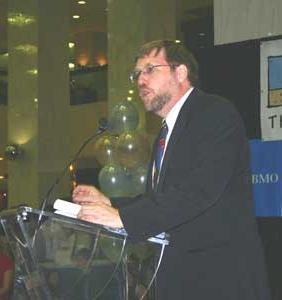
Sunday, March 06, 2005
Petals Around the Rose
My friend Bill passed this on the other day.
http://crux.baker.edu/cdavis09/roses.html
It’s a link to a math problem that was going around his office (a promising high-tech startup). Bill offered just one clue: “the longer it takes you to figure it out, the smarter you are.”
Tests such as these appeal to the competitive part of my nature. But I also think puzzle solving is an important entrepreneurial exercise, as it forces you to think in new ways and more deeply than usual.
In business, as in many parts of life, the first solution you think of may work, but it will not usually be the best or most efficient answer. So you need to believe that extra time spent studying the problem will result in new and possibly better solutions. So what better way to demonstrate that concept than by doing “impossible” puzzles that frustrate you the first or second time, but then succumb immediately when you approach them from a different perspective.
My oh-so-bright friends got this one the second time. I had to go away and then come back a couple of days later – at which point I changed my thinking, and found the right track at last.
SPOILER ALERT – Skip the next two paras if you haven’t tried the puzzle yet. But come back when you do.
Instead of trying to prove my math savvy by deciphering the relationships between the numbers, I paid attention to what I didn’t know – and got the solution within a minute. Which is a lesson well worth learning: focus on the questions you don’t understand. Don’t ignore what you don’t know.
Only when I solved the puzzle did I understand the clue, “the longer it takes you, the smarter you are.” We’ve all seen people try to over-analyze and outmuscle problems, when the true answer was really much easier. Lesson 2: There is virtue in simplicity.
http://crux.baker.edu/cdavis09/roses.html
It’s a link to a math problem that was going around his office (a promising high-tech startup). Bill offered just one clue: “the longer it takes you to figure it out, the smarter you are.”
Tests such as these appeal to the competitive part of my nature. But I also think puzzle solving is an important entrepreneurial exercise, as it forces you to think in new ways and more deeply than usual.
In business, as in many parts of life, the first solution you think of may work, but it will not usually be the best or most efficient answer. So you need to believe that extra time spent studying the problem will result in new and possibly better solutions. So what better way to demonstrate that concept than by doing “impossible” puzzles that frustrate you the first or second time, but then succumb immediately when you approach them from a different perspective.
My oh-so-bright friends got this one the second time. I had to go away and then come back a couple of days later – at which point I changed my thinking, and found the right track at last.
SPOILER ALERT – Skip the next two paras if you haven’t tried the puzzle yet. But come back when you do.
Instead of trying to prove my math savvy by deciphering the relationships between the numbers, I paid attention to what I didn’t know – and got the solution within a minute. Which is a lesson well worth learning: focus on the questions you don’t understand. Don’t ignore what you don’t know.
Only when I solved the puzzle did I understand the clue, “the longer it takes you, the smarter you are.” We’ve all seen people try to over-analyze and outmuscle problems, when the true answer was really much easier. Lesson 2: There is virtue in simplicity.
Friday, March 04, 2005
“Reverses” That Boost Sales
Long post: Reading Time, 4 minutes
(But it'll be a very valuable 4 minutes)
I believe that sales conversations should be legitimate, genuine conversations – not sales pitches, and not mutually antagonistic psychological warfare, either. If you’re selling something, you have to be sincere. authentic and helpful.
Still, there are times when your prey – er, prospect – will use mental tricks of their own on you, to probe your commitment, delay a decision, or beat down the price. And most people have no idea how to turn these stall tactics to their advantage.
I’ve found a cool book that offers lots of ideas and ammunition for situations like this. Close the Deal: Smart Moves for Selling, by Sam Deep and Lyle Sussman, provides 120 checklists of successful sales tips and tactics – and one of the best deals with what the authors call “Reverses.” These are things you can say and do to counter prospects' stalls and keep them talking – the ideas being that the more you discover about a client’s needs and concerns, the better you can help them, and the closer you'll be to a sale.
Here are a few highlights from the chapter, “Nineteen Reverses That Clarify the Buyer's Position.”
“Reversing is the strategy of shifting back onto buyers the pressure they place on you with challenging questions and statements,” say the authors. "The buyer uses these questions and statements to mask deep levels of emotion and pain. Reversing often involves asking a question in response to a buyer's question. One reason to reverse is to keep buyers talking. Another is to get them to redefine their original question or statement to something that is closer to their real intent, which they almost never reveal without help.”
To avoid annoying prospects with your reverses, the authors suggest preceding most reverses with “softening statements” such as, "I appreciate that. . .," "Help me to understand...," "I'm not sure, but...," "Good point,” “I’m glad you asked,” "A lot of people ask that,” and “First, let me ask you this. . . ."
Here are 10 useful examples from Close the Deal of “reverses” in action.
1. Pinned down.
Buyer: "What's this going to cost me?”
You: "Good question. Why do you ask?”
2. Off the record.
Buyer: "What's the price?"
You: "Off the record, Pat, what price were you looking for?"
(None of this discussion is off the record, but the pressure it relieves will many times open up buyers.
4. Controlling the interview.
Buyer: "What about [topic you don't want to discuss yet]?"
You: "That's an important question. Could we back up for just a moment, first?"
5. Pressure-packed moment.
Buyer: "Why is it that you won't give me a price?" (Buyer is bearing down on you.)
You: "Pat, is there some reason why you're putting all this pressure on me?"
8. The "magic wand" reverse.
This reverse helps buyers paint the picture of their needs and wants. You ask, "If you had a magic wand that could produce the ideal solution to your problem, what would it be?"
11. What?
When buyers say something that is in your best interest, say, "What?" This allows them to hear it a second time and is a powerful way to make them more positive about your product.
14. Buyer expresses mistrust or anger.
Your best reverse is, "There must be a reason you feel that way." Take great care not to get angry back.
15. A question you can't answer.
When you don't know the answer to a buyer's question, say, "I'm not sure. What do you think?" Never answer a question dishonestly.
16. You need more information before you respond.
Buyer: "How reliable is your delivery?"
You: "Please help me with something. What does reliable mean?"
… and a sneaky one…
17. Your price is under fire.
Buyer: "Here's what I'm paying my present supplier. Can you beat it?"
You: "No. That's a good price. [pause] Let me ask you a question. Can you guess why we do so much volume in this market, and yet we never have the lowest price?"
Buyer: "Service?"
You: "That's it! [Say this no matter what the buyer picked.] Now why do you think our customers are willing to pay extra for service?"
Selling is not psychological warfare. But that doesn’t mean you should walk into any deal unarmed.
Excerpted from Close the Deal: Smart Moves for Selling, by Sam Deep and Lyle Sussman, Perseus Books, Cambridge, Mass. 1999.
(But it'll be a very valuable 4 minutes)
I believe that sales conversations should be legitimate, genuine conversations – not sales pitches, and not mutually antagonistic psychological warfare, either. If you’re selling something, you have to be sincere. authentic and helpful.
Still, there are times when your prey – er, prospect – will use mental tricks of their own on you, to probe your commitment, delay a decision, or beat down the price. And most people have no idea how to turn these stall tactics to their advantage.
I’ve found a cool book that offers lots of ideas and ammunition for situations like this. Close the Deal: Smart Moves for Selling, by Sam Deep and Lyle Sussman, provides 120 checklists of successful sales tips and tactics – and one of the best deals with what the authors call “Reverses.” These are things you can say and do to counter prospects' stalls and keep them talking – the ideas being that the more you discover about a client’s needs and concerns, the better you can help them, and the closer you'll be to a sale.
Here are a few highlights from the chapter, “Nineteen Reverses That Clarify the Buyer's Position.”
“Reversing is the strategy of shifting back onto buyers the pressure they place on you with challenging questions and statements,” say the authors. "The buyer uses these questions and statements to mask deep levels of emotion and pain. Reversing often involves asking a question in response to a buyer's question. One reason to reverse is to keep buyers talking. Another is to get them to redefine their original question or statement to something that is closer to their real intent, which they almost never reveal without help.”
To avoid annoying prospects with your reverses, the authors suggest preceding most reverses with “softening statements” such as, "I appreciate that. . .," "Help me to understand...," "I'm not sure, but...," "Good point,” “I’m glad you asked,” "A lot of people ask that,” and “First, let me ask you this. . . ."
Here are 10 useful examples from Close the Deal of “reverses” in action.
1. Pinned down.
Buyer: "What's this going to cost me?”
You: "Good question. Why do you ask?”
2. Off the record.
Buyer: "What's the price?"
You: "Off the record, Pat, what price were you looking for?"
(None of this discussion is off the record, but the pressure it relieves will many times open up buyers.
4. Controlling the interview.
Buyer: "What about [topic you don't want to discuss yet]?"
You: "That's an important question. Could we back up for just a moment, first?"
5. Pressure-packed moment.
Buyer: "Why is it that you won't give me a price?" (Buyer is bearing down on you.)
You: "Pat, is there some reason why you're putting all this pressure on me?"
8. The "magic wand" reverse.
This reverse helps buyers paint the picture of their needs and wants. You ask, "If you had a magic wand that could produce the ideal solution to your problem, what would it be?"
11. What?
When buyers say something that is in your best interest, say, "What?" This allows them to hear it a second time and is a powerful way to make them more positive about your product.
14. Buyer expresses mistrust or anger.
Your best reverse is, "There must be a reason you feel that way." Take great care not to get angry back.
15. A question you can't answer.
When you don't know the answer to a buyer's question, say, "I'm not sure. What do you think?" Never answer a question dishonestly.
16. You need more information before you respond.
Buyer: "How reliable is your delivery?"
You: "Please help me with something. What does reliable mean?"
… and a sneaky one…
17. Your price is under fire.
Buyer: "Here's what I'm paying my present supplier. Can you beat it?"
You: "No. That's a good price. [pause] Let me ask you a question. Can you guess why we do so much volume in this market, and yet we never have the lowest price?"
Buyer: "Service?"
You: "That's it! [Say this no matter what the buyer picked.] Now why do you think our customers are willing to pay extra for service?"
Selling is not psychological warfare. But that doesn’t mean you should walk into any deal unarmed.
Excerpted from Close the Deal: Smart Moves for Selling, by Sam Deep and Lyle Sussman, Perseus Books, Cambridge, Mass. 1999.
Thursday, March 03, 2005
Comments R US
I have been remiss in failing to acknowledge a milestone for this blog: our First Comment!
A visitor named Shoestrings comments on our Feb. 10 post, "Why Small Business Rocks".
I was opining that it is small business that is responsible for most innovation in business today – and that big business recognizes that its role is to spot the successful entrepreneurs and buy them out. I suggested this is a good thing, because the entrepreneurs are then free to start more innovative businesses – this time with cash bulging out of their pockets (which isn’t always a positive, but let’s accept it as such for now).
Shoestrings makes a good point about the motives of entrepreneurs who start a business with the intention of selling out to “big-assed corporates.” He questions the long-term success of any business that puts “selling out” ahead of serving the customer.
The point I was trying to make, though, is not that most entrepreneurs start a business as Step One toward selling out. In my experience, people start businesses to fill a market gap and fulfill their own needs. Yes, a small minority are started with the intention of selling out, just as some homebuyers purchase real estate with the goal of flipping it for a quick profit. You see this mostly in the technology businesses that are designed from Day One to attract the interest of venture capitalists; the founders use the term “exit strategy” a lot.
For the most part, however, people build businesses in order to prove a theory or earn a living. Early on, success is just a remote concept, only dimly perceived, a light shining in a distant harbour on a foggy night. To my mind, the best businesses are not those that are founded with the intention of selling out, but those that provide a product or service better than anyone else in the market. All the success they enjoy follows from that.
Thanks for the comment, Shoestrings. Feel free to speak up any time.
A visitor named Shoestrings comments on our Feb. 10 post, "Why Small Business Rocks".
I was opining that it is small business that is responsible for most innovation in business today – and that big business recognizes that its role is to spot the successful entrepreneurs and buy them out. I suggested this is a good thing, because the entrepreneurs are then free to start more innovative businesses – this time with cash bulging out of their pockets (which isn’t always a positive, but let’s accept it as such for now).
Shoestrings makes a good point about the motives of entrepreneurs who start a business with the intention of selling out to “big-assed corporates.” He questions the long-term success of any business that puts “selling out” ahead of serving the customer.
The point I was trying to make, though, is not that most entrepreneurs start a business as Step One toward selling out. In my experience, people start businesses to fill a market gap and fulfill their own needs. Yes, a small minority are started with the intention of selling out, just as some homebuyers purchase real estate with the goal of flipping it for a quick profit. You see this mostly in the technology businesses that are designed from Day One to attract the interest of venture capitalists; the founders use the term “exit strategy” a lot.
For the most part, however, people build businesses in order to prove a theory or earn a living. Early on, success is just a remote concept, only dimly perceived, a light shining in a distant harbour on a foggy night. To my mind, the best businesses are not those that are founded with the intention of selling out, but those that provide a product or service better than anyone else in the market. All the success they enjoy follows from that.
Thanks for the comment, Shoestrings. Feel free to speak up any time.
The Essential Corporate Checkup
No time to post
barely time to think
but that’s the Web’s for
Here’s a cool link!
I intended this blog to be a link to cool entrepreneur resources as well as my own thoughts. So here’s a useful article from the most recent issue of PROFIT Magazine, on how to diagnose the health (or ills) of your business.
It’s fun, it’s interesting, and it will get you thinking. Kudos to Ian and Kim.
http://www.profitguide.com/quizzes/checkup.asp
My column in the latest issue is about positioning statements – how to say what you do so people actually give a darn. I will post a link as soon as PROFIT puts it up online.
barely time to think
but that’s the Web’s for
Here’s a cool link!
I intended this blog to be a link to cool entrepreneur resources as well as my own thoughts. So here’s a useful article from the most recent issue of PROFIT Magazine, on how to diagnose the health (or ills) of your business.
It’s fun, it’s interesting, and it will get you thinking. Kudos to Ian and Kim.
http://www.profitguide.com/quizzes/checkup.asp
My column in the latest issue is about positioning statements – how to say what you do so people actually give a darn. I will post a link as soon as PROFIT puts it up online.
Subscribe to:
Posts (Atom)