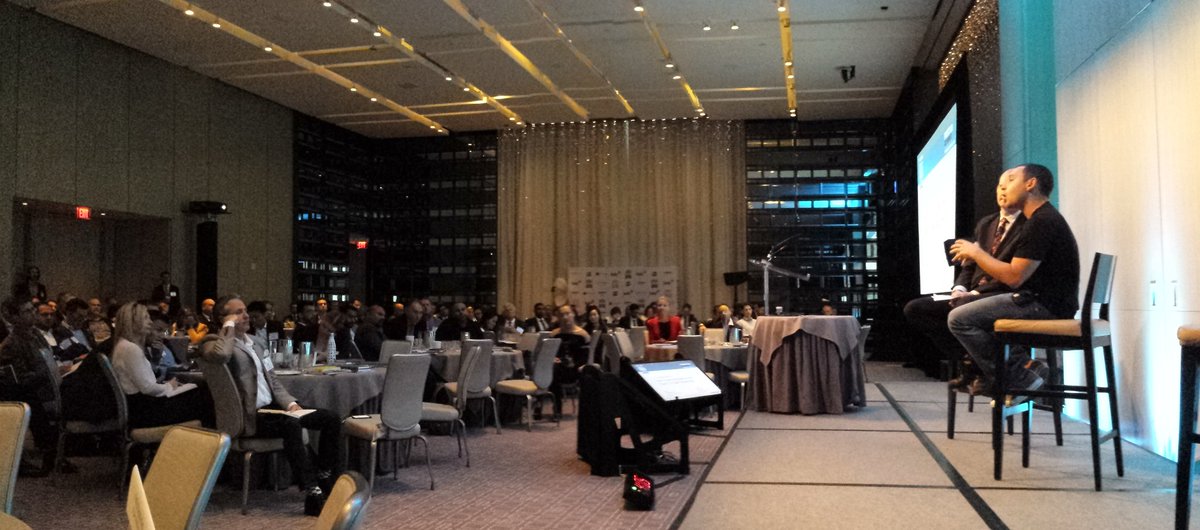
Lovingly borrowed from Howard Schultz and Dan Levitan of Maveron, for a recent presentation in Ottawa.
Monday, October 22, 2018
Thursday, July 19, 2018
What’s Your Mission? Your Personal Mission Statement
Every day you are missing key chances to sell yourself and your
business better.
Remember the
medieval stonecutter, who when asked what he was doing, answered with great
pride: “I’m building a cathedral.” Why not, then, say, “I’m involved with a
company that’s reinventing e-commerce.” That sounds a lot less like a
commercial, and more like a great cause that many people would be interested in
learning more about. That’s how you start a great conversation.
Whenever someone asks you, “What do you do?”, you
are being handed a golden opportunity to build your brand.
But most people answer that question modestly, almost reluctantly. “I’m in insurance,” they say, or “I work with a tech startup.” Unsure
whether the other person is truly interested, most people respond as tersely and noncommittally as possible.
The inevitable result: having received such a dull, unimaginative response, most people promptly
lose all interest in what you do. Congratulations! You just blew a chance to acquire a new
customer, partner, fan or friend.
If you care about what you do, be enthusiastic
about it. And make other people
feel just as excited as you are.
So when someone asks you what you do, instead of mumbling
the simplest, blandest answer you can, respond with something bolder, more
personal, and more memorable!
I remember asking the question of one entrepreneur, who were
applied very boldly,” I’m the second biggest steel fabricator in the Ottawa
Valley.” It was brash, it was memorable, and it sparked a great conversation.
Who knows how many steel fabricators there are in the Ottawa Valley? Doesn’t
matter. That hint of verve and audacity was the cue that this person was worth
talking to.
There’s a school of thought that says your opening line
should be a short commercial, such as: “I sell payment solutions for e-commerce
companies.” That’s clear and concise, but it’s not very personal, or likely to
grab the interest of anyone who is not entrenched in e-commerce.
Remember the
medieval stonecutter, who when asked what he was doing, answered with great
pride: “I’m building a cathedral.” Why not, then, say, “I’m involved with a
company that’s reinventing e-commerce.” That sounds a lot less like a
commercial, and more like a great cause that many people would be interested in
learning more about. That’s how you start a great conversation.
I call these Personal Mission Statements. As a business
person, you should prepare identifying statements and other talking points that
demonstrate why you’re an interesting person creating new value in this sorry
world.
Again, these are NOT commercials. Few new acquaintances give a fig about your “value proposition.” No one wants to be propositioned without permission.
But everyone is interested in hearing innovative stories about people doing
important and interesting work.
How do you create value for the world? Are you an inventor,
are you a pioneer, are you working on leading-edge projects? Do you have a
track record of helping people solve problems? Are you on the
lookout for potential partners, allies, referrals, resources?
Think through all
the interesting things you do, or you’re trying to do. Pick out the best parts
and incorporate them into the opening sentences of any business- or career-related
conversations. Don’t try to sell yourself; get people interested in your
vision, your projects, and your dreams. Once they're intrigued, a fruitful conversation
can begin. Afterwards you can decide if they're possible prospects, or, more likely, potential
partners, resources or allies.
So many people struggle with their "opening line." Don't think of it as a marketing trick. Just share your light with the world.
Don’t hide that light under a bushel. If you’re doing interesting stuff, it’s a crime that more people don’t know about it.
Exercise: Just Three Questions
1. What are the most interesting things you’re working on
right now?
2. Why should any of this matter to other people?
3. How can you convey your vision and mission to other
people in just one sentence (your Personal Mission Statement) that will whet
their appetites to learn more?
Monday, May 14, 2018
Meet the world's top social entrepreneurs
This year's Skoll World Forum for social entrepreneurs took place in Oxford, UK, April
10-13. Sadly, it marked the conference’s first year without founder Jeff Skoll,
the Canadian-born engineer who became the first president of eBay. Now
virtually the patron saint of social entrepreneurs, Jeff stayed
home in California to recover from back surgery.
But 1300 people showed up to the conference, making it the
largest Skoll World ever. They presented a “Global Treasure” award to Jimmy
Carter, and explored issues such as improving global healthcare, sustainable economic
development, preserving indigenous cultures, enhancing agriculture in Africa,
and fighting indentured slavery.
I wrote three stories on the Skoll conference. Here’s a
quick summary.
The story explored “proximity” through the case
study of a social venture called “Hello Tractor.” U.S. founder Jehiel Oliver confessed
that his initial plan to disrupt African agriculture by getting affordable
tractors in the hands of small landholders failed because he didn't wasn’t
close enough to the market. “We tried to do it the Silicon Valley way,” says
Oliver. “But we had to do it the community way instead.”
I looked at two ventures that this year received Skoll Awards, which are given annually to promising social ventures whose innovations have already had significant, proven impact on some of the world’s most pressing problems.
"You are a barrier against disinformation, duplicity and destruction.”
My third story was written for Corporate Knights magazine (the issue will be out in June, but it was posted online last week.) It’s a collection of highlights from the whole Skoll event – from Jimmy Carter’s acceptance speech to an Indian lawyer’s story of his journey out of slavery.
I also couldn't resist quoting Gwynne Shotwell, president
and COO of SpaceX, on how to create bold, successful change:
![]() |
| Jimmy Carter acceptance speech |
After the 2017 conference, which was still reeling
in shock from the election of Trump and his band of narcissistic nationalists,
the world’s best social entrepreneurs proved this year that they're back in
fighting form and ready to move forward again with their innovative, inspiring agendas
for improving the human condition.
![]() |
| Dinner at Oxford's 600-year-old Divinity School |
“Proximity triggers empathy.”
My first story for the Financial Post explored the conference’s surprising but very meaningful theme, “The Power of Proximity.” As I wrote, in phrasing that gained some Twitter traction, “Yes, this sounds like the business bromide ‘Get closer to your customer.’ But Skoll’s adoption of this theme demonstrated that this advice applies to any entrepreneur — especially when times are tough. It’s so easy to neglect your mission amid the day-to-day struggle to survive. As a leader, you have to stay focused on relationships even when things are so hard and complex that you feel you’ll never get home for dinner again.”
![]() |
| Jehiel Oliver of Hello Tractor |
"To whom much is given, much is required."
My second Post story zoomed in on a key challenge for social
entrepreneurs and the world: how to make governments more efficient. As I
wrote, “Government waste breeds cynicism, inequality and despair. The
entrepreneurs tackling this intractable problem could spur new efficiencies
around the world.”
![]() |
| 2018 Skoll Award winners |
Code for America trains tech-savvy “fellows” to improve the
ways governments offer services, by embracing concepts such as design thinking
and iterative, user-centered approaches. According to founder Jennifer Pahlka, CFA now has 70 local “brigades” whose work has helped
more than 500,000 people.
Just as important, she says CFA’s efforts are firing up public servants. “The people we call bureaucrats are actually a massive force for good, who are just hungry for the tools and approaches that will let them effectively help their fellow citizens. And we, the people, can help them unlock that enormous potential.”
(There's now also a Code for Canada, doing similar work. Visit https://codefor.ca/)
The second winner was Barbara Bush, the daughter of former
U.S. president George H.W. Bush, co-founder of New York City-based GlobalHealth Corps. “Our ‘big idea’ was – and still is – that great ideas don’t
change the world, great people do,” Bush told me in an interview by email. GHC
has now trained and placed 1,000 “fellows” under the age of 30 in medical
facilities and governments in the U.S., Rwanda, Uganda, Malawi and Zambia. They
are young, educated and committed catalysts for change, says Bush:
“We realized that there was a major implementation gap
in global health. Millions were dying from treatable illnesses because they
weren’t being reached with the incredible life-saving tools and information we
have. On the flip side, we saw a huge supply of passionate, talented young
leaders who wanted to change the world. So we set out to maximize this
interest by recruiting and training a new generation of leaders to ensure
people can live full, healthy lives. We are seeding
the global health field with incredible talent who will effect change throughout their careers.”
Read the full story here: http://business.financialpost.com/entrepreneur/what-if-we-could-infect-government-with-the-ideas-values-and-disruptive-energies-of-entrepreneurs
"You are a barrier against disinformation, duplicity and destruction.”
My third story was written for Corporate Knights magazine (the issue will be out in June, but it was posted online last week.) It’s a collection of highlights from the whole Skoll event – from Jimmy Carter’s acceptance speech to an Indian lawyer’s story of his journey out of slavery.
![]() |
| Gwynne Shotwell of Space X |
- Execute missions that seem impossible.
- Relentless focus on progress and improving every cycle.
- Drive feedback to ensure we learn and fix quickly.
- Superior staff is the only way to achieve great things.
(Sorry about that downer ending. But the best way to create
social justice is to recognize inequality in your own backyard.)
Saturday, April 07, 2018
Lessons from Canada's most aspiring entrepreneurs
Oops. I meant to share this with you weeks ago.
For my first column of 2018, I went back and contacted a few of the ambitious entrepreneurs whose businesses I had profiled in the first half of 2017. An editor of mine long ago said, "You can't do enough follow-ups," so I followed up to see how they're faring and what they learned over the past year.
In my experience, you can learn a lot from other entrepreneurs. Our journeys are all different, but many of the obstacles are common ones.
You can read the story at the Post website here:
http://business.financialpost.com/entrepreneur/0104-biz-rs-spence-review-fpe
What did they learn?
Here are a few examples of the lessons 2017 dealt out:
“I had a birdie chirping in my head that it might not work out. Now I know what that sounds like, so I am going to listen to that bird in future.”
“We learned that you need to understand what other market pressures and priorities your customers may be facing, and work with that challenge to demonstrate your value proposition to get to the top of their priority list.”
“Be totally forthright with potential competition, even when you’re not sure how they may react to your vision.”
“Understanding your customer is the most important thing you can do as a business."
“I learned that nothing is done in business until it’s done.”
“Things only work out if you make them work out.”
Now go back and read the full story.
http://business.financialpost.com/entrepreneur/0104-biz-rs-spence-review-fpe
I'd love to know what lessons you're learning.
Leave a comment or email me at rick@rickspence.ca if you'd like to share your thoughts on how to deal with the hard knocks of business. And please let me know if I can use your comments in a future column.
For my first column of 2018, I went back and contacted a few of the ambitious entrepreneurs whose businesses I had profiled in the first half of 2017. An editor of mine long ago said, "You can't do enough follow-ups," so I followed up to see how they're faring and what they learned over the past year.In my experience, you can learn a lot from other entrepreneurs. Our journeys are all different, but many of the obstacles are common ones.
You can read the story at the Post website here:
http://business.financialpost.com/entrepreneur/0104-biz-rs-spence-review-fpe
What did they learn?
Here are a few examples of the lessons 2017 dealt out:
“I had a birdie chirping in my head that it might not work out. Now I know what that sounds like, so I am going to listen to that bird in future.”
“We learned that you need to understand what other market pressures and priorities your customers may be facing, and work with that challenge to demonstrate your value proposition to get to the top of their priority list.”
“Be totally forthright with potential competition, even when you’re not sure how they may react to your vision.”
“Understanding your customer is the most important thing you can do as a business."
“I learned that nothing is done in business until it’s done.”
“Things only work out if you make them work out.”
Now go back and read the full story.
http://business.financialpost.com/entrepreneur/0104-biz-rs-spence-review-fpe
I'd love to know what lessons you're learning.
Leave a comment or email me at rick@rickspence.ca if you'd like to share your thoughts on how to deal with the hard knocks of business. And please let me know if I can use your comments in a future column.
Wednesday, March 07, 2018
Auditioning for Dragons' Den
Dragons' Den auditions continue across Canada this month. Why not step into the Den with your invention, product or business idea?
I just received a request for audition advice from a startup entrepreneur I know in Western Canada. I'm excited that she has registered, and as you'll see, I think she has a good shot at getting on the show. And of getting an offer.
I used to help the CBC Toronto crew with Dragons' Den auditions, years ago, when they were under-resourced. So I have some insight into what the producers (and the Dragons) are looking for. But I've been out of that loop for a few years now, so take the following for what it's worth.
Here, with a few edits to retain confidentiality, are my comments to this entrepreneur.
She asked what time she should show up: "You don't need to get there early; that's usually a busy time. I suggest you go 1-2 hours before they close. By that time the producers are tired, their expectations are low, and you will blow them away."
She asked whether the fact that her product's sales have been slow will be a problem. Hell, no!
"The fact that you are in stores and making sales is a big plus. You are way ahead of most people auditioning, because most of them don't have a product, and most of those who do are still looking for distribution. The audition judges (and the dragons) know sales success is as much a factor of promotion dollars as of product quality, so I doubt they would hold a slow start against you.
"Remember: above all they are looking for a good, upbeat story. And you have it.
"You saw personally a gap in a growing market. You looked for solutions and couldn't find one, so you designed one yourself and then hired a factory to produce them! Plus, you didn't want to risk your savings (the Dragons hate it when people do that - it's a sign of very bad judgment). So you looked for financial help. And after being turned down by a few sources, you found some additional capital (so there's a great lesson there about persistence).
"Keep your story simple. (Sometimes entrepreneurs get too immersed in their own stories and go on too long. Practice telling your story as simply and as briefly as you can.)
"One other thought. Think of a customer success story. It could be anything positive that a retailer or retail customer has said or done. Did a customer provide amazing feedback on the product, fit, convenience, etc? Did a retailer hunt you down and beg you to supply them? One or two quick, casual anecdotes like those will help position you as a winner."
The annual Dragons' Den audition tour began in February and continues across Canada until April 7. Upcoming locations include BC, Alberta, Whitehorse, Newfoundland, Saskatchewan, Winnipeg, Quebec and Ontario. Click here for dates, locations, and other useful information.
Go ahead. Own the Den!
Friday, February 23, 2018
How would you answer these tricky questions about your business?
This week's FP Entrepreneur column came out of a recent event I attended: the Toronto round of a 15-city “Open Innovation” competition run by Japan’s NTT Data, a US$16-billion-a-year software giant looking for creative partners and technologies.
Pitch competitions are the new Tupperware parties, so I attend a lot of them. But it's hard to get a good story out of them, even when the companies pitching on-stage are outstanding (as they were at this tech-focused event). There's little journalistic fodder in these raw. 5-minute pitches, even though the companies may be interesting (and I will be writing about a few of them in the weeks to come).
At the NTT Data event, however, the questions asked by the judges seemed newsworthy to me. Every entrepreneur, every executive, every salesperson, is always pitching their business or their products and services to everybody they meet. Sadly, most people don't do a very good job of it.
The judges at this event, however, had a rare knack for spotting the soft spots in people's presentations: especially for things they said that didn't quite make sense, and for the important things the presenters didn't say. I took careful note of the questions they asked, because these are the same questions people will ask themselves when they hear YOU pitch.
Being polite, or shy, or time-pressed, the people you meet may never ask these questions out loud - but they're definitely thinking them. To improve your daily pitches and formal presentations, you need to understand these questions so you can answer them before they're even asked.
Here are a few of those key questions:
* “Do you have any success stories you can share?” (The entrepreneur who was asked this forgot to tell one. Even after being asked!)
* “How did your company get into 65 countries?” (Any time you make a big, impressive-sounding claim, such as your business operating in 65 countries, people will ask themselves how you managed that. Was it strategy, or just luck? Make sure you're boasting about the right things.)
* “When selling to customers, what benefits do you lead with?” (That was just another way of asking the two Big Question in business: How do you create value, and what makes you different?)
This is the sort of basic, useful story that people used to tear out of the newspaper and save for future reading. You can just click this link:
http://business.financialpost.com/entrepreneur/the-hell-that-is-an-entrepreneurs-pitch-competition-and-how-to-survive-it
![]() |
| The Event Organizers |
At the NTT Data event, however, the questions asked by the judges seemed newsworthy to me. Every entrepreneur, every executive, every salesperson, is always pitching their business or their products and services to everybody they meet. Sadly, most people don't do a very good job of it.
The judges at this event, however, had a rare knack for spotting the soft spots in people's presentations: especially for things they said that didn't quite make sense, and for the important things the presenters didn't say. I took careful note of the questions they asked, because these are the same questions people will ask themselves when they hear YOU pitch.
![]() |
| The Presenters |
Here are a few of those key questions:
* “Do you have any success stories you can share?” (The entrepreneur who was asked this forgot to tell one. Even after being asked!)
* “How did your company get into 65 countries?” (Any time you make a big, impressive-sounding claim, such as your business operating in 65 countries, people will ask themselves how you managed that. Was it strategy, or just luck? Make sure you're boasting about the right things.)
* “When selling to customers, what benefits do you lead with?” (That was just another way of asking the two Big Question in business: How do you create value, and what makes you different?)
This is the sort of basic, useful story that people used to tear out of the newspaper and save for future reading. You can just click this link:
http://business.financialpost.com/entrepreneur/the-hell-that-is-an-entrepreneurs-pitch-competition-and-how-to-survive-it
Friday, January 05, 2018
A do-it-yourself Happy New Year
In January we're all filled with good intentions for self-improvement: ending bad habits, losing weight, spending more time with family. Laudable as these goals are, they are often hard to achieve. And they rarely make a dent on how happy your New Year will really be.

So here is my simple, DIY proposal for creating what my friend Jennifer Green @jade_consulting calls "an amazing 2018!"
Forget resolutions.
Just write out 3 goals for 2018. And commit to spending 15 minutes every day to move those goals forward.
(Including weekends, if possible. It's all about momentum.)
Three simple, meaningful goals. In a business sense, they may involve refining your strategy, engaging with new technology, exploring social media, or getting better at new product development. You can also include personal goals in your agenda for change: getting better at follow-ups, for instance, or praising employees, or abolishing procrastination.
Business owners are lucky. Change is hard, but they don't have to do it alone. Pick a few plucky staff members who have spare capacity or want more involvement with the business. Deputize them to work with you (or by themselves, if that's easier) on one of the three new initiatives you've just prioritized. Give them your full support, a bit of a budget, and a deadline, and ask them to come up with a plan.
Delegating is good for both the delagater and the delegatee. So share the challenge, the workload, and the opportunity to make a difference. Here in the bleak midwinter, you'll kindle hope and light in your business, and optimism for the future.
Get out your daytimer and schedule in 15 minutes a day for moving three priorities forward. If you miss a day, spend 30 minutes the next day. Keep things moving!
A Happy New Year? It's in your hands.

So here is my simple, DIY proposal for creating what my friend Jennifer Green @jade_consulting calls "an amazing 2018!"
Forget resolutions.
Just write out 3 goals for 2018. And commit to spending 15 minutes every day to move those goals forward.
(Including weekends, if possible. It's all about momentum.)
Three simple, meaningful goals. In a business sense, they may involve refining your strategy, engaging with new technology, exploring social media, or getting better at new product development. You can also include personal goals in your agenda for change: getting better at follow-ups, for instance, or praising employees, or abolishing procrastination.
Business owners are lucky. Change is hard, but they don't have to do it alone. Pick a few plucky staff members who have spare capacity or want more involvement with the business. Deputize them to work with you (or by themselves, if that's easier) on one of the three new initiatives you've just prioritized. Give them your full support, a bit of a budget, and a deadline, and ask them to come up with a plan.
Delegating is good for both the delagater and the delegatee. So share the challenge, the workload, and the opportunity to make a difference. Here in the bleak midwinter, you'll kindle hope and light in your business, and optimism for the future.
Get out your daytimer and schedule in 15 minutes a day for moving three priorities forward. If you miss a day, spend 30 minutes the next day. Keep things moving!
A Happy New Year? It's in your hands.
Monday, December 04, 2017
Scaling for Success
Canadians are running one of the world's most ambitious experiments in learning how to help promising growth companies learn how to scale.
"Scaling" is a fun term. Look it up in Google Image Search and you find picture after picture of dental hygienists poking at your teeth with sharp metal instruments.
But in business, scaling is the new term for "managing growth." Scaling is about scraping away your bad habits to expose the shiny value proposition beneath - and then developing a dozen new organizational capabilities (strategic communications, delegation, culture development, recruitment, finance, sales management, etc.) to ensure that you know how to compete on a global scale.
Essentially, scaling is the discipline all businesses must master if they hope to survive and grow. That's why I'm so interested in the Lazaridis Scale-Up Program now being workshopped by Wilfrid Laurier University’s Lazaridis Institute for the Management of Technology Enterprise. For the second year, they've selected 10 companies from across Canada to participate in a six-month crash course in scaling - as a way of learning how to teach scaling, and then how to scale it so more Canadian entrepreneurs can benefit from that education.
Imagine the competitive advantage Canada could enjoy if its best and brightest companies understood the challenges and logistics of scaling. We could create all the "unicorns" we want, and finally build the 21st-century economy we've dreamed of.
So here's the link to my first article about Cohort II of the Lazaridis Scale-Up Program.
As you'll see, it all starts with better communication.
Specifically, how can you engage stakeholders' heart, mind and gut - in 20 seconds?
Excerpt:
Click here for more.
"Scaling" is a fun term. Look it up in Google Image Search and you find picture after picture of dental hygienists poking at your teeth with sharp metal instruments. But in business, scaling is the new term for "managing growth." Scaling is about scraping away your bad habits to expose the shiny value proposition beneath - and then developing a dozen new organizational capabilities (strategic communications, delegation, culture development, recruitment, finance, sales management, etc.) to ensure that you know how to compete on a global scale.
Essentially, scaling is the discipline all businesses must master if they hope to survive and grow. That's why I'm so interested in the Lazaridis Scale-Up Program now being workshopped by Wilfrid Laurier University’s Lazaridis Institute for the Management of Technology Enterprise. For the second year, they've selected 10 companies from across Canada to participate in a six-month crash course in scaling - as a way of learning how to teach scaling, and then how to scale it so more Canadian entrepreneurs can benefit from that education.
Imagine the competitive advantage Canada could enjoy if its best and brightest companies understood the challenges and logistics of scaling. We could create all the "unicorns" we want, and finally build the 21st-century economy we've dreamed of.
So here's the link to my first article about Cohort II of the Lazaridis Scale-Up Program.
As you'll see, it all starts with better communication.
Specifically, how can you engage stakeholders' heart, mind and gut - in 20 seconds?
Excerpt:
Be clear (What do you do?).
Be compelling (How much better are you? How are you different?).
Be credible (Can we believe you?).
Those messages go straight to the head, the heart and the gut, in that order.Click here for more.
Friday, November 03, 2017
How to grow your business NOW!
“All businesses start
as an idea, an opportunity, or a hunch.”
“But as a business
grows, it has to shed the startup phase of gut instinct and guesswork. Founders
need to embrace an ever-evolving framework of processes and systems – such as
accounting, human resources and even internal communications – to ensure that work
started by just one or two people can be understood and consistently supported
by employees and associates of all different levels and backgrounds.”
This was the opening of my four-part Financial Post series last
month on “scaling”. That’s the process we used to call “managing growth,”
before Silicon Valley found a cooler buzzword.
I wrote four stories for the National Post on different
aspects of managing your company’s growth, oops, I mean scaling. VCs use this
term to describe how tech startups can master the path to global success, but these
stories are meant for any business leader trying to get ahead of the competition.
Hopefully that includes just about everybody.
Here are the yarns you should check out:
Scaling your family business
Scaling fast and slow
Managing the baffling logistics of scaling
The secret of
scaling: managing three businesses at the same time.
-
the
business as it is (current state);
-
the
business it will become over the next year (next-state);
-
and the
business you think it could become in five years (long-term).
Plus: The LazaridisInstitute’s Scale-Up Program is exploring the right way to help promising companies
learn to scale. Here’s what their test entrepreneurs learned in Year One.
Wednesday, October 11, 2017
Life at the Top: The challenges facing Canada's Fastest-Growing Companies
I spent this morning at the PROFIT 500 CEO Summit, bringing
together the leaders of Canada’s Canada's Fastest-Growing Companies. It’s the 29th
year of the survey, which has now outlasted not only PROFIT magazine, which debuted
the survey in 1988, but Canadian Business, which took over the survey after
PROFIT folded a few years ago. (CB stopped publishing in magazine form earlier
this year, but it lives on online and in occasional special issues.*)
![]() |
| Shopify COO Harley Finkelstein on stage at PROFIT 500 CEO Summit today |
PROFIT/CB/Maclean’s drags me out of mothballs once a year for
this event to lead one of the many roundtable discussions for the “Idea Exchange,”
where growth company CEOs discuss the issues that keep them up at night. The
seven CEOs I met today – from Toronto, Montreal, Calgary and southwestern Ontario – cited some pretty interesting
challenges:
· - How do my brother and I convince our father that the family business should invest more in technology?
· - How do we keep doubling sales given that it gets
harder and harder as you grow?
· - What tasks as CEO do I need to give up in order
to grow the company faster?
· - How can we get ahead without hiring more people?
· - How can we increase profitability?
· - How can we motivate world-class talent to move
to our city?
· - How can we systematize hiring so it takes less
time, while maintaining the rigour of our current process and preserving our
culture?
As
you might guess, these are confidential discussions, so I can’t talk about the solutions
we discussed. But it’s interesting to see how growth businesses in different industries
have problems that sound different, but are all essentially the same:
How
do I personally change fast enough to keep up with my company’s success?
At
one point, I mentioned the importance of taking time to put your key processes into writing. Then I asked how many of the entrepreneurs at the table
maintained an employee handbook. All seven said yes. Astounding!
Above
all, I was impressed by the respect these leaders had for their employees. They
truly treat them as partners. As one participant mentioned, “Our people are the
resource that makes our business successful, and will one day let us step away
from it.”


At the end, I asked people to offer their best management tip, or a book that changed their
life.
The books: Delivering Happiness (by Zappos founder Tony Hsieh); The One-Minute Manager; Managing Up (get your employees to read it); and It’s Not What You Sell, It’s What You Stand For, by Roy Spence (no relation).
Some
of the best advice:
- “Get a mentor. Or join a peer group (such as YPO, PEO, Innovators’ Alliance, etc).”
- Surround yourself with people who are better than you. There’s no better feeling when you're running a company than when people eat, breathe and sleep the organization.”
- When you're trying to teach your team something, “Keep at it. Let people know why you want them to do this.” If they're balking, find out what’s holding them back: “It’s my job to show people the whole picture.”
- “Do what you say you will.”
- “Don't overthink it. Get a product out there and test it.”
- “Even as COO, I still have my own customer accounts. I try to stay in touch with all aspects of the business.”
Saturday, September 23, 2017
Why Does Networking Matter?
Networking – or building better business relationships – is one of those essential skills that no one ever learns in school. Some folks are natural networkers – they meet people easily, gain trust quickly, and forge fast friendships. But most of us have to work at it.
Why bother? Because business is always about people. You will only succeed in business if you know how to meet people, how to connect with them, and how to gain their ongoing friendship and support. This applies not just to customers, but to co-workers, suppliers, consultants and associates, and hundreds of potential prospects, mentors, advisors, partners and friends.
We all know people who have sworn off networking, because they say it doesn't work. But that's usually because they don't know how to do it!
Networking isn’t just about schmoozing people so they will buy from you. Business relationships pay off in many ways, many of them unknown and invisible to us now. When you neglect to turn an acquaintance into a trusted contact, who knows what future opportunities you are tossing away?
Yesterday I had a coffee meeting with someone I just met the day before. We hit it off and now plan to do a very cool project together. Other people aren't strangers; they're allies you haven't met yet.
And I would never have met him had I not made friends 10 years ago with yet another new acquaintance, who’s the one who invited me to yesterday’s event. Developing and building new relationships in business may not change your life right away, but will pay off continually over time.
Think back to your recent business successes, large or small. Chances are they were initiated or abetted by people who recently passed the “acquaintance” level and became trusted colleagues. Business is all about adding value – and building your network is the best way to add value for your clients, employer, employees and other partners.
Why do I say that most people aren't very good at “networking”? Because it’s so much more than sizing up strangers based on their potential to become customers. You need to see the bigger picture – and then you need a plan.
The best way to succeed in any aspect of business is to develop a strategy and follow it. But when it comes to networking, almost no one bothers to plan. Expecting people to come to you with great ideas or open wallets isn’t networking. It’s standing in a corner waiting for someone to talk to you.
Today’s business leaders need a better vision of relationship-building. One rooted in the fact that business is a team sport. Each of us needs the most supportive team we can find. So networking is the process of putting together that team.
And remember – you're just one player on the team. It’s not all about you. It’s about how you and your team-mates can help each other.
Many people don't understand this. Even Dictionary.com defines networking as “cultivating people who can be helpful to one professionally.” That definition seems to assume that networking is selfish and narrow. It may sound appealing at first. But most adults have already learned that relationships based on grabbing sole advantage never last. No one wants to hang out with a bloodsucking vampire.
And you may have noticed that the selfish quarterback gets sacked by the other team much more often than the quarterbacks who respect their teammates and share the credit. You want your teammates to have your back.
So here’s the definition of networking that we use at Connectinc: Interacting and sharing with other people to develop lasting personal and business relationships of mutual benefit.
True networking means thinking not just about how people can help you, but how you can help them. Everyone needs information, resources, feedback, contacts and encouragement. Each of us can help each other by sharing our own experiences, our solutions, our network. And we can create lasting value for others by maintaining active, long-term relationships.
Make no mistake: networking is a powerful tool for personal advancement and profit. But a network exists for every member’s benefit – not just your own. Create value for others, and you’ll be planting seeds that will bloom and grow throughout your long and successful career.
Want more? Rick Spence and Barbara Katz are holding a free webinar on Tues. Sept. 26, at 1 pm and 7 pm EDT. We’ll share our seven best networking tips and take ALL your questions on relationship building, improving your confidence, mastering small talk, understanding "opening lines", and much more - including the best ways to follow up. For more information, click HERE for 1 pm. Or click HERE for 7 pm.
Connectinc offers tips and strategies for building your social capital through stronger business relationships. Follow us on Twitter at @connectinc_
Sunday, August 06, 2017
Writing with Power, for Impact
The other day a business acquaintance, Jeff, sent along the beginning of a blogpost, and asked me what I thought. I thought he was off to a good start, so I wrote him back some notes on how to turn it into an article with credibility and reader utility – and, hopefully, some promotional value for the writer.

But it has to happen in that order.
A blogpost that promotes the writer over the needs of its audience is doomed to be ignored and forgotten. An article that brings real value to a reader is much more likely to be remembered, to be shared, and to encourage readers to follow up.
Here, only slightly edited to preserve his confidentiality, is the advice I gave Jeff.
I think your article is off to a great start. I like your passion and your professionalism. And you offer some very vivid examples.
But before you start writing, you should always ask yourself:
· * What am I trying to say?
· * Who is my audience?
· * What do I want them to take away from this article that’s new and impactful?
You have to decide if this is going to be a promo piece for you, a think piece, a tool packed with useful tips, or a manifesto that will open people’s eyes to new thinking in their fields. (There are many other possibilities, of course; these are just a few samples to show the range that’s possible.)
Usually, the right answer is a blend of the above. The best promo pieces don't brag; they offer real value to the target reader. Confident professionals are happy to give knowledge away, because they know that’s the best way to earn respect, goodwill, and potential follow-ups and referrals.
So I suggest you now prepare an outline that includes what you have here, explores why so many people have the wrong idea of [redacted], and then follow up with some really insightful observations that will make your business market sit up and take notice. They might point to the essential changes your market needs, or examples of organizations that failed because they lacked the ability to change. Or you might get more prescriptive, and offer three to give tips on how companies can rethink their processes, make them simpler, more powerful or more effective, and reap the benefits of consistent improvement.
There’s so much free information available today. To make an impact, you have to share powerful ideas, stated simply, clearly and accessibly.
Good luck!

But it has to happen in that order.
A blogpost that promotes the writer over the needs of its audience is doomed to be ignored and forgotten. An article that brings real value to a reader is much more likely to be remembered, to be shared, and to encourage readers to follow up.
Here, only slightly edited to preserve his confidentiality, is the advice I gave Jeff.
I think your article is off to a great start. I like your passion and your professionalism. And you offer some very vivid examples.
But before you start writing, you should always ask yourself:
· * What am I trying to say?
· * Who is my audience?
· * What do I want them to take away from this article that’s new and impactful?
You have to decide if this is going to be a promo piece for you, a think piece, a tool packed with useful tips, or a manifesto that will open people’s eyes to new thinking in their fields. (There are many other possibilities, of course; these are just a few samples to show the range that’s possible.)
Usually, the right answer is a blend of the above. The best promo pieces don't brag; they offer real value to the target reader. Confident professionals are happy to give knowledge away, because they know that’s the best way to earn respect, goodwill, and potential follow-ups and referrals.
So I suggest you now prepare an outline that includes what you have here, explores why so many people have the wrong idea of [redacted], and then follow up with some really insightful observations that will make your business market sit up and take notice. They might point to the essential changes your market needs, or examples of organizations that failed because they lacked the ability to change. Or you might get more prescriptive, and offer three to give tips on how companies can rethink their processes, make them simpler, more powerful or more effective, and reap the benefits of consistent improvement.
There’s so much free information available today. To make an impact, you have to share powerful ideas, stated simply, clearly and accessibly.
Good luck!
Wednesday, July 05, 2017
When you spoil your kids you're stealing their future
Yesterday I did a radio interview with Aaron Rand of Montreal news/talk station CJAD 800. We discussed my most recent column, which ran in the Montreal Gazette and other major Postmedia papers as well as the Financial Post.
My column was an analysis of EntitleMania, a new book by California attorney Richard Watts, who's a financial advisor to many affluent business leaders and their families. The book is a warning to successful partners not to give to much to their kids - lest you steal away their ambition and self-reliance, or "cage" them in a lifestyle that they don't want and can't afford.
It's a fascinating book, and Aaron picked up on all of the cool points in my story: how Mr. Watts learned from nearly spoiling his third son; how entrepreneurs are some of the worst offenders in terms of spoiling their children; and how your kids' whole futures may be at risk.
Click here to watch the six-minute video on YouTube. (Ignore Mr. Rand's identity confusion at the start. It was embarrassing enough for the both of us.).
My column was an analysis of EntitleMania, a new book by California attorney Richard Watts, who's a financial advisor to many affluent business leaders and their families. The book is a warning to successful partners not to give to much to their kids - lest you steal away their ambition and self-reliance, or "cage" them in a lifestyle that they don't want and can't afford.
It's a fascinating book, and Aaron picked up on all of the cool points in my story: how Mr. Watts learned from nearly spoiling his third son; how entrepreneurs are some of the worst offenders in terms of spoiling their children; and how your kids' whole futures may be at risk.
Click here to watch the six-minute video on YouTube. (Ignore Mr. Rand's identity confusion at the start. It was embarrassing enough for the both of us.).
Or you can read my column here. It's more fun than spoiling your children!
Subscribe to:
Posts (Atom)


