Kodak - Winds of Change
This is a brilliant video from YouTube. It's a 3-minute Kodak commercial produced for internal use that proved so popular they've released it publicly.
Click the screen once or twice to see what could be the best Web 2.0 marketing move of the year.
It takes what was great about Kodak, shakes it up and down, admits the company's faults, and then throws down the gauntlet for the future. Masterful stuff.
(Turn your volume down. The announcer may get a little excited. )
"They've got things in their research labs that will make biometrics look like a Happy Meal toy!"

Wednesday, January 24, 2007

Monday, January 22, 2007
Surviving the minefield of venture capital
My latest (i.e., my second) Financial Post column is up on the Post’s website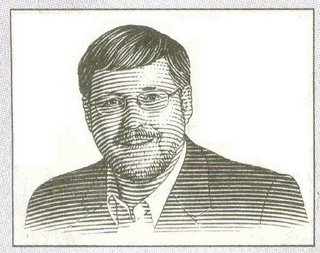 . To learn about some of the deadliest landmines facing entrepreneurs who think they want to attract venture-capital investment, click here.
I've always admired the little engraved headshots used to decorate the columns of various writers at the Financial Post – so I am delighted to now have one of my own. I think it’s kinda cute.
 . To learn about some of the deadliest landmines facing entrepreneurs who think they want to attract venture-capital investment, click here.
I've always admired the little engraved headshots used to decorate the columns of various writers at the Financial Post – so I am delighted to now have one of my own. I think it’s kinda cute.
Best-Ever Entrepreneurship Quotes: Week 16
Continuing our series of powerful motivational quotes personally selected to get your week off to an inspiring start.
For all the marketers in the house:
"If people around you will not hear you, fall down before them and beg their forgiveness, for in truth you are to blame.”
Fyodor Dostoyevsky
You can't go blaming the market for not cozying up to your product. Communication is YOUR job.
For all the marketers in the house:
"If people around you will not hear you, fall down before them and beg their forgiveness, for in truth you are to blame.”
Fyodor Dostoyevsky
You can't go blaming the market for not cozying up to your product. Communication is YOUR job.
Thursday, January 18, 2007
Don't Bore Your Team: The Leadership Wisdom of Craig MacTavish
It’s a shame more Canadians don't get to read Alberta Venture magazine*. AV provides blanket coverage of business (big and small) in Canada’s fastest-growing province, with wit and style.
And sometime it’s got great information anyone can benefit from.

The November issue, for instance, offered an incisive great interview with Craig MacTavish, the former journeyman hockey player who emerged as a creative and winning coach last spring when he led his Edmonton Oilers to the Stanley Cup finals.
“Craig’s List” of top ten leadership tips should be required reading for anyone in business:
1. Treat players equally. Put no one on a pedestal above the others.
2. Be tolerant of mistakes; otherwise players won’t take necessary risks.
3. Don’t expect players to perform beyond their capability.
4. Be patient with players’ shortcomings.
5. Let players know that you care about them as human beings.
6. Give support to a player in a slump.
7. Involve players in your thoughts and beliefs.
8. Don’t bore your players with too-long and poorly prepared meetings.
9. Present your game plan in a way that players get confident that your ideas are solid.
10. Instill in your team a belief in success.
You can read the full article here.
And sometime it’s got great information anyone can benefit from.

The November issue, for instance, offered an incisive great interview with Craig MacTavish, the former journeyman hockey player who emerged as a creative and winning coach last spring when he led his Edmonton Oilers to the Stanley Cup finals.
“Craig’s List” of top ten leadership tips should be required reading for anyone in business:
1. Treat players equally. Put no one on a pedestal above the others.
2. Be tolerant of mistakes; otherwise players won’t take necessary risks.
3. Don’t expect players to perform beyond their capability.
4. Be patient with players’ shortcomings.
5. Let players know that you care about them as human beings.
6. Give support to a player in a slump.
7. Involve players in your thoughts and beliefs.
8. Don’t bore your players with too-long and poorly prepared meetings.
9. Present your game plan in a way that players get confident that your ideas are solid.
10. Instill in your team a belief in success.
You can read the full article here.
Wednesday, January 17, 2007
No teeth, no glory
A while back I was asked to participate in a “graduation day” ceremony for prospective entrepreneurs who had just finished business startup training through the Toronto Business Development Centre.
The grads presented their business plans to a panel consisting of their instructors and me.
It was sort of like Dragons’ Den, the TV show pitting investors against entrepreneurs. Except the mood here was one of graduation-day celebration, rather than the merciless interrogation that the pitchers on Dragons’ Den went through.
Which of course left me in a quandary. When the “students” presented what I thought was faulty logic, or were missing some key connections, what was my role? To keep the mood light and say, “good job,” or go all serious on them? *
My recent column in PROFIT Magazine tells the whole story. Click here.
Excerpt, for those too busy to click:
“I've argued before that marketing is the glass jaw of Canadian entrepreneurs. But there is no excuse for someone coming out of a business startup program not to put marketing front and centre. I thought Google's targeted AdSense messages (online ads you pay for only when someone clicks through to your website) would be perfect for one of these businesses, but the entrepreneurs had never even heard of them.
"And the basic idea of guerrilla marketing — saving your money by piggybacking on other people's contacts and sales efforts — seemed to be a concept they hadn't heard before.”
(Last chance: click here for the full article.)
* You can probably guess how I resolved the dilemma. I feel that sending entrepreneurs out into the world without testing their knowledge and pushing them to the limit is insane. The harder you push them, the more they will be thankful for it later, when the world is pushing back harder than they ever expected.
Monday, January 15, 2007
"Gasoline you pour on a smouldering flame"
I had a great chat last week with Suzie Dingwall Williams, a lawyer and former venture capitalist now with Venutre Law in Toronto. She works with growth-oriented entrepreneurs to help their businesses make the right decisions, especially about venture capital.
She agreed with me that too many companies think they deserve venture capital money when they don't. VC money, after all, has traditionally been reserved for a very tiny group of growth-oriented companies with huge (usually worldwide) potential and defensible niches.
“A true VC kind of risk investment has such a disruptive business model or technology that there’s no real model for it yet,” says Suzy. “Nobody is going to back it unless they're willing to risk all their [investment] for a 1,000% return.”
“VC money is gasoline you pour on a smouldering flame.”
Canadian entrepreneurs with more modest growth ambitions often wonder why they can't get venture capital. Here’s your answer: unless you're a smoldering flame waiting to be sparked into a forest fire, you just ain’t their type.
The same conundrum, of course, afflicted the CBC’s Dragons' Den last fall. The entrepreneurs promoting their businesses thought they were pitching a small business investment opportunity.
Nobody told them that the investors (the dragons) were looking to invest in big businesses that are just temporarily small.
You can read more about Suzie in my Financial Post column next week. Or check out her blog here.
She agreed with me that too many companies think they deserve venture capital money when they don't. VC money, after all, has traditionally been reserved for a very tiny group of growth-oriented companies with huge (usually worldwide) potential and defensible niches.
“A true VC kind of risk investment has such a disruptive business model or technology that there’s no real model for it yet,” says Suzy. “Nobody is going to back it unless they're willing to risk all their [investment] for a 1,000% return.”
“VC money is gasoline you pour on a smouldering flame.”
Canadian entrepreneurs with more modest growth ambitions often wonder why they can't get venture capital. Here’s your answer: unless you're a smoldering flame waiting to be sparked into a forest fire, you just ain’t their type.
The same conundrum, of course, afflicted the CBC’s Dragons' Den last fall. The entrepreneurs promoting their businesses thought they were pitching a small business investment opportunity.
Nobody told them that the investors (the dragons) were looking to invest in big businesses that are just temporarily small.
You can read more about Suzie in my Financial Post column next week. Or check out her blog here.
Best-Ever Entrepreneurship Quotes: Week 15
Continuing our series of powerful motivational quotes personally selected to get your week off to an inspiring start.
"Character consists of what you do on the third and fourth tries."
~John Albert Michener
My take: Experience tells me there is a very thin line between failure and business success. Even the top salespeople will tell you that customers tend to buy on the seventh call.
Our instant-win, short-attention-span society doesn't do much to promote third and fourth tries. But that’s where success breeds best.
"Character consists of what you do on the third and fourth tries."
~John Albert Michener
My take: Experience tells me there is a very thin line between failure and business success. Even the top salespeople will tell you that customers tend to buy on the seventh call.
Our instant-win, short-attention-span society doesn't do much to promote third and fourth tries. But that’s where success breeds best.
Tuesday, January 09, 2007
Advantage: Small Business
I just noticed a great post by Toronto venture capitalist Rick Segal on his Post-Money Valuation blog last month that aptly demonstrates just why small business beats big business in the long run.
I’ll do my best to summarize the post, entitled Expenses - Doing Right vs. "The Policy."
Segal says a CFO recently asked him to review the expense-reimbursement section of his new employee handbook. While it was well written and detailed, Segal says it was also much too formal and corporate.
He suggested scrapping the whole thing and telling people to use common sense.
Read the full post here.
I’ll do my best to summarize the post, entitled Expenses - Doing Right vs. "The Policy."
Segal says a CFO recently asked him to review the expense-reimbursement section of his new employee handbook. While it was well written and detailed, Segal says it was also much too formal and corporate.
He suggested scrapping the whole thing and telling people to use common sense.
- "We need to work as a team to make sure we can hit the home run (grand slam) with the capital we’ve been given. It means watching the nickels cuz they add up to dollars.
"Coach airfare, duh, smallest car, duh, share cars, duh, cheap meals, duh, best western, duh, skype vs. cell, duh.And that’s just the warm-up.
"Everybody needs to look at every single expense and reduce it."
Read the full post here.
Monday, January 08, 2007
Canadian Entrepreneurship Test
In the early days of this blog (nearly two years ago!), I wrote a post about PROFIT Magazine's National Entrepreneurship Test, which we produced while I was at the magazine back in the '90s.
The test still holds up as a fun and insightful way to test your ability to think and act in an entrepreneurial manner. But the link went dead when PROFIT's website was restructured into Canadian Business Online last year, and I can't find it on their site any more.
Fortunately, I made sure when we published the test that we let people know it was freely available for reprinting and reuse by anyone in a non-commercial, educational context. So a quick search found that the test still exists online - or at least the revised shorter version, geared to Internet attention spans with 12 questions instead of 40.
So here's to the Entrepreneurship Centre of Sault Ste. Marie, Ont., which took PROFIT up on its offer and republished the test.
Find out if you have what it takes by clicking here.
The test still holds up as a fun and insightful way to test your ability to think and act in an entrepreneurial manner. But the link went dead when PROFIT's website was restructured into Canadian Business Online last year, and I can't find it on their site any more.
Fortunately, I made sure when we published the test that we let people know it was freely available for reprinting and reuse by anyone in a non-commercial, educational context. So a quick search found that the test still exists online - or at least the revised shorter version, geared to Internet attention spans with 12 questions instead of 40.
So here's to the Entrepreneurship Centre of Sault Ste. Marie, Ont., which took PROFIT up on its offer and republished the test.
Find out if you have what it takes by clicking here.
"Year of the Canadian Entrepreneur"
A new year has begun.
Today, January 8, RoyNat officially launches "The Year of the Canadian Entrepreneur," a multi-sponsor promotional project designed to celebrate Canadian entrepreneurs. The official website is www.yoce.ca.
The project includes a renewed, 12-page Entrepreneur section weekly in the Financial Post, as well as a series of 20-page inserts, the Essential Guide for Entrepreneurs, to run throughout the year in Canadian Business and PROFIT magazines.
There are also plans for a travelling entrepreneurship exhibition to tour the country this spring.
While not an official part of the consortium that bears its name, Canadian Entrepreneur (i.e., this blog) will be taking part. My new column for the Financial Post will run in the newly expanded Entrepreneur section every other Monday.
Today's column looks at the seven reasons why Canadian entrepreneurship is alive, and well, and growing. Click here to read it.
Plus, if they want to use the URL "CanadianEntrepreneur.net," they can just give me a call. In true entrepreneurial fashion, we'll work something out.
Today, January 8, RoyNat officially launches "The Year of the Canadian Entrepreneur," a multi-sponsor promotional project designed to celebrate Canadian entrepreneurs. The official website is www.yoce.ca.
The project includes a renewed, 12-page Entrepreneur section weekly in the Financial Post, as well as a series of 20-page inserts, the Essential Guide for Entrepreneurs, to run throughout the year in Canadian Business and PROFIT magazines.
There are also plans for a travelling entrepreneurship exhibition to tour the country this spring.
While not an official part of the consortium that bears its name, Canadian Entrepreneur (i.e., this blog) will be taking part. My new column for the Financial Post will run in the newly expanded Entrepreneur section every other Monday.
Today's column looks at the seven reasons why Canadian entrepreneurship is alive, and well, and growing. Click here to read it.
Plus, if they want to use the URL "CanadianEntrepreneur.net," they can just give me a call. In true entrepreneurial fashion, we'll work something out.
Best-Ever Entrepreneurship Quotes: Week 14
Continuing our series of powerful motivational quotes personally selected to get your week off to an inspiring start. This week we hear from a real Canadian entrepreneur.
“Had the men who undertook any great enterprise since time began realized half the obstacles and discouragements they would meet, they would never have started. But fortunately they didn't – and don't.”
Sir William Van Horne (1843-1915). (American-born taskmaster who completed the Canadian Pacific Railway, Canada’s greatest megaproject; he later served as president of the CPR, where he oversaw much of the industrialization of Canada)
My take on it: I’ve talked to countless successful Canadian entrepreneurs who have said that if they had the chance to do it over again, they wouldn't. It was just too hard, they say, took too long, cost too much (financially and personally).
I’ve never known whether to believe them or not. Their very natures usually dictate they do something impossible every day.
But the real takeaway for Canadian entrepreneurs is this: Do your planning. Plan some more. Revise the budget to account for all the obstacles and delays you can imagine.
Prepare for the worst, and no setback will break you.
“Had the men who undertook any great enterprise since time began realized half the obstacles and discouragements they would meet, they would never have started. But fortunately they didn't – and don't.”
Sir William Van Horne (1843-1915). (American-born taskmaster who completed the Canadian Pacific Railway, Canada’s greatest megaproject; he later served as president of the CPR, where he oversaw much of the industrialization of Canada)
My take on it: I’ve talked to countless successful Canadian entrepreneurs who have said that if they had the chance to do it over again, they wouldn't. It was just too hard, they say, took too long, cost too much (financially and personally).
I’ve never known whether to believe them or not. Their very natures usually dictate they do something impossible every day.
But the real takeaway for Canadian entrepreneurs is this: Do your planning. Plan some more. Revise the budget to account for all the obstacles and delays you can imagine.
Prepare for the worst, and no setback will break you.
Thursday, January 04, 2007
Clear the Track - Here comes Kaboose!

Toronto online photo-sharing company BubbleShare, a Web 2.0 technology in search of a business, has just been snapped up by Toronto-based Kaboose Inc., a collection of advertising-driven portals targeting kids and parents.
You can read about the $2.25-million deal in Mark Evans' Maple Leaf 2.0 blog here.
Kaboose is a pretty fascinating company with a worldwide growth plan. If you want to know more, you can read my Kaboose profile from the latest issue of PROFIT Magazine. Just click here.
Small Business: Stronger than you think!
Over on our sister blog, Selling to Small Business, I've just posted the results from a Statistics Canada study that reports that Canadian small businesses are actually healthier and last longer quite a bit longer than many people believed.
It's a 2005 study, but this is the first time I've seen it.
The main point: "Of all firms that were created during the 1990s, roughly one-quarter ceased to operate within the first two years. "
"Just over one-third of these firms survived five years or more, and only one-fifth were still in operation after 10 years.”
Although StatsCan's tone is pretty sombre, this result is much better than the statistic most people quote: the fallacy that 80% of all small businesses fail within five years. In fact, 20% last ten years!
For more, click here to see the post at Selling to Small Business.
Or click here to go straight to the StatsCan report.
It's a 2005 study, but this is the first time I've seen it.
The main point: "Of all firms that were created during the 1990s, roughly one-quarter ceased to operate within the first two years. "
"Just over one-third of these firms survived five years or more, and only one-fifth were still in operation after 10 years.”
Although StatsCan's tone is pretty sombre, this result is much better than the statistic most people quote: the fallacy that 80% of all small businesses fail within five years. In fact, 20% last ten years!
For more, click here to see the post at Selling to Small Business.
Or click here to go straight to the StatsCan report.
Stayin' Alive in 2007
A new story on OhMyNews International (a Korea-based site devoted to user-created content) offers five useful tips for thriving in 2007.
Then it boils the key messages down to three - in a gem of compression that's worth repeating here.
Exercise.
Save.
Be more social.
Click here to read the whole story by Nicolas van der Leek. But really, those five words are all you need.
Then it boils the key messages down to three - in a gem of compression that's worth repeating here.
Exercise.
Save.
Be more social.
Click here to read the whole story by Nicolas van der Leek. But really, those five words are all you need.
Monday, January 01, 2007
Best Ever Entrepreneurship Quotes, Week 13
Let's start the year off right with an inspiring yet intimidating quote that sums up the most challenging business task you face.
"To succeed in business it is necessary to make others see things as you see them."
- John H. Patterson
John Henry Patterson (1844-1922) founded the National Cash Register Company. Wikipedia decribes him as a "business innovator, sales genius, social progressive, patriot, and benevolent tyrant."
Patterson was one of the most influential business leaders of his time. In the period 1910-1930 it was estimated that one-sixth of U. S. business executives were former NCR executives. (Probably the most famous person hired and fired by Patterson was Thomas Watson Sr, who went on to found IBM.)
In writing my book, Secrets of Success from Canada's Fastest-Growing Companies, I decided that the final "secret" of top Canadian entrepreneurs was their ability to communicate - to influence customers, employees, financial backers, suppliers and other interest groups to share their own excitement about the mission and future of their business.
I didn't realize that John H. Patterson had said the same thing - better - a century earlier.
"To succeed in business it is necessary to make others see things as you see them."
- John H. Patterson
John Henry Patterson (1844-1922) founded the National Cash Register Company. Wikipedia decribes him as a "business innovator, sales genius, social progressive, patriot, and benevolent tyrant."
Patterson was one of the most influential business leaders of his time. In the period 1910-1930 it was estimated that one-sixth of U. S. business executives were former NCR executives. (Probably the most famous person hired and fired by Patterson was Thomas Watson Sr, who went on to found IBM.)
In writing my book, Secrets of Success from Canada's Fastest-Growing Companies, I decided that the final "secret" of top Canadian entrepreneurs was their ability to communicate - to influence customers, employees, financial backers, suppliers and other interest groups to share their own excitement about the mission and future of their business.
I didn't realize that John H. Patterson had said the same thing - better - a century earlier.
Your M&A advisory for 2007
My buddy Grant McMillen of McMillen & Associates Inc. reports that this is a wonderful time to consider selling your business.
In his recent yearend report he noted that M&A activity on a worldwide basis continues to boom. In the first nine months in 2006, transactions passed the $3-trillion mark!
More importantly, he says, values for mid market and smaller companies continue to improve. “This is partly driven by the financial buyers – private equity groups or high net worth individuals – who are looking for opportunities to invest their money. Many transaction values, expressed as a multiple of EBITDA, have been in the 6 to 8 range. One recent one, the acquisition of a mid-sized Canadian company by a multinational, was reportedly at a 14 times multiple.”
For 2007, “the pipeline continues to be strong for both buy and sell mandates,” says Grant. But never think that deals are easy to pull off.
McMillen characterizes 2006 as the year where “close didn't count.” He says he was involved in one transaction that “imploded” the day before closing, and another deal that was put on hold after the Letter of Intent was negotiated.
To ensure your deals don't implode, have the best legal advice possible. Maintain open communication at all times. Anticipate potential problems and head them off.
And listen to your instincts – if you sense your partners in the deal are concerned about something, approach them openly and try to get it fixed. They’re probably as afraid of surprises as you are.
In his recent yearend report he noted that M&A activity on a worldwide basis continues to boom. In the first nine months in 2006, transactions passed the $3-trillion mark!
More importantly, he says, values for mid market and smaller companies continue to improve. “This is partly driven by the financial buyers – private equity groups or high net worth individuals – who are looking for opportunities to invest their money. Many transaction values, expressed as a multiple of EBITDA, have been in the 6 to 8 range. One recent one, the acquisition of a mid-sized Canadian company by a multinational, was reportedly at a 14 times multiple.”
For 2007, “the pipeline continues to be strong for both buy and sell mandates,” says Grant. But never think that deals are easy to pull off.
McMillen characterizes 2006 as the year where “close didn't count.” He says he was involved in one transaction that “imploded” the day before closing, and another deal that was put on hold after the Letter of Intent was negotiated.
To ensure your deals don't implode, have the best legal advice possible. Maintain open communication at all times. Anticipate potential problems and head them off.
And listen to your instincts – if you sense your partners in the deal are concerned about something, approach them openly and try to get it fixed. They’re probably as afraid of surprises as you are.
Thursday, December 28, 2006
Best Ever Entrepreneurship Quotes, Week 12
Continuing our quest to find motivation and ideas in the experience of others.
"The best way to destroy an enemy is to make him a friend."
- Abraham Lincoln
Who better than Lincoln, who presided over a massive Civil War, knew what an enemy was - and the need to turn them into former enemies? This is obviously a skill demanded on all levels - personal, business, political. More importantly, it's also an attitude - a vision of what could be if you look beyond day-to-day grievances.
Some of the most powerful business deals I know have been forged by companies that are (or were) competitors. Who knows you better? Who else knows your market? Who has more resources you can leverage than the businesses that are most like yours?
In this week of (relative) peace, think about how you could make your life easier by making today's "enemies" tomorrow's friends.
"The best way to destroy an enemy is to make him a friend."
- Abraham Lincoln
Who better than Lincoln, who presided over a massive Civil War, knew what an enemy was - and the need to turn them into former enemies? This is obviously a skill demanded on all levels - personal, business, political. More importantly, it's also an attitude - a vision of what could be if you look beyond day-to-day grievances.
Some of the most powerful business deals I know have been forged by companies that are (or were) competitors. Who knows you better? Who else knows your market? Who has more resources you can leverage than the businesses that are most like yours?
In this week of (relative) peace, think about how you could make your life easier by making today's "enemies" tomorrow's friends.
Friday, December 22, 2006
Two more milestones on the road to wherever

This was a busy week for me, which could be why I just wrote my first post of the week - late Friday afternoon.

And suddenly I find we've hit two milestones.
My previous post (Burn Your Treehouse) was the 400th post in this blog's history - which means I've written more articles for Canadian Entrepreneur than I ever did for PROFIT Magazine, the Financial Times or Equinox Magazine, my three previously-most-prolific outlets.
Plus, today (or very early Saturday morning) we will hit our 15,000th visitor. A drop in the bucket for some websites, of course, but a milestone for Canadian Entrepreneur. It took us 14 months to get our first 5,000 visitors, six months to get the next five thousand, and less than three months to land the latest 5Gs - so we're still on a growth trajectory.
Thanks to all who visit. Thanks for all your comments and support.
Please accept my best wishes for a great Christmas holiday season.
And thanks to Carly for decorating the cookies above.
Burn Your Treehouse!
Check out the blog of Calgary-based CambrianHouse.com, a developer of crowdsource-produced software*, for some great insights into entrepreneurship. If you click here, they’ve collected the best five entrepreneurship/startup related posts into one handy file.
My favourite post (so far) is “Burn Your Treehouse.” In this article, the authors suggest that when many people start companies, the first thing they do is turn their back on the customer – just like the little boys who build a treehouse and hang out a sign saying “No girlz allowed.”
The author (presumably Cambrian House founder Michael Sikorsky) recalls doing exactly that when he started his previous, company, Servidium. “We bunkered ourselves in and built the best web development framework in the world…. It had database abstractions, security and templating mechanisms for separating presentation and business logic. It made tea and buttered your toast and even gave us a patent. It did everything - except sell.”
He admits his company was un-customer focused. “We got so caught up in the genius of our very own framework that we forgot to include the customer as part of the process.”
The price paid for this was a product nobody wanted. “By the time we realized the error of our ways, it was too late. The product never sold and we were never more than a wannabe product company kept afloat by professional services.”
So how do you stay out of the treehouse and engage customers early? “You force it,” says Sikorsky. “Build the most compelling feature of your product and get it out there. Just build it and see if you’re meeting an unmet demand. If no one is willing to spend any credits on your product or service, you’ve got your answer.”
Bottom line: Make the gap between product development and revenue as small as possible.
Click here for the full post (there's lots more). It’ll make you laugh, cry and smarter.
*If you want to know what that means, the next issue of PROFIT may help.)
My favourite post (so far) is “Burn Your Treehouse.” In this article, the authors suggest that when many people start companies, the first thing they do is turn their back on the customer – just like the little boys who build a treehouse and hang out a sign saying “No girlz allowed.”
The author (presumably Cambrian House founder Michael Sikorsky) recalls doing exactly that when he started his previous, company, Servidium. “We bunkered ourselves in and built the best web development framework in the world…. It had database abstractions, security and templating mechanisms for separating presentation and business logic. It made tea and buttered your toast and even gave us a patent. It did everything - except sell.”
He admits his company was un-customer focused. “We got so caught up in the genius of our very own framework that we forgot to include the customer as part of the process.”
The price paid for this was a product nobody wanted. “By the time we realized the error of our ways, it was too late. The product never sold and we were never more than a wannabe product company kept afloat by professional services.”
So how do you stay out of the treehouse and engage customers early? “You force it,” says Sikorsky. “Build the most compelling feature of your product and get it out there. Just build it and see if you’re meeting an unmet demand. If no one is willing to spend any credits on your product or service, you’ve got your answer.”
Bottom line: Make the gap between product development and revenue as small as possible.
Click here for the full post (there's lots more). It’ll make you laugh, cry and smarter.
*If you want to know what that means, the next issue of PROFIT may help.)
Monday, December 18, 2006
Best-Ever Entrepreneurship Quotes: Week 11
Continuing our weekly series of powerful motivational quotes personally selected to start your week on an inspiring note:
“I honestly think it's better to be a failure at something you love than to be a success at something you hate."
George Burns, American comedian, 1896-1996
This is not so much prescriptive advice in an entrepreneurial sense, but a pretty accurate description of the way many entrepreneurs view the world. Like artists, they tend to be driven by visions and personal ambitions that provide emotional rewards that more than make up for the risk and sacrifices that are often involved in taking "the road less travelled."
Although, George Burns was not above offering advice. His singular secret of success: "First of all, you've got to have talent. And then you've got to marry her like I did."
“I honestly think it's better to be a failure at something you love than to be a success at something you hate."
George Burns, American comedian, 1896-1996
This is not so much prescriptive advice in an entrepreneurial sense, but a pretty accurate description of the way many entrepreneurs view the world. Like artists, they tend to be driven by visions and personal ambitions that provide emotional rewards that more than make up for the risk and sacrifices that are often involved in taking "the road less travelled."
Although, George Burns was not above offering advice. His singular secret of success: "First of all, you've got to have talent. And then you've got to marry her like I did."
Thursday, December 14, 2006
Five Things You Wouldn't Know About Me
I got tagged.
Andy Nulman with his Montreal-based Pow! Right Between the Eyes blog caved in and revealed “Five Things You Wouldn't Know About Me,” in response to a meme challenge from fellow bloggers Mitch Joel and Michael Wagner. Then he tagged me to do the same – along with other blogging buddies Tim Sanders, Austin Hill, Roger Von Oech and someone mamed Shardy.
So, since this is the first time I’ve been memed, I’ll give it a shot. But I don't intend to make a habit of it.
Five Things Most Readers of this Blog Don't Know About Me:
1. I still call my best friend from Grade 2 Robbie. And his parents are the only people in the world who still call me Ricky.
2. I got into journalism because I was lonely. In my first and only year at the freshman factory that is York University, I got tired of going all day without talking to anyone. So I looked around to see if there was some club I could join and actually hang with some human beings between classes. Most of the clubs were ethnic-based, like the Armenian Students’ Association, and tempting as that sounded, I kept looking. Finally I dropped in at the student newspaper to see if they would have me. They were so happy to see me they asked if I wanted to be sports editor. I was never lonely again.
3. I was once almost sued by Conrad Black. I had written a story about him and his corporate domino-shuffling while I was at the Financial Times, and he took objection to my comment that he “xxx xxxx xxx as if they were xx xx xxxxx.” He demanded an apology. I wanted to fight, but I was also due to leave for Europe on a leave of absence in a few weeks, so I agreed to negotiate. His lawyers demanded a correction, but we held out for a “clarification.”
4. It was on that trip to Europe that I decided to ask my girlfriend to marry me. Eventually, she did.
5. Here's some actual news. Next month I start writing a twice-monthly column on entrepreneurship issues for the National Post. Better hope I don't tag you!
Andy Nulman with his Montreal-based Pow! Right Between the Eyes blog caved in and revealed “Five Things You Wouldn't Know About Me,” in response to a meme challenge from fellow bloggers Mitch Joel and Michael Wagner. Then he tagged me to do the same – along with other blogging buddies Tim Sanders, Austin Hill, Roger Von Oech and someone mamed Shardy.
So, since this is the first time I’ve been memed, I’ll give it a shot. But I don't intend to make a habit of it.
Five Things Most Readers of this Blog Don't Know About Me:
1. I still call my best friend from Grade 2 Robbie. And his parents are the only people in the world who still call me Ricky.
2. I got into journalism because I was lonely. In my first and only year at the freshman factory that is York University, I got tired of going all day without talking to anyone. So I looked around to see if there was some club I could join and actually hang with some human beings between classes. Most of the clubs were ethnic-based, like the Armenian Students’ Association, and tempting as that sounded, I kept looking. Finally I dropped in at the student newspaper to see if they would have me. They were so happy to see me they asked if I wanted to be sports editor. I was never lonely again.
3. I was once almost sued by Conrad Black. I had written a story about him and his corporate domino-shuffling while I was at the Financial Times, and he took objection to my comment that he “xxx xxxx xxx as if they were xx xx xxxxx.” He demanded an apology. I wanted to fight, but I was also due to leave for Europe on a leave of absence in a few weeks, so I agreed to negotiate. His lawyers demanded a correction, but we held out for a “clarification.”
4. It was on that trip to Europe that I decided to ask my girlfriend to marry me. Eventually, she did.
5. Here's some actual news. Next month I start writing a twice-monthly column on entrepreneurship issues for the National Post. Better hope I don't tag you!
Bank Mergers, again
So now the Bank of Canada is weighing in on the side of promoting bank mergers.
I can’t help but wonder what virtue these people see in bigness. Economies of scale did not help General Motors compete with Japanese and other upstarts. Size did not help Enron succeed (it just made the damage greater when everything fell apart). Digital Equipment sat by and watched the microcomputer revolution happen.
And closer to home, the Canadian banks’ market dominance did nothing to fend off a creative, resolutely customer-focussed campaign by ING Bank. (Imagine, helping clients save money!)
My take: only innovation and customer responsiveness will save the banks as they venture into the unregulated outside world. And where are those characteristics more likely to be found?
In a group of archly competitive, fast-moving, entrepreneurial firms, weaned on competition and the need to satisfy fast-changing clients needs? Or in a few giant, monopolistic firms with less reason than ever to listen to customers, innovate or do things differently?
Years ago, I wrote an editorial saying the banks should be allowed to merge – because forcing companies to stay in business when they no longer have the will to live simply makes no sense.
But that doesn't mean that bank mergers will be good for Canadians – or, long-term, for our banks.
Your comments are welcome.
I can’t help but wonder what virtue these people see in bigness. Economies of scale did not help General Motors compete with Japanese and other upstarts. Size did not help Enron succeed (it just made the damage greater when everything fell apart). Digital Equipment sat by and watched the microcomputer revolution happen.
And closer to home, the Canadian banks’ market dominance did nothing to fend off a creative, resolutely customer-focussed campaign by ING Bank. (Imagine, helping clients save money!)
My take: only innovation and customer responsiveness will save the banks as they venture into the unregulated outside world. And where are those characteristics more likely to be found?
In a group of archly competitive, fast-moving, entrepreneurial firms, weaned on competition and the need to satisfy fast-changing clients needs? Or in a few giant, monopolistic firms with less reason than ever to listen to customers, innovate or do things differently?
Years ago, I wrote an editorial saying the banks should be allowed to merge – because forcing companies to stay in business when they no longer have the will to live simply makes no sense.
But that doesn't mean that bank mergers will be good for Canadians – or, long-term, for our banks.
Your comments are welcome.
Wednesday, December 13, 2006
Breaking through your Blind Spots
I had lunch the other day with a marketing consultant whom I admire very much. But one thing has always concerned me about her own marketing: she hides her light.
In her monthly newsletter, she expounds on high-falutin’ issues of the day and tells us stories about her encounters with bad customer service, lousy advertising, and other marketing miscues.
It’s entertaining reading, but there’s nothing there that speaks to her personal expertise. Any idiot with a typewriter and the time to shop or read could produce a newsletter like that (and many of them do!).
But Margie (not her real name) is a senior profesional who solves real problems for Grade A business clients. Her marketing never cites the work she’s doing – which to my mind is much more interesting than her opinions on mistakes made by big, impersonal companies that should know better but never do.
So halfway through the lunch I went for it. I asked why she never writes about the situations she encounters with clients, and how she helps solve them. Why not share the practical, road-tested solutions that she comes up with for her clients – many of which will apply to every reader of her newsletter?
I'd figured she had a reason. So imagine my surprise when Margie said she’d never thought of it.
To her credit, she saw the opportunity right away. Deal with typical problems faced by her readers, and share the solutions she’s been involved with. That’s solid information for her readers/prospects – and perfect positioning for her.
We discussed ways to tell these stories without compromising client confidentiality, which is paramount, and she left our lunch determined to make a breakthrough.
Think how simple this is to do. Break away from doing what you've been doing and ask yourself: what would my clients really like from me? What would constitute real value to them?
The point is that all of us have to keep learning. We have to push ourselves. And we have to be open to feedback and criticism.
And then, of course, we have to be prepared to use that information to create positive change.
The moral: Seek out more feedback. It could be the secret weapon that moves you ahead.
In her monthly newsletter, she expounds on high-falutin’ issues of the day and tells us stories about her encounters with bad customer service, lousy advertising, and other marketing miscues.
It’s entertaining reading, but there’s nothing there that speaks to her personal expertise. Any idiot with a typewriter and the time to shop or read could produce a newsletter like that (and many of them do!).
But Margie (not her real name) is a senior profesional who solves real problems for Grade A business clients. Her marketing never cites the work she’s doing – which to my mind is much more interesting than her opinions on mistakes made by big, impersonal companies that should know better but never do.
So halfway through the lunch I went for it. I asked why she never writes about the situations she encounters with clients, and how she helps solve them. Why not share the practical, road-tested solutions that she comes up with for her clients – many of which will apply to every reader of her newsletter?
I'd figured she had a reason. So imagine my surprise when Margie said she’d never thought of it.
To her credit, she saw the opportunity right away. Deal with typical problems faced by her readers, and share the solutions she’s been involved with. That’s solid information for her readers/prospects – and perfect positioning for her.
We discussed ways to tell these stories without compromising client confidentiality, which is paramount, and she left our lunch determined to make a breakthrough.
Think how simple this is to do. Break away from doing what you've been doing and ask yourself: what would my clients really like from me? What would constitute real value to them?
The point is that all of us have to keep learning. We have to push ourselves. And we have to be open to feedback and criticism.
And then, of course, we have to be prepared to use that information to create positive change.
The moral: Seek out more feedback. It could be the secret weapon that moves you ahead.
Tuesday, December 12, 2006
Anatomy of a Startup
Last month I wrote a profile of a promising new startup company, Toronto-based Novajet, for PROFIT Magazine.
It’s the first story in a new regular feature called Startup Scan, in which PROFIT commissions a profile of a young company just starting out, and then submits the story to a jury of experienced entrepreneurs for their comments. Does the company have a credible plan? Are they going about it the right way? Are there additional, related markets the company should be pursuing?
It makes for a fun piece, and good insights into what makes for business success.
You can read the story - and the related critiques – by clicking here.
For those too busy to click through, here are a few excerpts:
-- Why CEO Chuck Buchanan walked away from his previous company after a partnership dispute, and decided to found another jet-charter company:
Having found his business-building instincts blunted in a company that had grown to 100 employees, Buchanan agreed to leave. "It was disturbing at first," he admits. "But the more I looked at it, the more I saw this as an entrepreneurial opportunity — a chance to grow something." By selling his half of Flightexec, Buchanan admits, he really didn't have to work again. "But you can't just sit around and grow petunias," he says. "You're not supposed to be a lump in life."
It’s the first story in a new regular feature called Startup Scan, in which PROFIT commissions a profile of a young company just starting out, and then submits the story to a jury of experienced entrepreneurs for their comments. Does the company have a credible plan? Are they going about it the right way? Are there additional, related markets the company should be pursuing?
It makes for a fun piece, and good insights into what makes for business success.
You can read the story - and the related critiques – by clicking here.
For those too busy to click through, here are a few excerpts:
-- Why CEO Chuck Buchanan walked away from his previous company after a partnership dispute, and decided to found another jet-charter company:
Having found his business-building instincts blunted in a company that had grown to 100 employees, Buchanan agreed to leave. "It was disturbing at first," he admits. "But the more I looked at it, the more I saw this as an entrepreneurial opportunity — a chance to grow something." By selling his half of Flightexec, Buchanan admits, he really didn't have to work again. "But you can't just sit around and grow petunias," he says. "You're not supposed to be a lump in life."
The Launch:
On November 2, NovaJet launched its first flight — a business jaunt for five people to Chicago's Palwaukee Municipal Airport, aboard a plane subcontracted from another charter company. Sitting on the tarmac just outside NovaJet's office abutting Hangar 9 at Pearson International Airport, the airline's sole jet, a seven-seat, 480-nautical-miles-an-hour Dassault Falcon 10 (call letters: C-JET) was still waiting for its permit to fly paid passengers. In the meantime, NovaJet had already launched its marketing campaign, featuring ads in the Globe and Mail and pay-per-click ads through Google AdSense targeting business clients who have never used chartered planes and consider executive jets a perk for the wealthy and self-indulgent.
Not true, Buchanan insists. His target market is mid-sized businesses that may have four or five people who need to fly 900 km to 1,600 km, often there and back in a single day. It might be a sales team making a presentation in the U.S. Midwest, a management team reporting to head office on the East Coast or an engineering team headed for a mine in northern Quebec. Once you add up airfares, take into account the time required to negotiate airports and change planes, and add hotel and meal costs, executive charter rates start to look good.
Monday, December 11, 2006
Canada's Best Blogs
Which are Canada's Best Blogs?
Click here to see the winners of the 2006 Canadian Blog Awards. You can click from this page through to all the winners and runners-up.
Congrats to Vancouver Housing Market Blog, which handily won two categories: "Best Business Blog" and "Best Local Blog." It rates a phenomenal 3,000 hits a day (about 30 times the traffic that this blog gets). Here's the power of blogs: It grew from 15,000 hits a month in January to 100,000 in October.
Sadly, Canadian Entrepreneur did not make the cut. For next year, clearly I have to get ALL my relatives onside. :-)
Click here to see the winners of the 2006 Canadian Blog Awards. You can click from this page through to all the winners and runners-up.
Congrats to Vancouver Housing Market Blog, which handily won two categories: "Best Business Blog" and "Best Local Blog." It rates a phenomenal 3,000 hits a day (about 30 times the traffic that this blog gets). Here's the power of blogs: It grew from 15,000 hits a month in January to 100,000 in October.
Sadly, Canadian Entrepreneur did not make the cut. For next year, clearly I have to get ALL my relatives onside. :-)
Best-Ever Entrepreneurship Quotes: Week 10
Continuing our weekly series of powerful motivational quotes personally selected to start your week on an inspiring note:
“You will never 'find' time for anything. If you want time you must take it.”
Charles Buxton – UK-based lawyer, academic and Labour Party MP
Okay, so he wasn’t exactly a business leader.
But this is surely the most powerful time-management quote ever. It speaks to the necessity of combining initiative, purpose and urgency – and what could be more entrepreneurial than that?
How might this insight help you prioritize this week?
“You will never 'find' time for anything. If you want time you must take it.”
Charles Buxton – UK-based lawyer, academic and Labour Party MP
Okay, so he wasn’t exactly a business leader.
But this is surely the most powerful time-management quote ever. It speaks to the necessity of combining initiative, purpose and urgency – and what could be more entrepreneurial than that?
How might this insight help you prioritize this week?
Friday, December 08, 2006
Who will be The Canadian Entrepreneur of 2006?
The end-of-the-year countdown is underway, and I would like YOU to help me choose the first-ever “Canadian Entrepreneur of 2006” Award.
Let me know who you think has been this year’s most inspiring, successful or impactful Canadian entrepreneur. (“Canadian” being broadly defined as any Canadian-born entrepreneur, any Canadian-resident entrepreneur, or any entrepreneur operating mainly in Canada.)
You can submit as many nominations as you'd like. You can just submit their name(s), or you can tell us in your own words why you think this person should be recognized by this blog. (To submit, leave a comment below or email me at rick (at) rickspence.ca.)
The prize? We’ll salute all the nominees, and then choose a winner who will be profiled in this blog and – perhaps – in a portion of the mainstream media where I have some influence. (That influence is growing, too – watch for an announcement soon!)
Criteria? Winners will be chosen based on their initiative, success, obstacles overcome, and overall impact. Since this blog has readers from sea to sea, I hope we will receive submissions from across the country.
A few examples to get you going: Why not Balsillie and Laziridis of RiM, for their vision, persistence and success in the Blackberry department? Or Kevin O’Leary, the former tech entrepreneur turned angel investor/prince of darkness who made a huge impact this year on TV’s Dragons’ Den?
How about Teresa Cascioli of Lakeport Brewing, for crashing the exclusive beer club with her buck-a-beer brands? Or John Sleeman, who sold the family brewery that he revived single-handedly for big bucks this year?
These are all Ontario examples of the top of my head. I’m hoping outraged readers will send in their own nominations from across this land.
Entry deadline: Dec. 23.
(All nominees will be entered into a draw for the only other Canadian Entrepreneur mug in existence. It’s a priceless prize, so don't forget to check back after Christmas to see if you've won!)
Let me know who you think has been this year’s most inspiring, successful or impactful Canadian entrepreneur. (“Canadian” being broadly defined as any Canadian-born entrepreneur, any Canadian-resident entrepreneur, or any entrepreneur operating mainly in Canada.)
You can submit as many nominations as you'd like. You can just submit their name(s), or you can tell us in your own words why you think this person should be recognized by this blog. (To submit, leave a comment below or email me at rick (at) rickspence.ca.)
The prize? We’ll salute all the nominees, and then choose a winner who will be profiled in this blog and – perhaps – in a portion of the mainstream media where I have some influence. (That influence is growing, too – watch for an announcement soon!)
Criteria? Winners will be chosen based on their initiative, success, obstacles overcome, and overall impact. Since this blog has readers from sea to sea, I hope we will receive submissions from across the country.
A few examples to get you going: Why not Balsillie and Laziridis of RiM, for their vision, persistence and success in the Blackberry department? Or Kevin O’Leary, the former tech entrepreneur turned angel investor/prince of darkness who made a huge impact this year on TV’s Dragons’ Den?
How about Teresa Cascioli of Lakeport Brewing, for crashing the exclusive beer club with her buck-a-beer brands? Or John Sleeman, who sold the family brewery that he revived single-handedly for big bucks this year?
These are all Ontario examples of the top of my head. I’m hoping outraged readers will send in their own nominations from across this land.
Entry deadline: Dec. 23.
(All nominees will be entered into a draw for the only other Canadian Entrepreneur mug in existence. It’s a priceless prize, so don't forget to check back after Christmas to see if you've won!)
Thursday, December 07, 2006
11 Ways to Improve Your Writing and Your Business
In compiling the secrets of success from some of Canada’s best entrepreneurs for my 1997 book, Secrets of Success from Canada’s Fastest-Growing Companies, I realized that many of the attributes of great entrepreneurs – from great marketing skills to planning and HR smarts – stem from old-fashioned communication skills. I’ve been a proponent of strong writing and communication skills ever since.
So I was delighted to find the following article from the Minnesota-based Roberts Group: 11 Ways to Improve Your Writing and Your Business.
Here are the 11 points: feel free to click here for the whole story.
1. Begin with one grain of sand.
2. Give the who, what, when, where, and why.
3. Step up to bat and take a few swings.
4. Adopt a plain writing style.
5. Keep it short.
6. Give the reader a map.
7. Be active.
8. Cut unneeded words and prune windy phrases.
9. Watch out for these four commonly misused words.
10. Stress benefits, not features.
11. Give your writing the conversation test.
Why does simple, clear writing matter? Because your employees spend more time trying to decipher poorly written reports and memos than they spend reading well-written documents. Because employers and customers shun job-seekers and marketers who don't communicate clearly. And, as author Sherry Roberts says, because “People won't buy what they don't understand.”
Here’s how you get started.
1. Begin with one grain of sand: Before you start to write any business document, identify the single idea you're trying to get across. Jot it down in one sentence on a note pad next to your keyboard. If you were writing a news story, this would be the headline.
Here are some examples:
You want an appointment to explain your new product. (sales letter)
Using computers to track inventory will save thousands of dollars. (report)
The janitorial crew will be working new hours. (memo)
Your one-line synopsis is a grain of sand; it will help you begin. Large projects can be built from it, but the grain of sand itself is neither overwhelming nor intimidating.
As you write, reread your one-line reminder. It will keep you grounded, focused, on target. Know what you want before you begin to write, and the writing will come more easily.
Get the whole story at http://www.editorialservice.com/11ways.html
So I was delighted to find the following article from the Minnesota-based Roberts Group: 11 Ways to Improve Your Writing and Your Business.
Here are the 11 points: feel free to click here for the whole story.
1. Begin with one grain of sand.
2. Give the who, what, when, where, and why.
3. Step up to bat and take a few swings.
4. Adopt a plain writing style.
5. Keep it short.
6. Give the reader a map.
7. Be active.
8. Cut unneeded words and prune windy phrases.
9. Watch out for these four commonly misused words.
10. Stress benefits, not features.
11. Give your writing the conversation test.
Why does simple, clear writing matter? Because your employees spend more time trying to decipher poorly written reports and memos than they spend reading well-written documents. Because employers and customers shun job-seekers and marketers who don't communicate clearly. And, as author Sherry Roberts says, because “People won't buy what they don't understand.”
Here’s how you get started.
1. Begin with one grain of sand: Before you start to write any business document, identify the single idea you're trying to get across. Jot it down in one sentence on a note pad next to your keyboard. If you were writing a news story, this would be the headline.
Here are some examples:
You want an appointment to explain your new product. (sales letter)
Using computers to track inventory will save thousands of dollars. (report)
The janitorial crew will be working new hours. (memo)
Your one-line synopsis is a grain of sand; it will help you begin. Large projects can be built from it, but the grain of sand itself is neither overwhelming nor intimidating.
As you write, reread your one-line reminder. It will keep you grounded, focused, on target. Know what you want before you begin to write, and the writing will come more easily.
Get the whole story at http://www.editorialservice.com/11ways.html
Tuesday, December 05, 2006
The Four Ts of Blogging
I gave a presentation last week on the new interactive online media that are changing the marketing equation: blogs, search, wikis, video, and other digital phenomena you need to know.
It should surprise no one here that I favour blogs as a big marketing play. Blogs are flexible, powerful, they add life to websites, they are loved by search engines, they serve niche markets in intimate ways, they deepen relationships – and some even drive sales. It’s a versatile tool you need to understand.
BUT – blogs aren't for everyone. I count four problems with blogging - four ways that blogging strikes Terror into the hearts of many businesses. Coincidentally, they all start with T.
Time: Blogs require time. Usually, executive (or key employee) time. Sadly, no one cares what your office temp or promotions assistant thinks – they want to hear from your top person or people. And that means you have to take time to think up subjects, to write, and to post.
Talent: To blog successfully, someone in your shop has to know how to write – or you have to hire someone to do it for them. Vague, unclear, ungrammatical and other bad writing will do you no favours.
Topics: Someone, somewhere, has to keep thinking up topics to blog about. In an ideal world, you would get so much feedback and so many comments from your readers that you would never be at a loss for content. But in the real world, you have to post two or three times a week – and you need to have something to say.
Thick Skin: Sometimes people will object to what you write. Some will use your blog as a forum for criticizing you or your company. You have to get comfortable with inviting critics into the tent. As Shel Israel and Robert Scobie say in their book Naked Conversations, you may be surprised to find other customers coming to your defence, which is a wonderful outcome. At any rate, you can certainly defend yourself. But bloggers have to be prepared for pushback.
Business is full of systems and processes and shortcuts that are designed to prevent important, time-pressed employees from committing to regular, ongoing obligations such as blogging. Blogging goes against all common sense in that it asks you to sit down, think and create.
Of course, that’s why blogs are so powerful in the right hands – and useless in the wrong ones.
(There is always the possibility of delegating blogging to trained professionals, such as PR people or outside writers. Purists scoff at letting other people blog for you, but I think it can be done. But you have to agree to work closely with your PR people – and you need the same commitment, the same ability to think and analyze, and the same risk-tolerance as if you were doing it all yourself.)
Make no mistake: the product is worth it - as an archive of company knowledge and experience, a search engine attractor, a relationship-building tool, and as an interactive mechanism for engaging customers and stakeholders in ongoing dialogue. But blogging's freshness and walk-on-the-wild-side creativity will create problems for many firms before they begin to see the light.
Your comments?
It should surprise no one here that I favour blogs as a big marketing play. Blogs are flexible, powerful, they add life to websites, they are loved by search engines, they serve niche markets in intimate ways, they deepen relationships – and some even drive sales. It’s a versatile tool you need to understand.
BUT – blogs aren't for everyone. I count four problems with blogging - four ways that blogging strikes Terror into the hearts of many businesses. Coincidentally, they all start with T.
Time: Blogs require time. Usually, executive (or key employee) time. Sadly, no one cares what your office temp or promotions assistant thinks – they want to hear from your top person or people. And that means you have to take time to think up subjects, to write, and to post.
Talent: To blog successfully, someone in your shop has to know how to write – or you have to hire someone to do it for them. Vague, unclear, ungrammatical and other bad writing will do you no favours.
Topics: Someone, somewhere, has to keep thinking up topics to blog about. In an ideal world, you would get so much feedback and so many comments from your readers that you would never be at a loss for content. But in the real world, you have to post two or three times a week – and you need to have something to say.
Thick Skin: Sometimes people will object to what you write. Some will use your blog as a forum for criticizing you or your company. You have to get comfortable with inviting critics into the tent. As Shel Israel and Robert Scobie say in their book Naked Conversations, you may be surprised to find other customers coming to your defence, which is a wonderful outcome. At any rate, you can certainly defend yourself. But bloggers have to be prepared for pushback.
Business is full of systems and processes and shortcuts that are designed to prevent important, time-pressed employees from committing to regular, ongoing obligations such as blogging. Blogging goes against all common sense in that it asks you to sit down, think and create.
Of course, that’s why blogs are so powerful in the right hands – and useless in the wrong ones.
(There is always the possibility of delegating blogging to trained professionals, such as PR people or outside writers. Purists scoff at letting other people blog for you, but I think it can be done. But you have to agree to work closely with your PR people – and you need the same commitment, the same ability to think and analyze, and the same risk-tolerance as if you were doing it all yourself.)
Make no mistake: the product is worth it - as an archive of company knowledge and experience, a search engine attractor, a relationship-building tool, and as an interactive mechanism for engaging customers and stakeholders in ongoing dialogue. But blogging's freshness and walk-on-the-wild-side creativity will create problems for many firms before they begin to see the light.
Your comments?
Monday, December 04, 2006
Best-Ever Entrepreneurship Quotes: Week 9
Continuing our weekly series of powerful motivational quotes personally selected to get your week off to an inspiring start:
"A wise man will make more opportunities than he finds."
Francis Bacon
English author, courtier, & philosopher (1561 - 1626)
"A wise man will make more opportunities than he finds."
Francis Bacon
English author, courtier, & philosopher (1561 - 1626)
Saturday, December 02, 2006
Project-Management Tips - for entrepreneurs and astronauts
Project management is one of those skills that successful entrepreneurs seem to be born with - and the rest of us have to learn. I’m sure some managers believe studying the top online MBA programs will give them a stellar skill set. In reality, that's not true at all.
Here's a quick course in project management: 100 Rules for Project Managers, as developed by Jerry Madden, Associate Director of the Flight Projects Directorate at NASA's Goddard Space Flight Center.
Within 10 years, NASA went from shooting dogs into space (one-way) to sending three men to the moon and bringing them safely back home again. So obviously they learned a thing or two about building effective teams, creating consensus and getting things done.
Here are some of my favourite maxims as collected by Jerry Madden. (You can view and download the whole list here.)
Rule #1: A project manager should visit everyone who is building anything for his project at least once, should know all the managers on his project (both government and contractor), and know the integration team members. People like to know that the project manager is interested in their work, and the best proof is for the manager to visit them and see first hand what they are doing.
Rule #5: Vicious, despicable, or thoroughly disliked persons, gentlemen, and ladies can be project managers. Lost souls, procrastinators, and wishy-washies cannot.
Rule #6: A comfortable project manager is one waiting for his next assignment or one on the verge of failure. Security is not normal to project management.
Rule #10: Not all successful managers are competent and not all failed managers are incompetent. Luck still plays a part in success or failure, but luck favors the competent, hard-working manager.
Rule #15: The seeds of problems are laid down early. Initial planning is the most vital part of a project. The review of most failed projects or project problems indicate the disasters were well planned to happen from the start.
Rule #24: Pay close attention to workaholics—if they get going in the wrong direction, they can do a lot of damage in a short time.
Rule #28: People who monitor work and don't help get it done never seem to know exactly what is going on. (Being involved is the key to excellence.)
Rule #55: Over-engineering is common. Engineers like puzzles and mazes. Try to make them keep their designs simple.
Rule #68: Remember the boss has the right to make decisions. Even if you think they are wrong, tell the boss what you think but if he still wants it done his way; do it his way and do your best to make sure the outcome is successful.
And my favourite:
Rule #83: Sometimes the best thing to do is nothing. It is also occasionally the best help you can give. Just listening is all that is needed on many occasions. You may be the boss, but if you constantly have to solve someone's problems, you are working for him.
Check out the whole list here.
Here's a quick course in project management: 100 Rules for Project Managers, as developed by Jerry Madden, Associate Director of the Flight Projects Directorate at NASA's Goddard Space Flight Center.
Within 10 years, NASA went from shooting dogs into space (one-way) to sending three men to the moon and bringing them safely back home again. So obviously they learned a thing or two about building effective teams, creating consensus and getting things done.
Here are some of my favourite maxims as collected by Jerry Madden. (You can view and download the whole list here.)
Rule #1: A project manager should visit everyone who is building anything for his project at least once, should know all the managers on his project (both government and contractor), and know the integration team members. People like to know that the project manager is interested in their work, and the best proof is for the manager to visit them and see first hand what they are doing.
Rule #5: Vicious, despicable, or thoroughly disliked persons, gentlemen, and ladies can be project managers. Lost souls, procrastinators, and wishy-washies cannot.
Rule #6: A comfortable project manager is one waiting for his next assignment or one on the verge of failure. Security is not normal to project management.
Rule #10: Not all successful managers are competent and not all failed managers are incompetent. Luck still plays a part in success or failure, but luck favors the competent, hard-working manager.
Rule #15: The seeds of problems are laid down early. Initial planning is the most vital part of a project. The review of most failed projects or project problems indicate the disasters were well planned to happen from the start.
Rule #24: Pay close attention to workaholics—if they get going in the wrong direction, they can do a lot of damage in a short time.
Rule #28: People who monitor work and don't help get it done never seem to know exactly what is going on. (Being involved is the key to excellence.)
Rule #55: Over-engineering is common. Engineers like puzzles and mazes. Try to make them keep their designs simple.
Rule #68: Remember the boss has the right to make decisions. Even if you think they are wrong, tell the boss what you think but if he still wants it done his way; do it his way and do your best to make sure the outcome is successful.
And my favourite:
Rule #83: Sometimes the best thing to do is nothing. It is also occasionally the best help you can give. Just listening is all that is needed on many occasions. You may be the boss, but if you constantly have to solve someone's problems, you are working for him.
Check out the whole list here.
Wednesday, November 29, 2006
Two great resources you need to know
I just came across a website called AllExperts.com, a part of the About.com, empire that claims to have hundreds of volunteer experts standing by to answer your questions on almost every topic, from coin collecting to small engine maintenance. And they promise answers within 24 hours!
If you have a business question that’s bugging you, you may not even have to wait for an answer. They have a huge archive of business-related questions, covering everything from startups, home business and hiring to managing your business, e-commerce, and mergers and acquisitions.
I surveyed the archives and found some terrific answers to past questions. The volunteer experts are clearly well qualified, and some offer excellent information. (The worst part is how inarticulate many of the question-writers are, but the answers are literate and useful.)
One business person asked how he could get his people to ask better questions when interviewing job candidates. The response included links to hiring manuals, as well as many smart interview questions, arranged by category such as Education, Work Experience, Job Performance Evaluations, and Self-Assessment Questions. This is great information that could save you from hiring a consultant or running out to buy some book.
I haven't tested sending in a question to see what kind of response you’d get, but I’ll try it and let you know how it turns out. Click here to check out AllExperts.com yourself.
The other resource I wanted to tell you about is likely sitting on your desktop. I’ve just been playing around with Office 03’s voice-recognition system, and it’s absolutely amazing.
You hook up a microphone, do a 15-minute training session, and you can start dictating just about anything. I find that I can’t dictate a complex article, but this works fine for simpler, more conversational documents (such as writing blogposts). I find it also works for memos and e-mails.
Here’s an example of the accuracy of the voice recognition system. I will not edit anything that I dictate in this paragraph. Everything you were reading came directly from the computer based on what I spoke into my headset. So far I see only one mistake: in the previous sentence, the computer wrote the word "were" instead of "are." So, we’re not quite at the Star Trek stage, where we can speak to our computer and tell it to do sophisticated things reliably such as declare war on the klingons. But I think we’ve come a long way since I’ve tried that Dragon dictation system about ten years ago and it made about ten mistakes in every sentence (and it took forever because you had to speak slowly, word by word). This won’t work for every office; the system doesn’t like distractions or interruptions or loud background noise. And you have to get used to the sound of your own voice out loud in a quiet office. But if you can think and your feet, and you’re prepared to go back and review and correct the text of the computer has put down—and if you are as bad a typist as I am - then you may just find that this system revolutionary. It can save you a lot of time. And it’s kind of fun to.
(Okay, I have bolded the mistakes I noticed in the above paragraph: it didn't capitalize Klingons; it said "I've tried" instead of "I tried"; “think and your feet” instead of “on your feet”; an extra “that” in “that this system” that I don't think I said; an unneeded "of" in the phrase "the text of the computer has put down"; and that final "to" should be "too." Overall, not bad. And I was speaking at almost a normal pace.)
To check it out for yourself, look up the speech menu under the “Tools” drop-down menu in your Word program. Good luck and happy talking.
Leave a comment if you'd like to share your own experience with Voice-Recognition. I never thought I’d say this, but Microsoft rocks.
If you have a business question that’s bugging you, you may not even have to wait for an answer. They have a huge archive of business-related questions, covering everything from startups, home business and hiring to managing your business, e-commerce, and mergers and acquisitions.
I surveyed the archives and found some terrific answers to past questions. The volunteer experts are clearly well qualified, and some offer excellent information. (The worst part is how inarticulate many of the question-writers are, but the answers are literate and useful.)
One business person asked how he could get his people to ask better questions when interviewing job candidates. The response included links to hiring manuals, as well as many smart interview questions, arranged by category such as Education, Work Experience, Job Performance Evaluations, and Self-Assessment Questions. This is great information that could save you from hiring a consultant or running out to buy some book.
I haven't tested sending in a question to see what kind of response you’d get, but I’ll try it and let you know how it turns out. Click here to check out AllExperts.com yourself.
The other resource I wanted to tell you about is likely sitting on your desktop. I’ve just been playing around with Office 03’s voice-recognition system, and it’s absolutely amazing.
You hook up a microphone, do a 15-minute training session, and you can start dictating just about anything. I find that I can’t dictate a complex article, but this works fine for simpler, more conversational documents (such as writing blogposts). I find it also works for memos and e-mails.
Here’s an example of the accuracy of the voice recognition system. I will not edit anything that I dictate in this paragraph. Everything you were reading came directly from the computer based on what I spoke into my headset. So far I see only one mistake: in the previous sentence, the computer wrote the word "were" instead of "are." So, we’re not quite at the Star Trek stage, where we can speak to our computer and tell it to do sophisticated things reliably such as declare war on the klingons. But I think we’ve come a long way since I’ve tried that Dragon dictation system about ten years ago and it made about ten mistakes in every sentence (and it took forever because you had to speak slowly, word by word). This won’t work for every office; the system doesn’t like distractions or interruptions or loud background noise. And you have to get used to the sound of your own voice out loud in a quiet office. But if you can think and your feet, and you’re prepared to go back and review and correct the text of the computer has put down—and if you are as bad a typist as I am - then you may just find that this system revolutionary. It can save you a lot of time. And it’s kind of fun to.
(Okay, I have bolded the mistakes I noticed in the above paragraph: it didn't capitalize Klingons; it said "I've tried" instead of "I tried"; “think and your feet” instead of “on your feet”; an extra “that” in “that this system” that I don't think I said; an unneeded "of" in the phrase "the text of the computer has put down"; and that final "to" should be "too." Overall, not bad. And I was speaking at almost a normal pace.)
To check it out for yourself, look up the speech menu under the “Tools” drop-down menu in your Word program. Good luck and happy talking.
Leave a comment if you'd like to share your own experience with Voice-Recognition. I never thought I’d say this, but Microsoft rocks.
Tuesday, November 28, 2006
Contest Extended!
Even though this blog has seen record traffic (more than 100 visitors a day) over the past week, I've been disappointed with the results of my poll to see which entrepreneurs you would most like to hear from. So we're going to extend it one more week.
Maybe people were turned off by my use of the word "podcasts,' which interests only a fraction of the populace. So I'll rephrase the question.
If you had a chance to meet with any successful entrepreneur(s) and pick their brain, who would it be? Bill Gates, Conrad Black, Michael Dell, Terry Matthews: the possibilities are endless. They don't even have to be Canadian entrepreneurs.
In other words, what business leader would you actually cross the street to listen to?

You can email me (Rick (at) rickspence.ca), or just leave a comment below. Remember, anyone who responds gets entered in a draw to win an original Canadian Entrepreneur mug!
The contest closes December 6. I look forward to hearing from you.
Maybe people were turned off by my use of the word "podcasts,' which interests only a fraction of the populace. So I'll rephrase the question.
If you had a chance to meet with any successful entrepreneur(s) and pick their brain, who would it be? Bill Gates, Conrad Black, Michael Dell, Terry Matthews: the possibilities are endless. They don't even have to be Canadian entrepreneurs.
In other words, what business leader would you actually cross the street to listen to?

You can email me (Rick (at) rickspence.ca), or just leave a comment below. Remember, anyone who responds gets entered in a draw to win an original Canadian Entrepreneur mug!
The contest closes December 6. I look forward to hearing from you.
Best-Ever Entrepreneurship Quotes: Week 8
Continuing our weekly series of powerful motivational quotes designed to get your week off to an inspiring start:
"If doubt is challenging you and you do not act, doubts will grow. Challenge the doubts with action and you will grow. Doubt and action are incompatible."
John Kanary
Canadian (from Belleville, Ont.) motivational speaker and performance coach
http://www.johnkanary.com/
"If doubt is challenging you and you do not act, doubts will grow. Challenge the doubts with action and you will grow. Doubt and action are incompatible."
John Kanary
Canadian (from Belleville, Ont.) motivational speaker and performance coach
http://www.johnkanary.com/
Friday, November 24, 2006
Business 2.0, Customers Zero
I bought a cheap two-year subscription to Business 2.0 a while back; it expires in February.
Today I got a note informing me that they're about to renew my subscription "at the guaranteed low rate of 27% off the newsstand price" - $39.95 for 11 issues.
Hold it right there. That's four times my original rate of $10 a year.
On the newsstand this week, their current issue contains an insert card (you know, the ones that fall to the floor as soon as you pick up the issue) offering two years for $11.60 - Canadian. That's about one-seventh the "guaranteed low rate" they're offering me.
Yet on the back of my renewal notice, Business 2.0 promises me that "Your price is one of the lowest rates available to anyone, anywhere."
I can't imagine it's possible to find a higher rate. When I hit the Net to look, my first Google response offered a Canadian rate of $13.75 for 22 issues. That's a long way from the "outstanding savings" Business 2.0 is offering its most important customer - the paying subscriber who wants to renew.
(Maybe it's a selling feature for advertisers: "Our subscribers are so dumb they don't shop around. They'll pay any price you ask.")
Business 2.0 calls itself "The playbook for a new generation of leaders." In an era where we are supposed to be respecting and empowering existing customers as our most valuable asset, ripping them off doesn't quite seem to fit the 2.0 spirit.
Speaking as a veteran editor and publisher, a magazine subscription is the best entertainment or publishing bargain you can find (even at $39.95). But treating good customers this way is bad business.
Today I got a note informing me that they're about to renew my subscription "at the guaranteed low rate of 27% off the newsstand price" - $39.95 for 11 issues.
Hold it right there. That's four times my original rate of $10 a year.
On the newsstand this week, their current issue contains an insert card (you know, the ones that fall to the floor as soon as you pick up the issue) offering two years for $11.60 - Canadian. That's about one-seventh the "guaranteed low rate" they're offering me.
Yet on the back of my renewal notice, Business 2.0 promises me that "Your price is one of the lowest rates available to anyone, anywhere."
I can't imagine it's possible to find a higher rate. When I hit the Net to look, my first Google response offered a Canadian rate of $13.75 for 22 issues. That's a long way from the "outstanding savings" Business 2.0 is offering its most important customer - the paying subscriber who wants to renew.
(Maybe it's a selling feature for advertisers: "Our subscribers are so dumb they don't shop around. They'll pay any price you ask.")
Business 2.0 calls itself "The playbook for a new generation of leaders." In an era where we are supposed to be respecting and empowering existing customers as our most valuable asset, ripping them off doesn't quite seem to fit the 2.0 spirit.
Speaking as a veteran editor and publisher, a magazine subscription is the best entertainment or publishing bargain you can find (even at $39.95). But treating good customers this way is bad business.
It's a brand old flag
How are your branding skills?
Visit this post from Toronto art director Frederik Samuel to see how today’s savviest marketers might rebrand the flags of the world! (It'll take you about two minutes.)
Warning: although this is very funny stuff, it might also get you thinking.
http://www.frederiksamuel.com/blog/images/myflags.swf
 Thanks to Seth Godin for the heads-up.
Visit this post from Toronto art director Frederik Samuel to see how today’s savviest marketers might rebrand the flags of the world! (It'll take you about two minutes.)
Warning: although this is very funny stuff, it might also get you thinking.
http://www.frederiksamuel.com/blog/images/myflags.swf
 Thanks to Seth Godin for the heads-up.
Thursday, November 23, 2006
The lawyers got paid
In the Dragons' Den/JobLoft post below, I mentioned the "huge" legal bill that the four owners of JobLoft were left with when the dragons pulled out of the deal. I brought it up because one of those owners mentioned it, and then I mentioned that bill again at the end of my post, as a lesson every entreprenur should learn: the lawyers always get paid.
To which a Toronto lawyer early this morning responded, why do I think lawyers shouldn't get paid? Painters do! He sounded quite offended.
Well, thanks to a post this afternoon by Lee Liu of JobLoft, we now have some idea what that bill amounts to:
"What they didn’t show on TV was that the legal bills for both the dragon’s side as well as our side of the deal (yes, we had to pay for both, but that’s just reality), eats away almost a quarter of the $200,000, after taxes."
As the VCs like to say, it costs as much to make a big deal as a small one.
To which a Toronto lawyer early this morning responded, why do I think lawyers shouldn't get paid? Painters do! He sounded quite offended.
Well, thanks to a post this afternoon by Lee Liu of JobLoft, we now have some idea what that bill amounts to:
"What they didn’t show on TV was that the legal bills for both the dragon’s side as well as our side of the deal (yes, we had to pay for both, but that’s just reality), eats away almost a quarter of the $200,000, after taxes."
As the VCs like to say, it costs as much to make a big deal as a small one.
See It Now
(with apologies to Ed Murrow)
Click on the YouTube screen below to watch the JobLoft deal meltdown, from last night's Dragons' Den finale.
Click on the YouTube screen below to watch the JobLoft deal meltdown, from last night's Dragons' Den finale.
Hot Times in the Dragons' Den (a long post, but worth it)
Dragons’ Den last night was mostly a disappointment - with one fascinating highlight. The season finale was a look back at some of the dragons’ most outrageous moments, along with several superficial updates on some of the show's most memorable “pitchers.”
The updates emphasized how resentful (or regretful) the entrepreneurs were regarding their Dragon Day experience. We learned almost nothing about how their businesses have advanced during that time, or what the owners learned from the experience. Probing how they retain their confidence after the tongue-lashings they received from the dragons would have been fun and possibly educational, but the interviews never scratched the surface.
The highlight, though, was the blow-up of one deal, on-camera, when the normally jovial Robert Herjavec ripped up a cheque after the dragons’ strategic plan was questioned by a current director of the company.
Here’s what happened: all five dragons had agreed to invest $40,000 each for 50% of JobLoft, a Toronto-based job-site company founded by four friends from Ryerson University. The deal was just being signed when Ryerson prof James Norrie, who had taught the students and was made a director of the company, took issue with the dragons’ plan to market mainly to employers (he thought the company should target job-seekers, too).
Based on what we saw on the tube, things got out of hand fast. The dragons wanted to know who this guy was and why they hadn’t heard about him before, and Norrie started belittling the price they were paying. He also sniped about how insignificant that amount is to people who fly to meetings in private jets (well, how else is a busy guy like Jim Treliving supposed to get around?).
That was it. The three dragons in the room (the third was Kevin O’Leary) bristled at that last remark, and Herjavec tore up the $200,000 cheque.
You can follow the fallout at JobLoft’s blog, where the four founders posted an official explanation last night after a month of (CBC-imposed) silence. The guys themselves seem not unhappy with the outcome; for one thing, they weren’t getting as much of the dragons’ time as they had been led to believe. (On the original show, O’Leary had warned the kids he’d be “in their face” every day.) But then, the deal hadn’t been done yet: how much time were the dragons supposed to be giving them?
Here’s how one founder, Lee Liu, sized up the problem: The dragons, he noted, “are just very busy people and having a board meeting once [in] a blue moon and at their convenience just doesn’t cut it for a 50/50 partnership. Experience, contacts and business knowledge is great but only if you have time to give it.”
Even better than this debate are the 30-odd (Update: more than 50!) comments that follow, with visitors split pretty evenly between those who think JobLoft had a narrow escape, and those urging them to go back to the dragons on their knees to try to resurrect the deal. It’s an exciting, real-time discussion on an important issue: the role of angel investors/VCs in startup businesses.
Should the guys have saved the deal? They originally agreed to it because they thought the dragons could help them grow their business by leaps and bounds. If they still believe that, the size of the initial investment is almost irrelevant: the pie should soon enough be big enough for everyone.
If the guys had changed their minds and grown disillusioned with their new mentors, they should have either called off the deal or raised their concerns, in person, prior to the cheque-signing. They should have taken control of the process, instead of letting their professor do the dirty work, or letting dragon-sized egos upset the deal.
Although the four founders were stuck with a legal bill they call “huge,” they still come out winners. JobLoft has received tremendous exposure, and the founders got about four years’ worth of learning in three months.
“Communicate” is the No. 1 lesson I would take away from this.
No. 2? The lawyers always get paid.
UPDATES, Thursday at 10 am
The blogosphere is buzzing about the DD/JobLoft meltdown. If you want to follow up:
* Sean Wise liked the finale episode more than I did. Plus: more JobLoft reactions and a survey.
* Kempton in Calgary offers some wise perspective.
* The CBC's DD site is abuzz. (Scroll about halfway down to pick up the latest comments.)
More to come, I'm sure.
3 pm update: Blogger Ryan Coleman of Found in Translation has some thoughts about the show.
JobLoft Gets Out of a So-So Deal But Still Needs to Dump Norrie says Ben Yoskovitz
The updates emphasized how resentful (or regretful) the entrepreneurs were regarding their Dragon Day experience. We learned almost nothing about how their businesses have advanced during that time, or what the owners learned from the experience. Probing how they retain their confidence after the tongue-lashings they received from the dragons would have been fun and possibly educational, but the interviews never scratched the surface.
The highlight, though, was the blow-up of one deal, on-camera, when the normally jovial Robert Herjavec ripped up a cheque after the dragons’ strategic plan was questioned by a current director of the company.
Here’s what happened: all five dragons had agreed to invest $40,000 each for 50% of JobLoft, a Toronto-based job-site company founded by four friends from Ryerson University. The deal was just being signed when Ryerson prof James Norrie, who had taught the students and was made a director of the company, took issue with the dragons’ plan to market mainly to employers (he thought the company should target job-seekers, too).
Based on what we saw on the tube, things got out of hand fast. The dragons wanted to know who this guy was and why they hadn’t heard about him before, and Norrie started belittling the price they were paying. He also sniped about how insignificant that amount is to people who fly to meetings in private jets (well, how else is a busy guy like Jim Treliving supposed to get around?).
That was it. The three dragons in the room (the third was Kevin O’Leary) bristled at that last remark, and Herjavec tore up the $200,000 cheque.
You can follow the fallout at JobLoft’s blog, where the four founders posted an official explanation last night after a month of (CBC-imposed) silence. The guys themselves seem not unhappy with the outcome; for one thing, they weren’t getting as much of the dragons’ time as they had been led to believe. (On the original show, O’Leary had warned the kids he’d be “in their face” every day.) But then, the deal hadn’t been done yet: how much time were the dragons supposed to be giving them?
Here’s how one founder, Lee Liu, sized up the problem: The dragons, he noted, “are just very busy people and having a board meeting once [in] a blue moon and at their convenience just doesn’t cut it for a 50/50 partnership. Experience, contacts and business knowledge is great but only if you have time to give it.”
Even better than this debate are the 30-odd (Update: more than 50!) comments that follow, with visitors split pretty evenly between those who think JobLoft had a narrow escape, and those urging them to go back to the dragons on their knees to try to resurrect the deal. It’s an exciting, real-time discussion on an important issue: the role of angel investors/VCs in startup businesses.
Should the guys have saved the deal? They originally agreed to it because they thought the dragons could help them grow their business by leaps and bounds. If they still believe that, the size of the initial investment is almost irrelevant: the pie should soon enough be big enough for everyone.
If the guys had changed their minds and grown disillusioned with their new mentors, they should have either called off the deal or raised their concerns, in person, prior to the cheque-signing. They should have taken control of the process, instead of letting their professor do the dirty work, or letting dragon-sized egos upset the deal.
Although the four founders were stuck with a legal bill they call “huge,” they still come out winners. JobLoft has received tremendous exposure, and the founders got about four years’ worth of learning in three months.
“Communicate” is the No. 1 lesson I would take away from this.
No. 2? The lawyers always get paid.
UPDATES, Thursday at 10 am
The blogosphere is buzzing about the DD/JobLoft meltdown. If you want to follow up:
* Sean Wise liked the finale episode more than I did. Plus: more JobLoft reactions and a survey.
* Kempton in Calgary offers some wise perspective.
* The CBC's DD site is abuzz. (Scroll about halfway down to pick up the latest comments.)
More to come, I'm sure.
3 pm update: Blogger Ryan Coleman of Found in Translation has some thoughts about the show.
JobLoft Gets Out of a So-So Deal But Still Needs to Dump Norrie says Ben Yoskovitz
Wednesday, November 22, 2006
Coffee Time!!!
 Just a reminder that I am still looking for your nominations of business leaders whom you would love to hear speak through podcasts.
Doesn't matter if you listen to those things or not - I want to know whom you respect and would make an effort (even a small one!) to listen to.
And everyone who responds gets entered into a draw for one real-live Canadian Entrepreneur coffee mug!
You can leave a comment at the end of this post, or click through to this previous post, and see what responders said last week, and then respond to that.
Either way, I hope to hear from you. Contest closes Nov. 28.
And yes, cette offre est aussi disponible au Quebec.
The Last Dragons
Your last reminder of the year. Dragon's Den, season finale tonight at 8 on CBC.
Man, they should be paying me.
This is the followup show where they look back at some of the pitchers and the deals that got done. I hear one deal went south with a bullet, so it should make for some fun viewin'.
Business is a unique subject area in that it mixes the harsh reality of numbers and discipline and time clocks and supply chains with an endearingly human element of dream-building. Kudos to the Dragon's Den folks for figuring out how to build an entertaining* show by focusing on the dreams.
Man, they should be paying me.
This is the followup show where they look back at some of the pitchers and the deals that got done. I hear one deal went south with a bullet, so it should make for some fun viewin'.
Business is a unique subject area in that it mixes the harsh reality of numbers and discipline and time clocks and supply chains with an endearingly human element of dream-building. Kudos to the Dragon's Den folks for figuring out how to build an entertaining* show by focusing on the dreams.
- * and yet instructive, too. I remember telling the producers before the first show aired that they should edit together a longer version for educational use. Already I know at least one busines prof who's showing it in class.
Tuesday, November 21, 2006
Just like the first time...
I talked this afternoon to a startup entrepreneur who has a very healthy attitude towards customer service.
He’s run a business before, so he knows how things work. He compared his industry (which shall go nameless) to the hotel business in Toronto. “Service is lacking,” he says. “It’s all supply and demand: When it’s busy, the customer gets gouged. It takes a situation like SARS to make you appreciate the customer again.”
His company is trying to promote itself on price, but sell long-term on service. The question he asks prospects is: “What would it take to earn your business, and how can we keep you happy forever?”
And here’s his bottom line: “If you treat your customers like it’s the first day you opened your business, you're not going to lose them.”
He’s run a business before, so he knows how things work. He compared his industry (which shall go nameless) to the hotel business in Toronto. “Service is lacking,” he says. “It’s all supply and demand: When it’s busy, the customer gets gouged. It takes a situation like SARS to make you appreciate the customer again.”
His company is trying to promote itself on price, but sell long-term on service. The question he asks prospects is: “What would it take to earn your business, and how can we keep you happy forever?”
And here’s his bottom line: “If you treat your customers like it’s the first day you opened your business, you're not going to lose them.”
Who are you ignoring?
To promote the surprising benefits of encouraging employees to make more friends at work, last week I summarized an interview from HR.com with Tom Rath of The Gallup Organization, author of the new book, Vital Friends: The People You Can’t Afford to Live Without.
There were so many good ideas in that article that I had to add one more.
In his book Rath reports on management's shocking failure to engage with its employees. Based on Gallup’s decades of interviews with workers around the globe, he says only 17% of employees report that their manager has made “an investment in their relationship” in the past three months.
That’s not just a shame but a scandal, given this day and age when so few employees seem to engage with their work. Rath says his research shows that “People who do say they have a good relationship or friendship with their boss are more engaged and satisfied with their jobs overall.”
But according to Rath, “When we talk to employees, they tell us that for the most part, their managers are actually ignoring them.” And that’s about the worst thing you can do, he says.
“I always thought it was terrible if your manager was just focusing on what you were doing wrong all the time. But it turns out from our studies that it’s even worse if your manager is not paying any attention. There is a huge chunk of managers out there who just aren’t thinking consciously about how they can build that relationship.”
One explanation for this finding, notes Rath, is that many larger organizations actually discourage employees from socializing with colleagues in a different pay grade. Some even have 1-800 lines to help employees snitch on disobedient workers.
Let’s just mark that as Exhibit 1,452 in the list of “Big Business blunders,” and note it as one more reason small businesses are usually smarter and more effective than big ones.
For the entire story, click here.
If you have to register, go for it. It's free and worthwhile.
There were so many good ideas in that article that I had to add one more.
In his book Rath reports on management's shocking failure to engage with its employees. Based on Gallup’s decades of interviews with workers around the globe, he says only 17% of employees report that their manager has made “an investment in their relationship” in the past three months.
That’s not just a shame but a scandal, given this day and age when so few employees seem to engage with their work. Rath says his research shows that “People who do say they have a good relationship or friendship with their boss are more engaged and satisfied with their jobs overall.”
But according to Rath, “When we talk to employees, they tell us that for the most part, their managers are actually ignoring them.” And that’s about the worst thing you can do, he says.
“I always thought it was terrible if your manager was just focusing on what you were doing wrong all the time. But it turns out from our studies that it’s even worse if your manager is not paying any attention. There is a huge chunk of managers out there who just aren’t thinking consciously about how they can build that relationship.”
One explanation for this finding, notes Rath, is that many larger organizations actually discourage employees from socializing with colleagues in a different pay grade. Some even have 1-800 lines to help employees snitch on disobedient workers.
Let’s just mark that as Exhibit 1,452 in the list of “Big Business blunders,” and note it as one more reason small businesses are usually smarter and more effective than big ones.
For the entire story, click here.
If you have to register, go for it. It's free and worthwhile.
Monday, November 20, 2006
Best-Ever Entrepreneurship Quotes - Week 7
We continue our weekly series of powerful motivational quotes designed to get your week off to the right start:
“In the factory we make cosmetics; in the drugstore we sell hope.”
Charles Revson, founder of Revlon
I’ve always held that marketing awareness is the chief asset of any entrepreneur: knowing who buys your product and why.
Because what they buy, as the Canadian-born Revson well knew, is not necessarily what you're selling.
“In the factory we make cosmetics; in the drugstore we sell hope.”
Charles Revson, founder of Revlon
I’ve always held that marketing awareness is the chief asset of any entrepreneur: knowing who buys your product and why.
Because what they buy, as the Canadian-born Revson well knew, is not necessarily what you're selling.
Friday, November 17, 2006
Should friends matter in your business?
Here’s a Big Idea for you to think about:
People who have a "best friend" at work are seven times more likely to be engaged in their work than other employees. They also have fewer accidents, more engaged customers, and are more likely to innovate and share new ideas.
That’s the word from Tom Rath, leader of the Gallup Organization’s Workplace and Leadership Consulting Worldwide, as well as author of the No. 1 bestseller, How Full is Your Bucket?
If this is true, you have a golden opportunity to increase employee engagement and effectiveness simply by helping people in your organization communicate and connect with each other.
Rath described his theories in a new interview with HR.com, the Aurora, Ont.-based “Human Resources Portal.” (Three cheers for a Canadian company that thinks big and talks like a winner!)
Gallup has been studying friendships (among many other things) among 10 million people for more than a decade. According to its data, when people don’t have a best friend at work, there is only a one in 12 chance that they’ll be engaged at work.
When people are asked about their favorite past jobs, they are most likely to point not to a company or brand or job, but to the close friends they had there.
In case you're wondering, the research says that one-third of employees have a best friend at work. In other words, there's lots of room for improvement.
For years, employers have tried to build collegial, effective workplaces without turning them into a social club. Now it looks like those personal relationships are more important than we thought.
How are you going to build stronger interpersonal relationships in your office?
For the entire story, click here.
PS: One more Big Idea for you to think about:
When Gallup asked 700 people in Texas to name the activities they enjoy most during their day, the most popular activity was spending time with friends (yes, it ranked above time spent with spouse). And way down at the bottom of the list, below cleaning the house, was spending time with the boss.
“Pretty big disconnect there,” says Rath.
People who have a "best friend" at work are seven times more likely to be engaged in their work than other employees. They also have fewer accidents, more engaged customers, and are more likely to innovate and share new ideas.
That’s the word from Tom Rath, leader of the Gallup Organization’s Workplace and Leadership Consulting Worldwide, as well as author of the No. 1 bestseller, How Full is Your Bucket?
If this is true, you have a golden opportunity to increase employee engagement and effectiveness simply by helping people in your organization communicate and connect with each other.
Rath described his theories in a new interview with HR.com, the Aurora, Ont.-based “Human Resources Portal.” (Three cheers for a Canadian company that thinks big and talks like a winner!)
Gallup has been studying friendships (among many other things) among 10 million people for more than a decade. According to its data, when people don’t have a best friend at work, there is only a one in 12 chance that they’ll be engaged at work.
When people are asked about their favorite past jobs, they are most likely to point not to a company or brand or job, but to the close friends they had there.
In case you're wondering, the research says that one-third of employees have a best friend at work. In other words, there's lots of room for improvement.
For years, employers have tried to build collegial, effective workplaces without turning them into a social club. Now it looks like those personal relationships are more important than we thought.
How are you going to build stronger interpersonal relationships in your office?
For the entire story, click here.
PS: One more Big Idea for you to think about:
When Gallup asked 700 people in Texas to name the activities they enjoy most during their day, the most popular activity was spending time with friends (yes, it ranked above time spent with spouse). And way down at the bottom of the list, below cleaning the house, was spending time with the boss.
“Pretty big disconnect there,” says Rath.
Thursday, November 16, 2006
Is Marketing your Achilles Heel?
I was negligent in not posting a link to my controversial column on entrepreneurial marketing in the October issue of PROFIT Magazine.
You can read the column here, but the core point lies in the following paragraphs:
You can read the column here, but the core point lies in the following paragraphs:
- "Early in my new content-marketing career, I discovered how hard it is to separate individual marketing initiatives from the big picture. Brought in to help firms do something simple, such as write a press release or update a website, I would ask a few positioning questions to ensure I understood the market and the message. Questions like: Who is your target audience? What do they expect from you? What do you want to sell them?
- "Not only could many companies not answer those questions, I discovered they had been unconsciously avoiding them. Understanding customers—not to mention ourselves—is a tricky business that takes time, effort and thinking. Putting aside the daily busywork to recalibrate and refocus not only seems wasteful, it might expose competing points of view, lack of focus or a failure to keep pace with the market."
The column concludes by urging entrepreneurs to consciously review their own positioning efforts. Ask questions such as these:
- Who is your market? How has it changed since you last asked this question?
» Why do customers buy from you?
» What's the highest-value product or service you can sell to them? And what do they really want to buy from you?
» Who else needs and wants the products or solutions you're selling? How can you engage them?
Agree? Disagree? Want to explore this further?
You can read the rest of the article by clicking here. Or you can click on Comments, below, and get a dialogue going with your fellow entrepreneurs.
The nerve of some people!
Did you know that some other bloggers whose blogs have been nominated for a 2006 Canadian Blog Award have been urging their readers to go vote for their site every day until voting closes Nov. 21?
Not at all the subtle approach some others have taken (see preceding post)!
You know what to do.
Not at all the subtle approach some others have taken (see preceding post)!
You know what to do.
Best Business Blogs
The nominees are in for Canada's best business blog, as part of the 2006 Canadian Blog Awards. If you haven't read them before, you might want to browse through the contenders, below. A lot of good learning and entertaining reading.
Bloggers work very hard to create new and interesting material, all in the hopes that you'll find something you like (and then maybe even, please oh please, leave a comment). So why not reward your favorite blog by voting for it as Blog of the Year!
First-round voting is open till Nov. 21. Second-round voting is Nov. 23 to Dec. 1.
And for some reason, they let you vote once a day!
Check out all the nominees and place your votes at http://cba.myblahg.com/
Nominees for Best Business Blog of 2006:
A Canadian Econoview
Social Media Group Corporate Blogging
B(abble)log
StayGoLinks
BPWrap
The Other Bloke's Blog
Canadian Entrepreneur
Thomas Purves
CEO Blog
Uninstalled
Community Security: The Provident Blog
Vancouver Housing Market Blog
Digital Life News
Venture Law Lines
Market Insight
We're Not Wired Right
My Name Is Kate
Worthwhile Canadian Initiative
Project Porchlight
Bloggers work very hard to create new and interesting material, all in the hopes that you'll find something you like (and then maybe even, please oh please, leave a comment). So why not reward your favorite blog by voting for it as Blog of the Year!
First-round voting is open till Nov. 21. Second-round voting is Nov. 23 to Dec. 1.
And for some reason, they let you vote once a day!
Check out all the nominees and place your votes at http://cba.myblahg.com/
Nominees for Best Business Blog of 2006:
A Canadian Econoview
Social Media Group Corporate Blogging
B(abble)log
StayGoLinks
BPWrap
The Other Bloke's Blog
Canadian Entrepreneur
Thomas Purves
CEO Blog
Uninstalled
Community Security: The Provident Blog
Vancouver Housing Market Blog
Digital Life News
Venture Law Lines
Market Insight
We're Not Wired Right
My Name Is Kate
Worthwhile Canadian Initiative
Project Porchlight
Tuesday, November 14, 2006
12,000th Visitor!
Another milestone: This blog yesterday recorded its 12,000th visitor.
We’re really developing traction – it’s been just six weeks since we welcomed Visitor #10,000. In fact, yesterday was our biggest day ever in terms of traffic, with 88 visitors.
Visitor 12,000 hails from Minnesota and found us by doing a Google search for “ways to cut costs in my business.” He found our story “How to cut costs,” from February 2005 – our first month of blogging.
Which shows one of the advantages of blogging over, say, writing a column for a magazine: the blog, like The Force, will be with you always.
We’re really developing traction – it’s been just six weeks since we welcomed Visitor #10,000. In fact, yesterday was our biggest day ever in terms of traffic, with 88 visitors.
Visitor 12,000 hails from Minnesota and found us by doing a Google search for “ways to cut costs in my business.” He found our story “How to cut costs,” from February 2005 – our first month of blogging.
Which shows one of the advantages of blogging over, say, writing a column for a magazine: the blog, like The Force, will be with you always.
Who would you like to hear?
This is a call for your help. Yet it could win you a brand-new Canadian Entrepreneur coffee mug!
Let's say someone (not me, thanks for asking) was to start a podcasting service featuring short, insightful intervi ews with North America's leading entrepreneurs.
Who would you most want to listen to?
What entrepreneur or business leader would you want to hear?
In other words, if you could get insider tips and advice from any two or three top business leaders, who would you most like to hear?
Even if you've never listened to a podcast, your opinion is important. This isn't about technology. It's about who has the right stuff to attract an audience of busy entrepreneurs.
Please let me know who you would like to hear from. You may leave a Comment below, or contact me by email at rick (a) rickspence.ca
In return for your generosity, everyone who responds by Nov 28 (UPDATE: Deadline extended to Dec. 6!) will be entered into a draw to win the first-ever Canadian Entrepreneur coffee mug - a $20 value! (Suitable for regifting.)
Thanks for your help. I really would like to hear your opinions.
Let's say someone (not me, thanks for asking) was to start a podcasting service featuring short, insightful intervi
 ews with North America's leading entrepreneurs.
Who would you most want to listen to?
What entrepreneur or business leader would you want to hear?
In other words, if you could get insider tips and advice from any two or three top business leaders, who would you most like to hear?
Even if you've never listened to a podcast, your opinion is important. This isn't about technology. It's about who has the right stuff to attract an audience of busy entrepreneurs.
Please let me know who you would like to hear from. You may leave a Comment below, or contact me by email at rick (a) rickspence.ca
In return for your generosity, everyone who responds by Nov 28 (UPDATE: Deadline extended to Dec. 6!) will be entered into a draw to win the first-ever Canadian Entrepreneur coffee mug - a $20 value! (Suitable for regifting.)
Thanks for your help. I really would like to hear your opinions.
Monday, November 13, 2006
Best Ever Entrepreneurial Quotes - Week 6
Our regular series of exceptional entrepreneurial quotes moves this week to Mondays -- all the better to inspire you for the rest of the week.
Today's comment is from a man who was 49 years ahead of his time:
"The institutional leader is primarily an expert in the promotion and protection of values."
Philip Selznick, Leadership in Administration: A Sociological Interpretation (1957)
Philip Selznick, Leadership in Administration: A Sociological Interpretation (1957)
Which of course raises the key question: What do you stand for?
(By the way, Prof Selznick is still around, an emeritus professor of sociology and law at the University of California, Berkeley. )
Canada’s Top 10 Brands
Arieh Singer of One Degree, the great Canadian Internet marketing resource, blogged last week on the Breakfast of Brand Champions 2006 held at the U of T's Rotman School of Management. This is the annual survey of the best brands in Canada, as voted by industry people. It is run by Cundari SFP, The Strategic Councel, and Canadian Business.
What are Canada’s top consumer brands? (Both products and companies were eligible.)
Before we reveal them, here is Arieh’s take on the key attribute of a strong brand: “In order for a brand to succeed it must create a unique customer experience, and deliver it consistently across all touch points with customers.”
Now, here are the Top 10 Canadian brands announced last week:
Tim Horton’s
Canadian Tire
WestJet
Cirque du Soleil
President’s Choice
Molson Canadian
Loblaw’s
Bell / Bell Mobility
TD Canada Trust
Shoppers Drug Mart
Do you agree? Disagree? Leave a comment.
Personally, I find the list a little confusing. Cirque du Soleil is a bigger brand in Vegas than it is in Canada. Bell (is it Bell Canada? Bell Ontario? Bell Quebec?) is a confusing mess these days, beavers be damned. (They even seem to have dropped the "Bell Mobility" name in favour of the somehow-even-more-bland-brand, "Wireless.")
Loblaw’s is an icon only in Ontario, and is busy rolling out Superstores under various names in the rest of the country. And Molson Canadian is such a great brand it’s called Laurentide in Quebec. (The Montreal Canadiens would make more sense on this list!)
To my mind, a more complete list would replace those four with Rick Mercer, The Globe and Mail, Swiss Chalet and the BlackBerry.
For Arieh’s full article (which contains more on branding and less ranting), click here.
What are Canada’s top consumer brands? (Both products and companies were eligible.)
Before we reveal them, here is Arieh’s take on the key attribute of a strong brand: “In order for a brand to succeed it must create a unique customer experience, and deliver it consistently across all touch points with customers.”
Now, here are the Top 10 Canadian brands announced last week:
Tim Horton’s
Canadian Tire
WestJet
Cirque du Soleil
President’s Choice
Molson Canadian
Loblaw’s
Bell / Bell Mobility
TD Canada Trust
Shoppers Drug Mart
Do you agree? Disagree? Leave a comment.
Personally, I find the list a little confusing. Cirque du Soleil is a bigger brand in Vegas than it is in Canada. Bell (is it Bell Canada? Bell Ontario? Bell Quebec?) is a confusing mess these days, beavers be damned. (They even seem to have dropped the "Bell Mobility" name in favour of the somehow-even-more-bland-brand, "Wireless.")
Loblaw’s is an icon only in Ontario, and is busy rolling out Superstores under various names in the rest of the country. And Molson Canadian is such a great brand it’s called Laurentide in Quebec. (The Montreal Canadiens would make more sense on this list!)
To my mind, a more complete list would replace those four with Rick Mercer, The Globe and Mail, Swiss Chalet and the BlackBerry.
For Arieh’s full article (which contains more on branding and less ranting), click here.
Sunday, November 12, 2006
The Dragon of Choice is... Robert!

I must owe somebody some money.
Before the launch of Dragons' Den, I predicted to several people that Laurence Lewin of La Senza would be the breakout star of the show (after the always acerbic Kevin O'Leary, of course, since he already has his own show, on ROB TV).
But Laurence's dapper English accent and aristocratic manner haven't measured up to Robert Herjavec's charm and goodwill. Acording to a highly un-scientific survey (reviewing the Google search terms that lead people to this site), Herjavec is the man. This blog has received scores of visitors who came seeking info on Herjavec. We've had very few hits from anyone looking for the other dragons.
In fact, people seem to take a personal interest in Robert, the man with the custom-built, 50,000-sq-ft Bridle Path house. Just today one person came to this site by way of a search for "Robert Herjavec + age," and another looked up "Robert Herjavec + school."
Whatever can it mean?
BTW, Dragons returns this Wednesday with a repeat of the first show (which launched with scant fanfare and drew poor ratings). The following week, a special episode looks back at some of the most colourful entrepreneurial pitchers, as well as the deals the dragons made. I've heard that one of them, as would be appropriate with such fire-breathing people around, went down in flames.
Friday, November 10, 2006
Questions for Curves
Inc. Magazine recently interviewed Gary Heavin, co-founder (with his wife Diane) of Curves, the 14-year-old women’s fitness chain that has suddenly become the world’s largest fitness franchise, with 10,000 locations in 42 countries. Inc. asked him 10 questions: I’ll give you a preview by sharing the best four.
What's the least glamorous thing you do regularly in the line of duty? Dealing with all the problems that rise to the top. They're usually simple misunderstandings that require my intervention. I apologize a lot.
What skill would you most like to improve? Praising people.
If you could go back in time and do one thing differently in your business, what would it be? I would go back and say "I" and "me" less, and "us" and "we" more.
What keeps you up at night? I cannot think about work after 6 p.m.; if I do, I'm up all night, so I don't, ever.
For the rest of the interview, click here.
What's the least glamorous thing you do regularly in the line of duty? Dealing with all the problems that rise to the top. They're usually simple misunderstandings that require my intervention. I apologize a lot.
What skill would you most like to improve? Praising people.
If you could go back in time and do one thing differently in your business, what would it be? I would go back and say "I" and "me" less, and "us" and "we" more.
What keeps you up at night? I cannot think about work after 6 p.m.; if I do, I'm up all night, so I don't, ever.
For the rest of the interview, click here.
VCs face the music
A Nov. 8 article in the NY Times (not sure how long the link will last) explores the phenomenon of Internet companies that are avoiding venture capital. Seems it's too expensive and comes with too many strings attached.
Fear not. The VCs are actually learning to adapt to the market.
Welcome to the real world, NYT. Vulture capitalists have never been loved (or even tolerated) for anything but their cash. Every entreprenur knows that as soon as they take VC money, their head is being measured for a pike.
The difference now is that there are more alternatives for funding, especially from angels (anyone with money who invests as much for the relationship as the return). Our society has never been richer, and these angels are smarter and more experienced than ever, and ready to take intelligent risks.
Pity the VCs: All that money, and no one wants to dance.
"Some [startups] have gone without venture capital altogether or have raised far smaller sums than venture investors would have liked. Many were sold for millions before venture capitalists could even get in. That has been a challenge for venture capitalists, who have raised record amounts in recent years and need places to put that money to work.
“V.C.’s hate it; they want you to take big money,” said Jay Adelson, who is the chief executive of two start-ups, Digg and Revision3. Digg took some venture money, but far less than backers offered, and Revision3 has been running on about $850,000 raised from a group of angel investors."
Fear not. The VCs are actually learning to adapt to the market.
- "Just last week, Charles River Ventures announced it would offer loans of $250,000 to entrepreneurs as a way to gain access to promising start-ups. Other firms are also giving out small loans, albeit not as a part of any formal program. "
Welcome to the real world, NYT. Vulture capitalists have never been loved (or even tolerated) for anything but their cash. Every entreprenur knows that as soon as they take VC money, their head is being measured for a pike.
The difference now is that there are more alternatives for funding, especially from angels (anyone with money who invests as much for the relationship as the return). Our society has never been richer, and these angels are smarter and more experienced than ever, and ready to take intelligent risks.
Pity the VCs: All that money, and no one wants to dance.
Best Entrepreneurial Quotes, Week V
Continuing our Friday series - which next week moves to Monday, so we can start every week on an inspirational note.
"The business schools reward difficult complex behavior more than simple behavior, but simple behavior is more effective."
Warren Buffett
World's Greatest Investor
"The business schools reward difficult complex behavior more than simple behavior, but simple behavior is more effective."
Warren Buffett
World's Greatest Investor
Leave your laptop at home!
Yesterday’s technology marvel, today’s sack of potatoes.
IT World Canada has just published a useful story on leaving your notebook computer behind next time you travel for business.
Imagine – napping on the plane without feeling guilty about not going over those spreadsheets! (If that’s too daring, just print out a hard copy for reading in the departure lounge.)
The story looks at breakthroughs in mobility technology that allow you to be just as productive using someone else’s computer while you're away. A lot of intriguing ideas, such as using your iPod to store data and Internet settings. You retrieve them by hooking it up to a remote computer, say, at your hotel’s business centre.
Other suggestions:
* Find out if the airport(s) you’ll be using has its own computer-equipped business centre;
* Access the files you need through online data-storage services such as Mozy;
* Access your home computer from anywhere using the subscription service GoToMyPC
(a great product that has certainly saved my bacon a few times).
Check out the story here.
IT World Canada has just published a useful story on leaving your notebook computer behind next time you travel for business.
Imagine – napping on the plane without feeling guilty about not going over those spreadsheets! (If that’s too daring, just print out a hard copy for reading in the departure lounge.)
The story looks at breakthroughs in mobility technology that allow you to be just as productive using someone else’s computer while you're away. A lot of intriguing ideas, such as using your iPod to store data and Internet settings. You retrieve them by hooking it up to a remote computer, say, at your hotel’s business centre.
Other suggestions:
* Find out if the airport(s) you’ll be using has its own computer-equipped business centre;
* Access the files you need through online data-storage services such as Mozy;
* Access your home computer from anywhere using the subscription service GoToMyPC
(a great product that has certainly saved my bacon a few times).
Check out the story here.
Thursday, November 09, 2006
The Best in Business Blogging
The following are the business blogs that have been nominated (or nominated themselves) from the Best Business Blog award at the 2006 Canadian Blog Awards.
Feel free to visit them all and see what kind of all-star bloggers Canada has to offer. (Go ahead, click on through, I won’t mind.)
A Canadian Econoview --- B(abble)log --- BPWrap --- Canadian Entrepreneur --- CEO Blog --- Digital Life News --- Market Insight --- My Name Is Kate --- Social Media Group Corporate Blogging --- StayGoLinks --- The Other Bloke's Blog --- Thomas Purves --- Uninstalled --- Vancouver Housing Market Blog --- We're Not Wired Right --- Worthwhile Canadian Initiative
You can vote for your favourite blogs starting Nov. 25. Check here for more details.
Canadian Entrepreneur: Connecting you to the Business Web since, er, 2005.
Feel free to visit them all and see what kind of all-star bloggers Canada has to offer. (Go ahead, click on through, I won’t mind.)
A Canadian Econoview --- B(abble)log --- BPWrap --- Canadian Entrepreneur --- CEO Blog --- Digital Life News --- Market Insight --- My Name Is Kate --- Social Media Group Corporate Blogging --- StayGoLinks --- The Other Bloke's Blog --- Thomas Purves --- Uninstalled --- Vancouver Housing Market Blog --- We're Not Wired Right --- Worthwhile Canadian Initiative
You can vote for your favourite blogs starting Nov. 25. Check here for more details.
Canadian Entrepreneur: Connecting you to the Business Web since, er, 2005.
A Fable for Entrepreneurs
A boat docked in a tiny Mexican village. A tourist complimented the Mexican fisherman on the quality of his fish and asked how long it took him to catch them. "Not very long," answered the fisherman.
“But then, why didn't you stay out longer and catch more?" asked the tourist.
The fisherman explained that his small catch was sufficient to meet hisneeds and those of his family. The tourist asked, "But what do you do with the rest of your time?" The fisherman replied, "I sleep late, fish a little, play with my children, and take a siesta with my wife. In the evenings, I go into the village to see my friends, have a few drinks, play the guitar, and sing a few songs. I have a full life."
The tourist interrupted, "I have an MBA from Harvard and I can help you! You should start by fishing longer every day. You can then sell the extra fish you catch. With the extra revenue, you can buy a bigger boat."
“And after that?" asked the Mexican.
"With the extra money the larger boat will bring, you can buy a second one and a third one and so on until you have an entire fleet of trawlers. Instead of selling your fish to a middle man, you can then negotiate directly with the processing plants and maybe even open your own plant. You can then leave this little village and move to Mexico City, Los Angeles, or even New York City! From there you can direct your huge new enterprise."
"How long would that take?” asked the fisherman.
"Twenty, perhaps twenty-five years," replied the Tourist.
"And after that?" asked the fisherman. "That's when it gets really interesting," answered the Tourist. "When your business gets really big, you can start selling stocks and make millions!"
"Millions? Really? And after that?" asked the Mexican.
"After that you'll be able to retire, live in a tiny village near the coast, sleep late, play with your children, catch a few fish, take a siesta with your wife and spend your evenings drinking and enjoying your friends."
The moral: To thine own self be true. You may already be where others want you to go.
Found on the Internet. Author Unknown.
“But then, why didn't you stay out longer and catch more?" asked the tourist.
The fisherman explained that his small catch was sufficient to meet hisneeds and those of his family. The tourist asked, "But what do you do with the rest of your time?" The fisherman replied, "I sleep late, fish a little, play with my children, and take a siesta with my wife. In the evenings, I go into the village to see my friends, have a few drinks, play the guitar, and sing a few songs. I have a full life."
The tourist interrupted, "I have an MBA from Harvard and I can help you! You should start by fishing longer every day. You can then sell the extra fish you catch. With the extra revenue, you can buy a bigger boat."
“And after that?" asked the Mexican.
"With the extra money the larger boat will bring, you can buy a second one and a third one and so on until you have an entire fleet of trawlers. Instead of selling your fish to a middle man, you can then negotiate directly with the processing plants and maybe even open your own plant. You can then leave this little village and move to Mexico City, Los Angeles, or even New York City! From there you can direct your huge new enterprise."
"How long would that take?” asked the fisherman.
"Twenty, perhaps twenty-five years," replied the Tourist.
"And after that?" asked the fisherman. "That's when it gets really interesting," answered the Tourist. "When your business gets really big, you can start selling stocks and make millions!"
"Millions? Really? And after that?" asked the Mexican.
"After that you'll be able to retire, live in a tiny village near the coast, sleep late, play with your children, catch a few fish, take a siesta with your wife and spend your evenings drinking and enjoying your friends."
The moral: To thine own self be true. You may already be where others want you to go.
Found on the Internet. Author Unknown.
Subscribe to:
Posts (Atom)